Fatty alcohols such as cetyl, stearyl and cetearyl alcohol are wax-like emollients, not drying alcohols. In the oil-in-water worked example below — cetearyl alcohol with a non-ionic emulsifier, 15% oil phase — 3–6% (w/w, as supplied) builds the lamellar liquid-crystal gel network that thickens the cream; in anhydrous balms and whipped butters 3–8% adds firmness without beeswax's tacky drag. Change the grade or the emulsifier and the numbers move with it.
- Cetyl alcohol (C16) melts at roughly 49–55 °C and stearyl alcohol (C18) higher, at roughly 58–60 °C (the CIR safety reports list 50–55 °C and 51–60 °C). CIR, safety assessment of cetearyl and cetyl alcohol All three are listed in the EU/UK CosIng inventory as emollient and emulsion-stabilising ingredients: Cetyl Alcohol, Stearyl Alcohol, Cetearyl Alcohol.
- Oil-in-water creams, in the worked example below (cetearyl alcohol, non-ionic emulsifier, 15% oil phase): 3–6% (w/w, as supplied) builds the lamellar gel network as the batch cools through 45–35 °C. The range belongs to that formula, not to the ingredient.
- Water-in-oil creams: no gel network can form, so it acts only as a wax — keep it low, 0.5–2% (w/w, as supplied), or it adds drag instead of stability.
- Balms and whipped butters, in a butter-and-oil base with no other structuring wax: 3–8% (w/w, as supplied) adds firmness; stearyl's higher melt point (about 58–60 °C) beats cetyl's (about 49–55 °C) in warm-room stability.
- Oil scrubs, liquid-oil base with a conventional sugar load: 3–5% (w/w, as supplied) thickens the oil enough to stop sugar crystals sinking or the oil pooling on top.
Occasionally, I see the posts when people ask which ingredients are their favourite ones. It made me think and I decided to write about the group of the ingredients which fascinate me.
I love fatty alcohols, their structure, how they behave and how useful they are.
For people who don’t like the word “alcohol” in it and think that alcohol will dry skin - good news. It doesn’t.
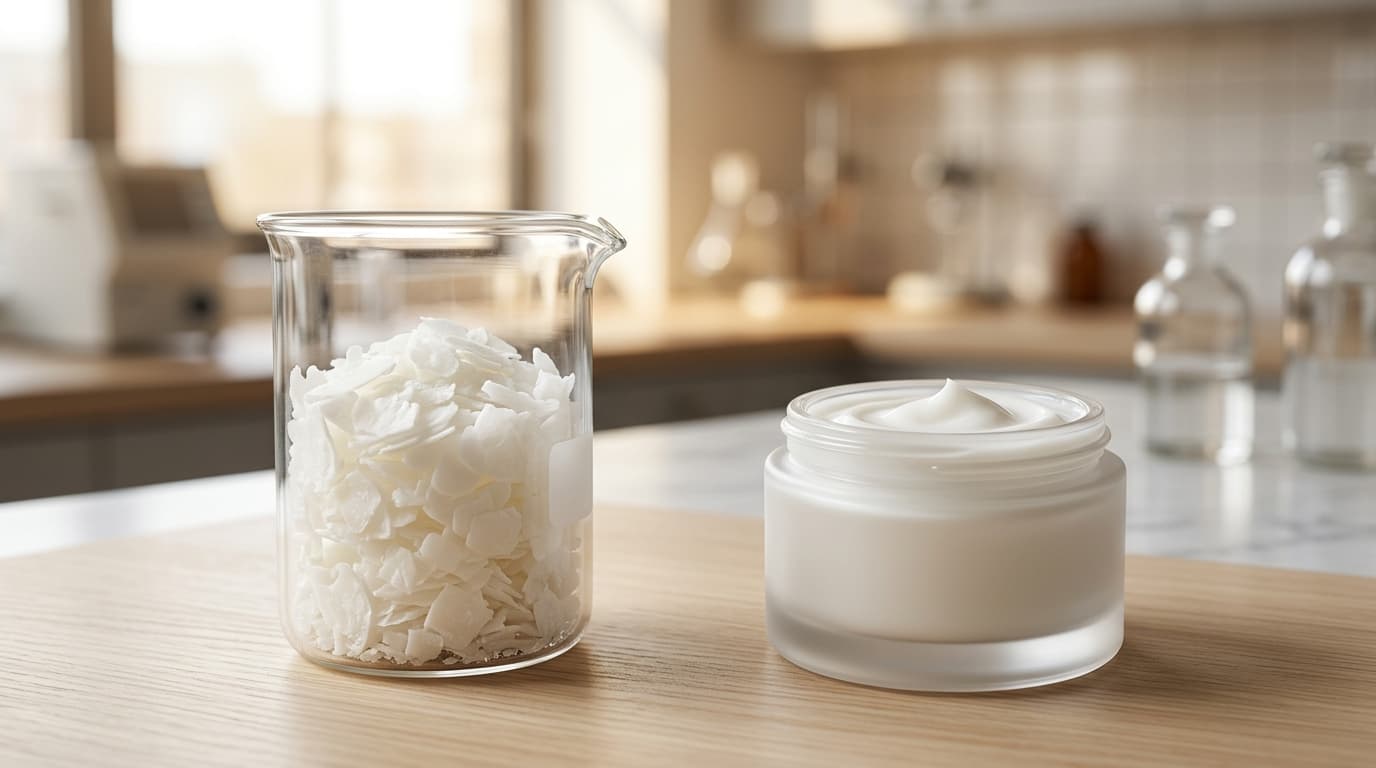
The alcohol in hand sanitiser is a tiny molecule that evaporates in seconds and takes your skin's water with it. A fatty alcohol is enormous by comparison: a long greasy chain with one small water-loving tip on the end. It comes as white waxy flakes, melts around 50 °C, and doesn't evaporate at all. It's an emollient. A lovely, solid emollient! That shape: big greasy chain, tiny tip — is exactly why it behaves so differently depending on what else is in the pot.
In lotions and creams (oil-in-water, where water is continues phase and little drops of oil inside it)
Cetearyl or cetyl alcohol is not your emulsifier, alone it can't hold oil and water together. But pair it with a real one and together they build something clever.
Liquid crystals — this is the bit worth knowing the name for. A liquid crystal is a halfway state between liquid and solid: it flows, but its molecules stay lined up in neat layers. Like a deck of cards that slides around yet never stops being a stack.
As your cream cools, the fatty alcohol and emulsifier arrange into exactly that: flat sheets stacked one on another, with water trapped between every pair. Formulators call it a lamellar (layered) liquid crystalline phase, or a gel network — the same structure that X-ray and neutron scattering studies see in creams built from surfactant plus C16/C18 fatty alcohols. Ahmadi et al., Pharmaceutics, 2020
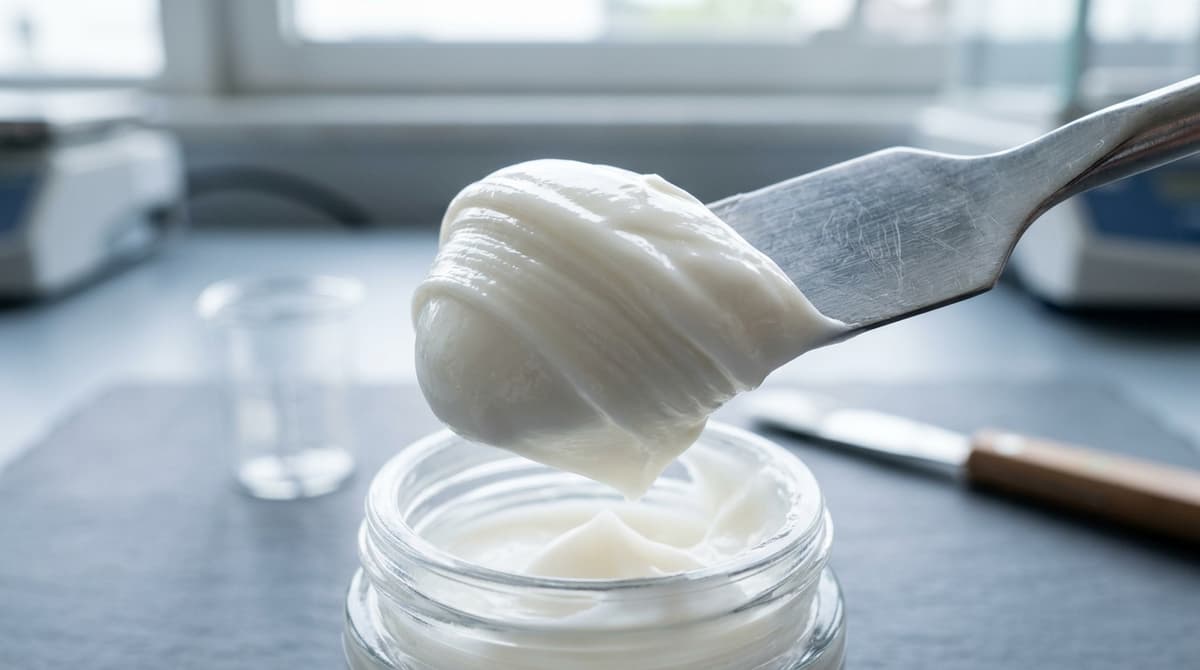
The stack makes the cream thick, oil droplets sit in a jelly rather than floating loose. And the water locked between the sheets is why a good cream feels moisturising, not greasy. Skin's own barrier is layered the same way, which is part of why these creams feel so comfortable.
Numbers only mean something inside a named formula, so here is the one this article uses as its worked example. Water phase: deionised water to 100%, plus any water-soluble polyol. Oil phase: 15% liquid oil, 4% non-ionic emulsifier (a glyceryl stearate type), and 5% cetearyl alcohol, as supplied (w/w) — cetearyl rather than cetyl or stearyl, because the C16/C18 mixture is the forgiving one. Processing order: heat both phases separately and hold them at 75 °C for about 20 minutes, add the oil phase to the water phase under high shear, then swap to low shear and keep stirring gently as the batch cools through 45–35 °C. That cool-down is when the layers assemble; if you read my post about shear and the homogeniser, this is where and why we swap high shear to low while cooling.
Two things about that 75 °C, because it is the number people most often carry away wrongly. It is a heat-and-hold processing temperature for this formula — chosen so every waxy component is fully melted and both phases are matched before emulsification — and it is not the melting point of the fatty alcohol, which is far lower (cetyl around 49–55 °C, stearyl around 58–60 °C per the CIR reports). Nor is it a universal instruction: an emulsifier with a different phase-inversion behaviour, a higher-melting wax, or a heat-sensitive active will all move it. If you take the 3–6% and the 75 °C away from this formula, take the conditions with them: grade of alcohol, emulsifier, phase composition and processing order. The supplier's technical data sheet and the manufacturer's starting formulations are where the equivalent numbers for your own raw materials live. Cool it fast and standing still and you get thin, gritty lotion. And don't judge thickness for 24–48 hours, it's still building.
In water-in-oil creams (where tiny drops of water wrapped inside continues oil phase)
Flip the phases and the scaffolding simply can't form! There's no water phase for it to build in. Now it's just a wax that stiffens the oil and holds the water droplets in place. Useful, but keep it low (0.5–2%, w/w) or you buy waxy drag instead of stability. A pinch of salt in the water phase does far more here. I prefer it to beeswax any time
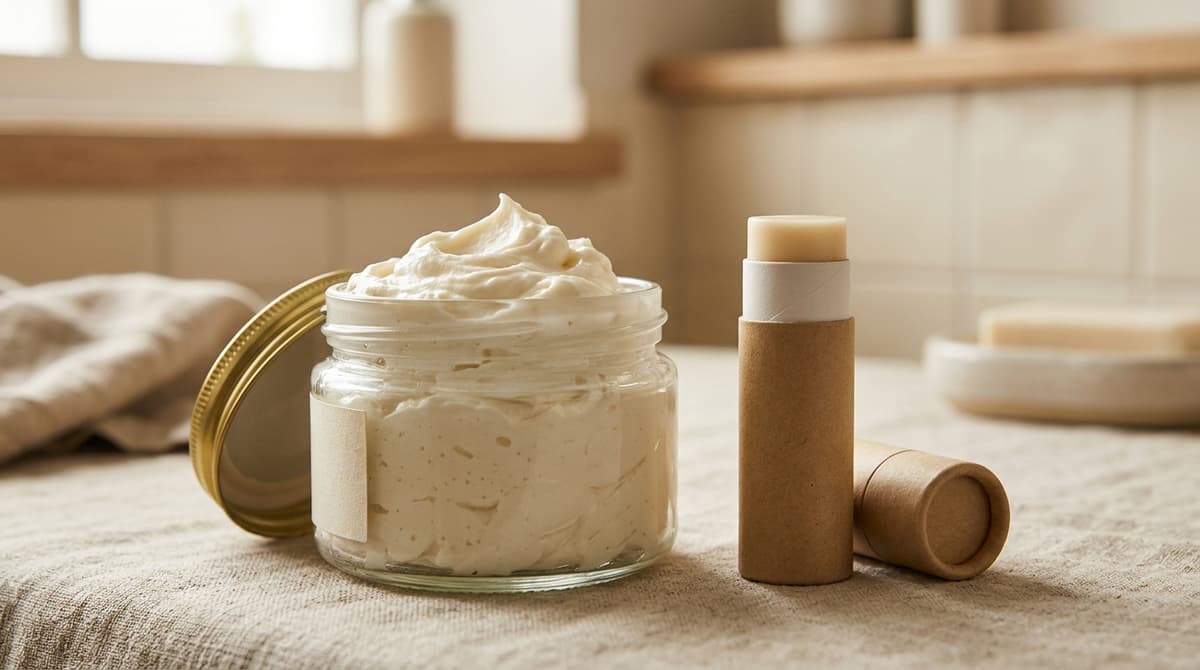
In balms, scrubs and whipped butters (no water at all)
Same story — pure wax, no scaffolding. But it's a nice wax.
For your balms: in a simple butter-and-liquid-oil base with no other structuring wax, 3–8% (w/w, as supplied) adds firmness without beeswax's tacky, sealing feel. Smoother melt, better slip. Lovely in the lip balms! The range moves as soon as another wax, a hard butter or a higher pour temperature comes into the formula, so treat it as a starting point for a trial, not a specification.
Whipped butters: 3–8% (w/w, as supplied), in a shea- or mango-butter base whipped after a controlled cool-down, helps the whip hold its shape and stops it slumping in a warm room. Stearyl beats cetyl here because it melts higher (about 58–60 °C versus about 49–55 °C). CIR, safety assessment of stearyl alcohol It also makes shea feel lighter and less greasy. It won't fix shea graininess though — that's a tempering problem, not an ingredient one.
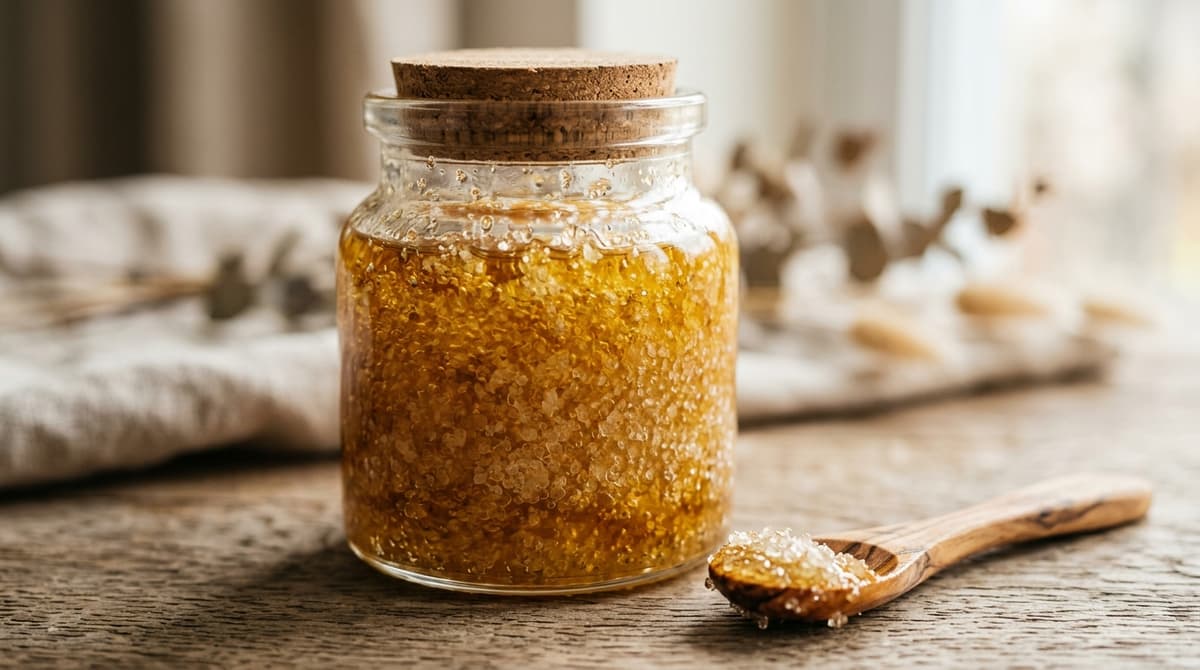
Oil scrubs: 3–5% (w/w, as supplied) thickens the oil so the sugar stops sinking and the oil stops pooling on top — that range assumes a liquid-oil base and a sugar load in the usual two-to-one-by-weight neighbourhood; a coarser abrasive or a denser salt will need re-trialling. This is the single best fix for a separating scrub.
Try it!
Just quick picks: Cetyl = softer, lighter, silkier. Stearyl = firmer, waxier, better in heat. Cetearyl = a blend of the two, and the most forgiving of the three — creams built on a single fatty alcohol tend to grow crystallites and lose structure, while the C16/C18 mix stays smoother and more stable. Start with cetearyl.
Overdose it anywhere and you'll get the same two complaints: waxy drag, and a white smear when you rub it in. With fatty alcohols, less is usually more.
FAQ
Does cetyl or stearyl alcohol clog pores?
What the documents actually say: the CIR Expert Panel concluded that cetearyl alcohol, cetyl alcohol and the other long-chain alcohols in that report are safe as cosmetic ingredients in the present practices of use, and, in a separate report, that stearyl alcohol is safe as currently used in cosmetics (CIR, cetearyl alcohol). That is a safety conclusion for the ingredients under the conditions of use the Panel reviewed — it is not a finding that a finished product containing them is non-comedogenic, which is a property of the whole formula and would have to be tested on the product itself. They are certainly not the drying, evaporating alcohols found in toners or sanitisers; beyond that, very oily skin may simply prefer the lighter cetyl over stearyl.
Can cetyl, stearyl and cetearyl alcohol be swapped 1:1 in a recipe?
Not perfectly — cetearyl alcohol is a blend of the two, so swapping in pure cetyl gives a softer, lighter cream while pure stearyl gives a firmer, waxier one at the same percentage.
Are cetyl and stearyl alcohol vegan and biodegradable?
Origin and biodegradability are properties of the specific grade you buy, not of the ingredient name: cetyl and stearyl alcohol are produced from vegetable oils such as coconut or palm kernel, from petrochemical feedstocks, and historically from animal fats. Vegan status is established by the supplier's declaration for the material and lot, and "readily biodegradable" is a claim that has to rest on the result of the corresponding test for that grade — neither can be inferred from the INCI name.
Sources
- European Commission, CosIng — Cetyl Alcohol (CAS 36653-82-4), accessed 2026
- European Commission, CosIng — Stearyl Alcohol (CAS 112-92-5), accessed 2026
- European Commission, CosIng — Cetearyl Alcohol (CAS 67762-27-0), accessed 2026
- Cosmetic Ingredient Review, Cetearyl Alcohol — ingredient page and supplemental documents, cir-safety.org
- Cosmetic Ingredient Review, Final Report on the Safety Assessment of Cetearyl Alcohol, Cetyl Alcohol, Isostearyl Alcohol, Myristyl Alcohol, and Behenyl Alcohol, J Am Coll Toxicol, 1988
- Cosmetic Ingredient Review, Final Report on the Safety Assessment of Stearyl Alcohol, Oleyl Alcohol, and Octyl Dodecanol, J Am Coll Toxicol, 1985
- Ahmadi D. et al., The Influence of Co-Surfactants on Lamellar Liquid Crystal Structures Formed in Creams, Pharmaceutics, 2020 (PMC7557764)