Useful material on cosmetic chemistry, ingredients and growing your business
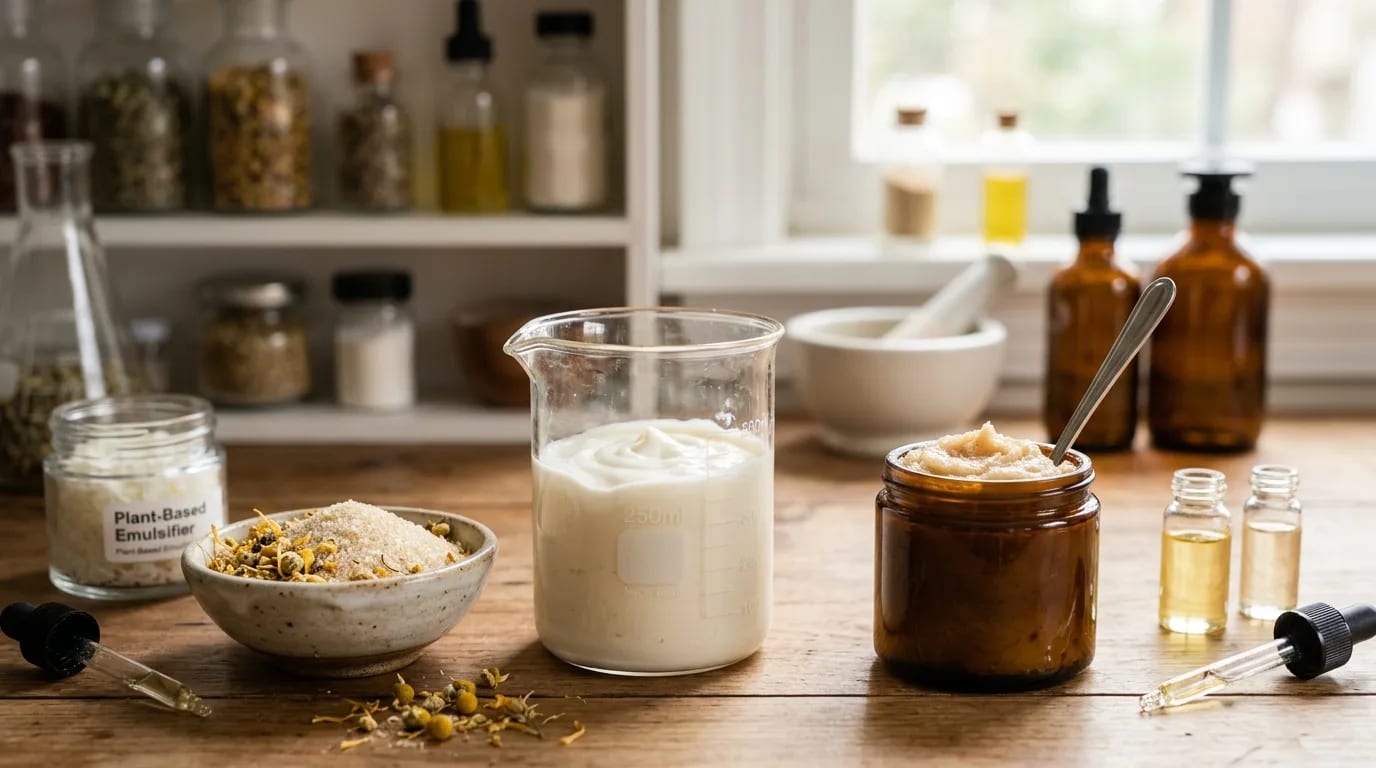
Emulsifying wax in sugar scrub is a blend of fatty alcohol and surfactant that lets oil and water mix. Typical use is 5-10% of the total formula (commercial raw material, by mass). It makes the scrub rinse off milky instead of greasy, but it does not preserve the product, and any water in the scrub
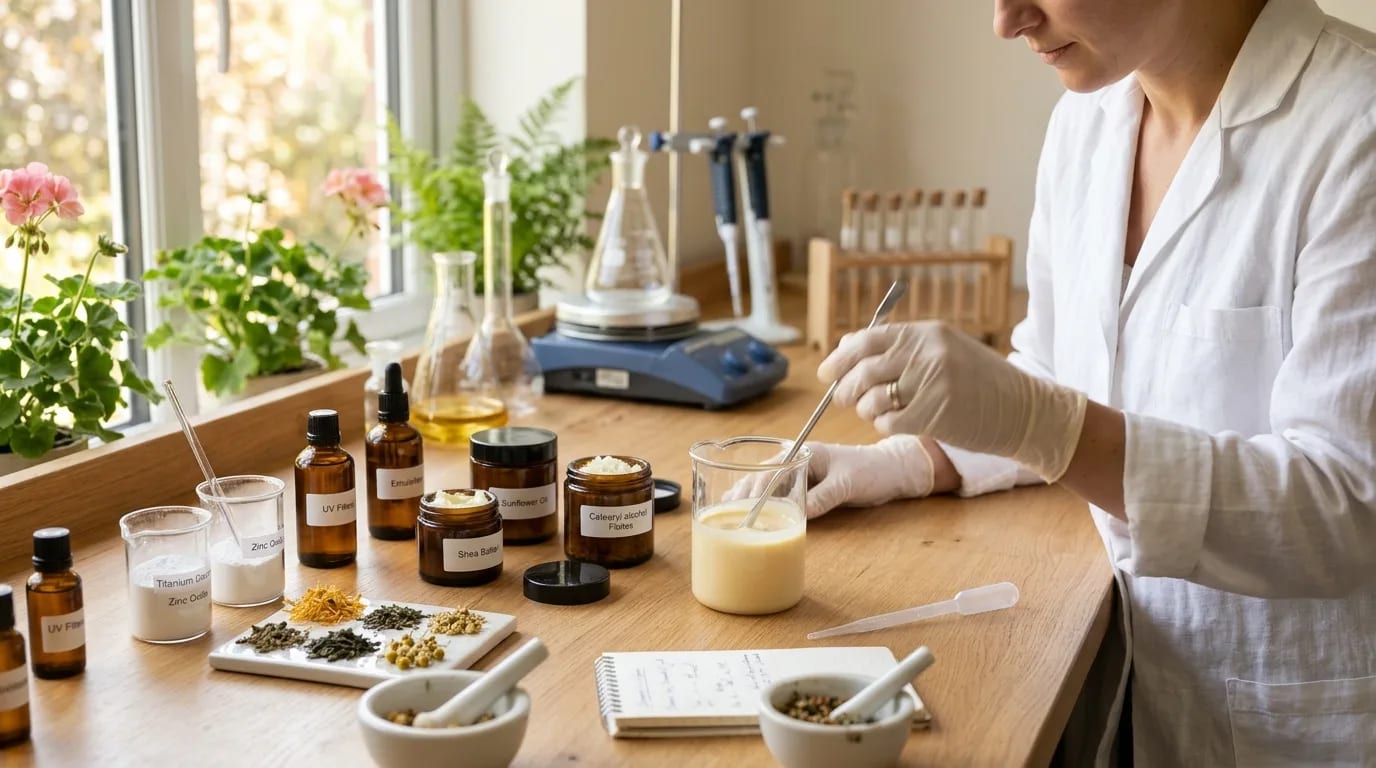
Ingredients for sunscreen formulation fall into four groups: UV filters (organic such as avobenzone, octocrylene and triazines; inorganic such as zinc oxide and titanium dioxide, each capped by Annex VI of the UK Cosmetics Regulation ), emulsifiers, photostabilisers and antioxidants, and film-former
Mineral vs chemical sunscreen formulation comes down to mechanism and matrix: mineral filters (zinc oxide, titanium dioxide) are insoluble particles that mostly absorb and scatter UV, while chemical filters are dissolved organic molecules that absorb UV. In the UK, titanium dioxide and zinc oxide ar
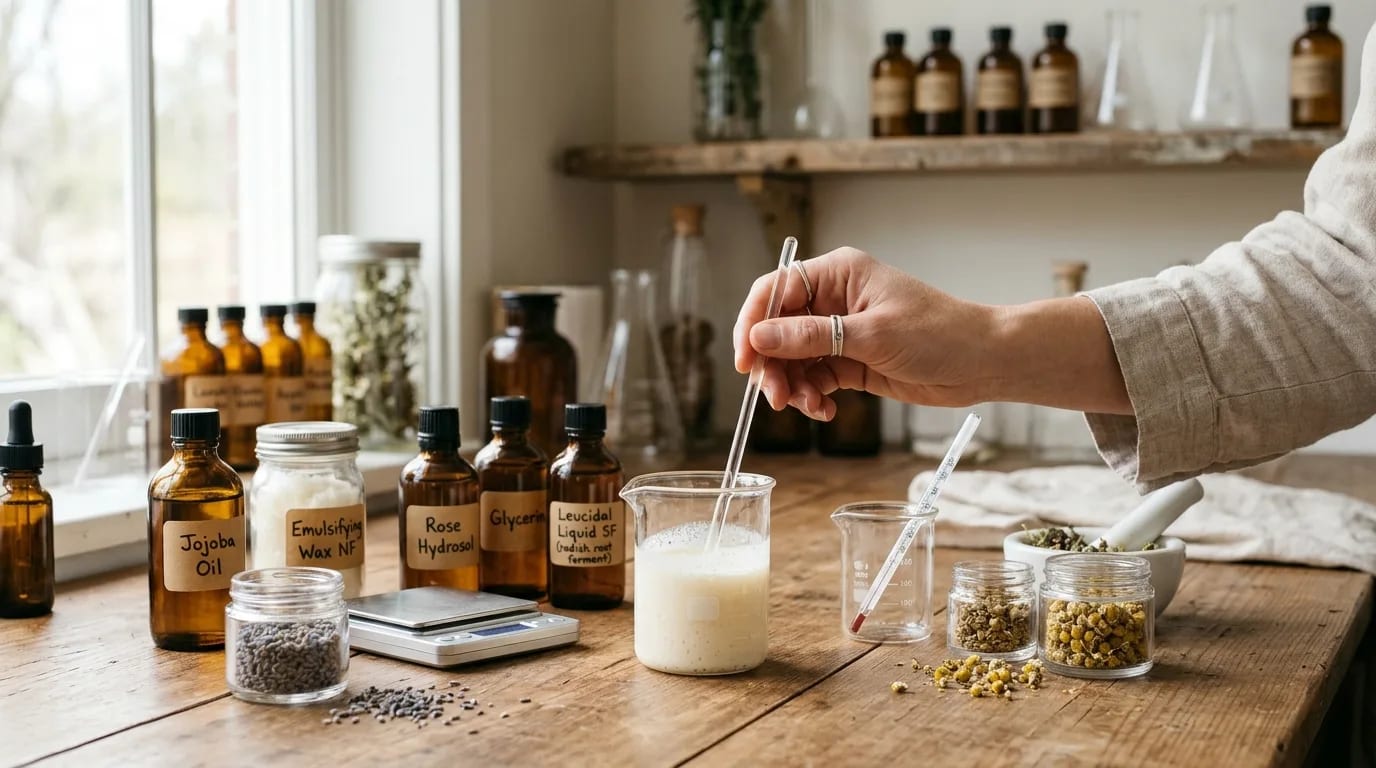
A DIY emulsion base for skincare cream making is a water phase and an oil phase held together by an emulsifier, typically 15–30% oil and 3–8% emulsifier (commercial raw material, weight/weight). Any base containing water needs a validated preservative system. Fermented extracts and chelators can sup
UK law does not name one mandatory SPF test, but a sunscreen must carry evidence for every claim. In practice that means in vivo SPF testing to ISO 24444 on 10–20 volunteers at 2 mg/cm², UVA testing to ISO 24443 (UVA protection at least one third of the labelled SPF), plus a safety report and Produc
Formulating with hero ingredients means building the whole formula around one star active, such as niacinamide at 2–5% (active), so that dose, pH, solvent system, stabilisers and packaging all protect and deliver it. A hero only works if the base lets it stay stable, reach the skin and remain compli
DIY sunscreen warning: homemade sunscreen cannot deliver a reliable SPF. Even with zinc oxide, particles clump, spread unevenly and leave unprotected gaps, and no kitchen can test SPF or UVA protection. Under UK rules, a sunscreen needs a safety assessment and permitted UV filters only. Oils, carrot
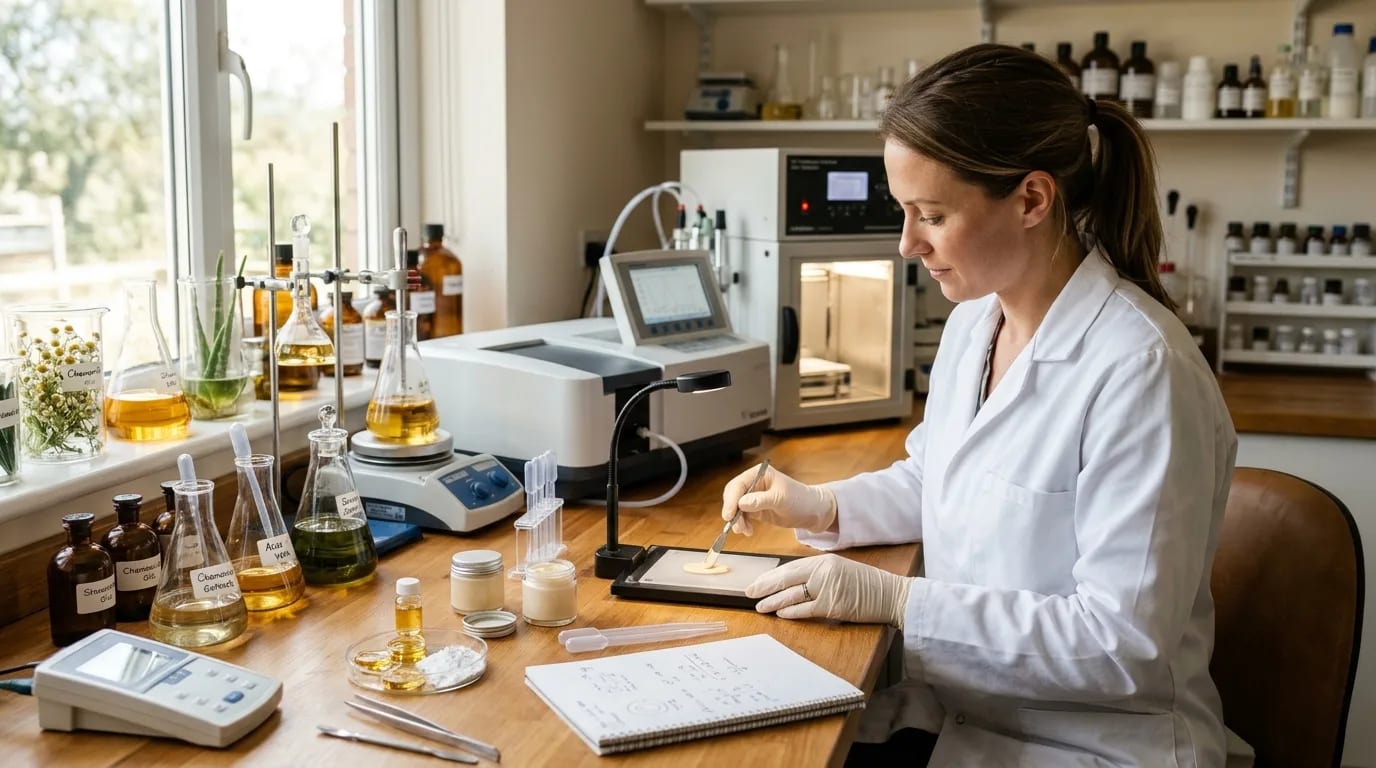
A chemical formulation course teaches the practical chemistry behind creams, serums and cleansers: emulsification, pH adjustment, preservation, INCI labelling under UK Cosmetics Regulation (retained EU 1223/2009), and stability testing. Good courses combine lab practice (weighing, phase mixing, visc
Sunscreen formulation relies on UV filters (organic absorbers like avobenzone, octocrylene, or mineral filters like zinc oxide and titanium dioxide), plus emulsifiers, film-formers, antioxidants and rheology modifiers that keep filters stable, evenly spread and photostable on skin. In the UK/EU, onl
Natural clay face masks work by physically adsorbing sebum, sweat residue and loose surface debris onto negatively charged mineral particles such as kaolin, bentonite or rhassoul. Bentonite swells up to 8–15 times its dry volume in water (PubMed) , giving the strongest oil-absorbing pull, while kaol
To formulate a brightening serum with alpha arbutin, use 1–2% active ingredient in a water-based gel at pH 4.0–5.5, add a chelator like disodium EDTA to prevent discolouration, pair with 0.5–1% ferulic acid or 5% niacinamide for synergy, and preserve properly since the aqueous base is microbially vu
Working skincare recipes are emulsions or gels built on measured percentages: 3-5% emollient plus 0.5-2% emulsifier for a lotion, 0.5-1% gelling polymer for a serum base, and always a broad-spectrum preservative system tested at a pH of 4.5-5.5. Anything mixed in a kitchen without a preservative or
 Walker Formulation Academycosmetic chemistry