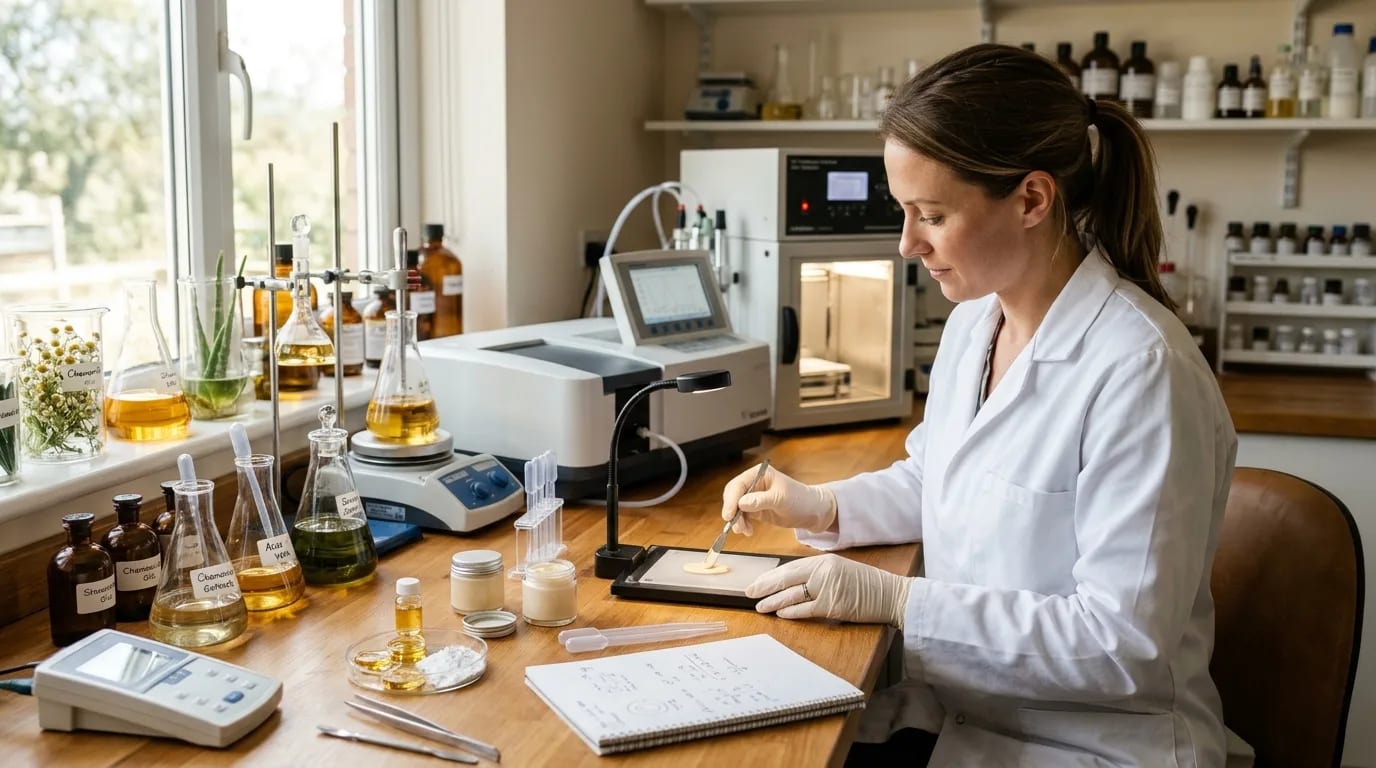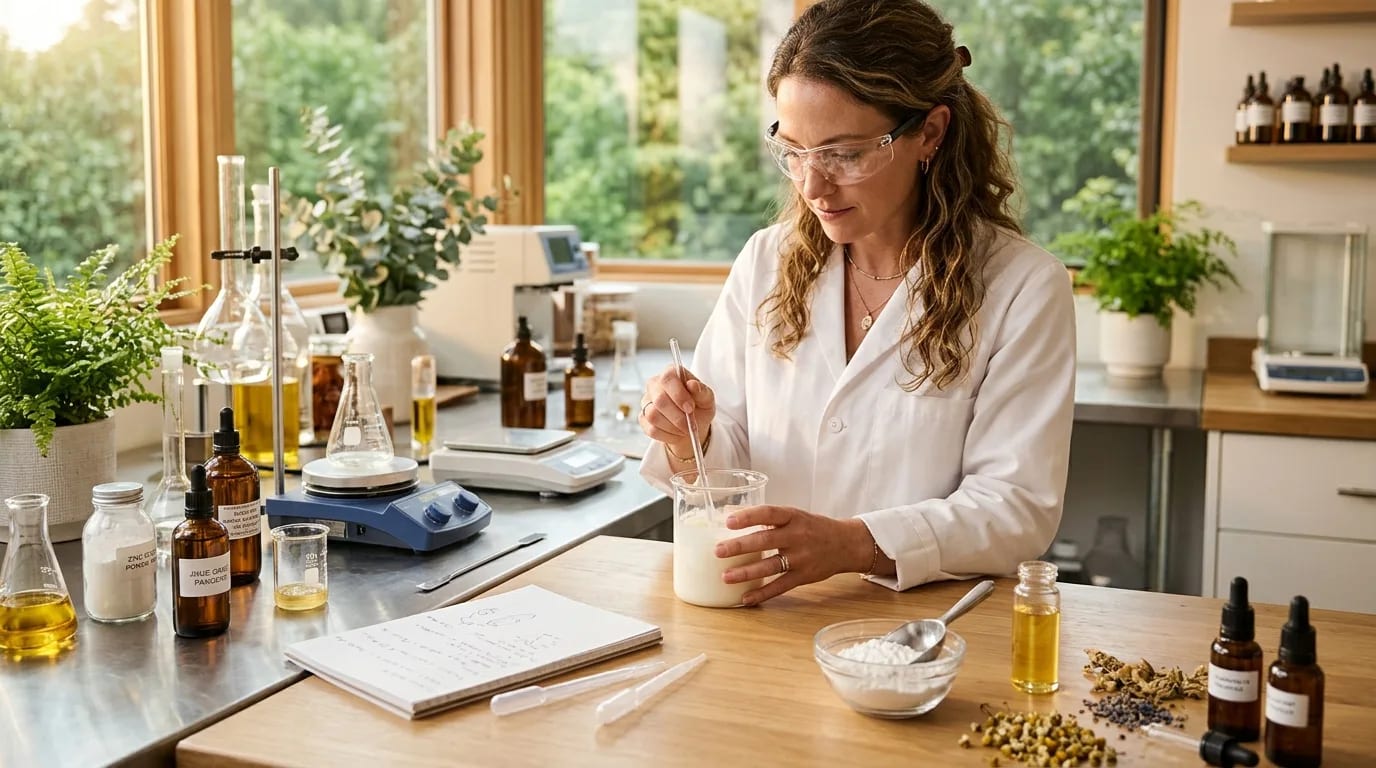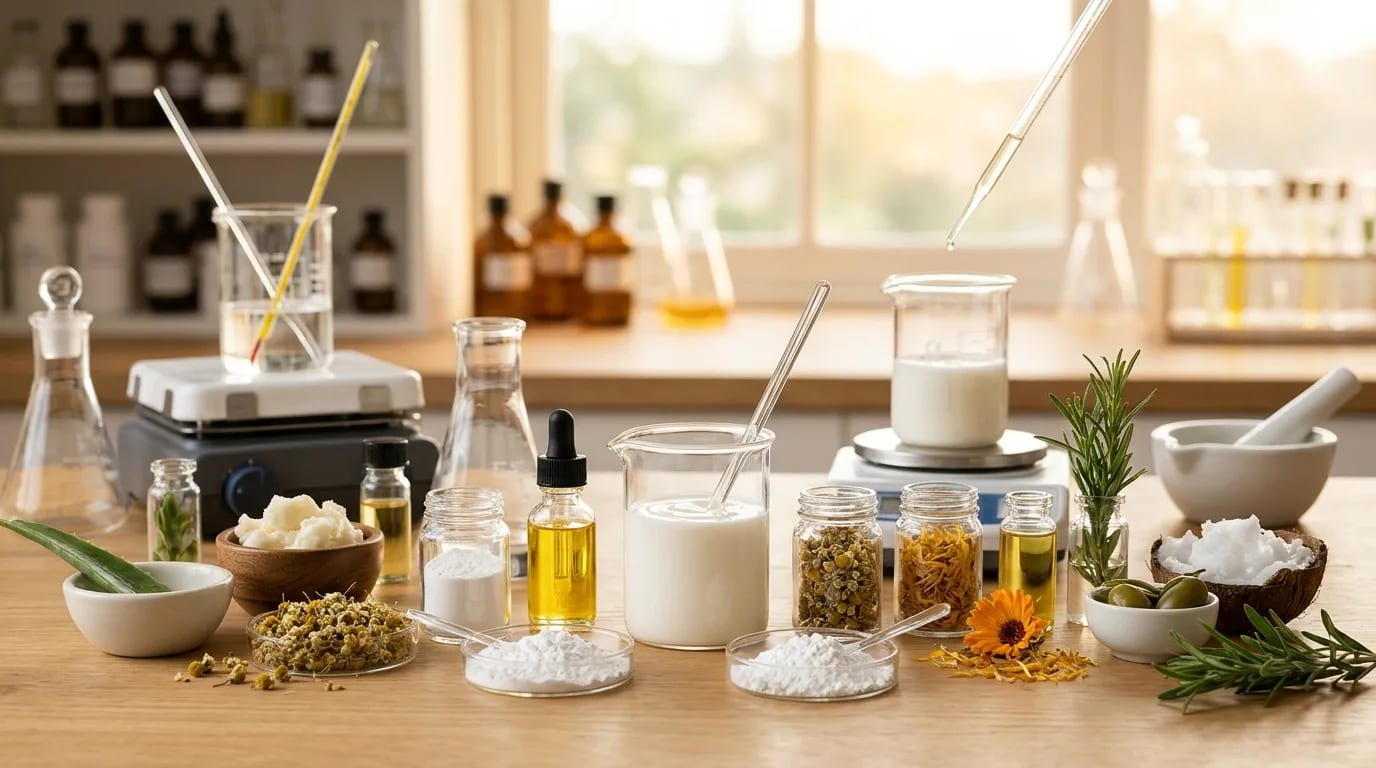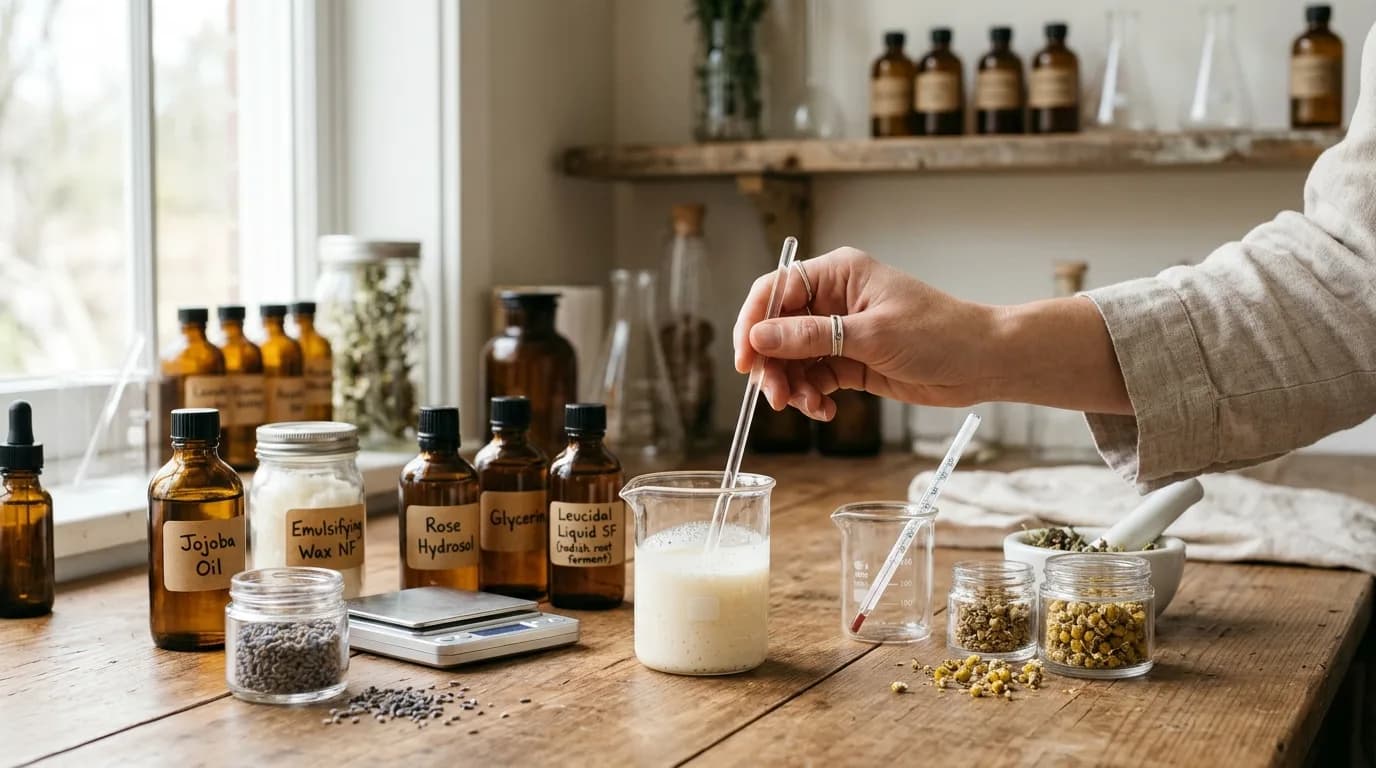
A DIY emulsion base for skincare cream making is a water phase and an oil phase held together by an emulsifier, typically 15–30% oil and 3–8% emulsifier (commercial raw material, weight/weight). Any base containing water needs a validated preservative system. Fermented extracts and chelators can support preservation, but they do not replace one.
- Typical oil-in-water cream: 15–30% oil phase, 3–8% emulsifier (commercial raw material, w/w), remainder water.
- Water activity above roughly 0.6 can support microbial growth; creams sit near 0.98–0.99.
- Skin-compatible cream pH usually sits at 4.5–6.0, which is also the range where many organic-acid preservatives work.
- Chelators such as disodium EDTA are typically used at 0.05–0.2% (commercial raw material, w/w).
- A homemade water-based cream without preservation should be treated as a product with a shelf life of days, not months.
Your jar of beautiful, silky cream is a warm, nutrient-rich buffet for bacteria and moulds, and you cannot see the guests arriving. Most DIY failures are not about texture. They are about what quietly grows in the water phase.
DIY Emulsion Bases for Skincare Cream Making: The Microbial Risk
Why water-based creams fail without stabilisers
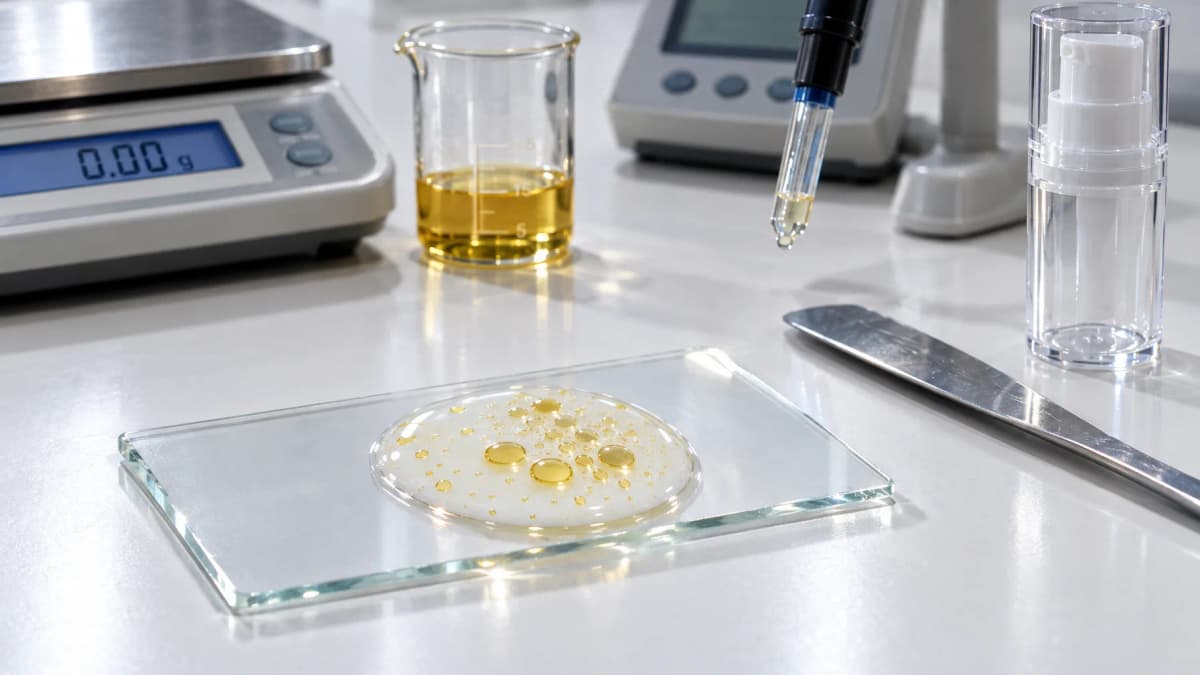
An emulsion is not a single material. It is two immiscible phases held together by surfactant films. In an oil-in-water cream, the continuous phase is water, and that is where microbes live. Water activity in such creams is close to 1, far above the level at which most microorganisms stop multiplying. Anhydrous products such as balms, butters and oil blends are a different story: with no free water, the risk drops dramatically. If you want the structural side of emulsions, see Emulsifiers and cream texture: what is actually happening inside your moisturizer.
Kitchen-style ingredients make it worse. Plant extracts, hydrolysed proteins, panthenol, sugars and gums all feed microbes. Contamination arrives from fingers, tap water, spoons and the jar itself. A repeatedly opened pot is a challenge test run by your own hands.
What the regulation expects from a product that is sold
If you only make cream for yourself, regulation does not apply to you. The moment you sell or give products to others in the UK, the UK Cosmetics Regulation (retained Regulation (EC) 1223/2009) applies, including a safety assessment and good manufacturing practice. Preservatives must come from the permitted list in Annex V, and their maximum concentrations and conditions are fixed there. Check the current entry for any preservative against the official listing and the CosIng database before using it. Whether a substance is allowed is determined by the list, not by whether it is natural or edible.
The wider principle of layered preservation is covered in Preservation in cosmetics: why a single preservative won't save your formulation.
Signs a base has already turned
- Change in smell: sour, yeasty or "crayon-like".
- Visible specks, pink or grey film, or fuzzy surface growth.
- Phase separation with a watery layer.
- pH drifting by more than 0.5 units from the starting value.
Note that dangerous contamination can exist with no visible sign at all.
Natural Alternatives: Using Fermented Extracts as Broad-Spectrum Preservatives
What fermented ingredients really do
Fermented ingredients such as Lactobacillus ferment, Leuconostoc/radish root ferment filtrate and similar products contain bacteriocin-like peptides and organic acids. Published work on lactic acid bacteria describes antimicrobial metabolites with activity against a range of bacteria and some fungi, which is the scientific basis for their use as supporting agents (PubMed search: lactic acid bacteria antimicrobial cosmetic preservation). The honest summary is that activity is narrower and more variable than that of classic preservatives, and it depends on pH, the rest of the formula and the supplier's grade.
Why they are boosters, not stand-alone solutions
Suppliers position these materials as part of a system, usually with organic acids or multifunctional diols. Ask the supplier for challenge-test data on a formula close to yours, including their recommended use level (stated as active matter or as raw material, which are not the same thing) and pH window. Their regulatory status for preservative claims should be verified against the Annex V list and CosIng: a material listed for another function in CosIng is not automatically an approved preservative.
| Approach | Strength | Limitation | Regulatory check |
|---|---|---|---|
| Fermented filtrates | Gentle profile, consumer-friendly | Narrow or variable spectrum; needs low pH and supporting hurdles | Verify function and claims in CosIng and Annex V |
| Organic acids (e.g. sorbic, benzoic, dehydroacetic) | Well studied, effective at pH below about 5.5 | Weak at neutral pH, mainly fungi or bacteria depending on the acid | Must match Annex V limits |
| Multifunctional diols (e.g. 1,2-hexanediol, caprylyl glycol) | Boost other preservatives, help texture | Rarely sufficient alone at low use levels | Check supplier data and CosIng function |
| Anhydrous format | Avoids the water problem | Not a cream; still susceptible to oxidation | Safety assessment still required |
Hurdle technology in practice
Preservation works best as a set of hurdles: low pH, a suitable acid system, a chelator, low water availability (glycerin helps modestly), clean production and airless or tube packaging. Each hurdle alone is weak; together they can be strong. Only a challenge test (preservative efficacy test) can show whether the combination works for your exact base.
Chelating Agents: How EDTA Analogues Prevent Oxidation in Homemade Bases
Metal ions: the hidden accelerant
Trace iron and copper from water, plant extracts and pigments catalyse the oxidation of unsaturated oils and also weaken preservative performance. Chelators bind these ions. Disodium EDTA is the classic option, used at roughly 0.05–0.2% (commercial raw material, w/w), and the CIR safety review covers its use in cosmetics (CIR ingredient safety reviews). Its permitted use should be confirmed in the UK listing before you rely on it.
EDTA analogues and alternatives
- Tetrasodium glutamate diacetate: readily biodegradable, a common "green" chelator.
- Sodium phytate: derived from plant sources, works best at mildly acidic pH.
- Sodium gluconate: mild, effective for iron in lower pH systems.
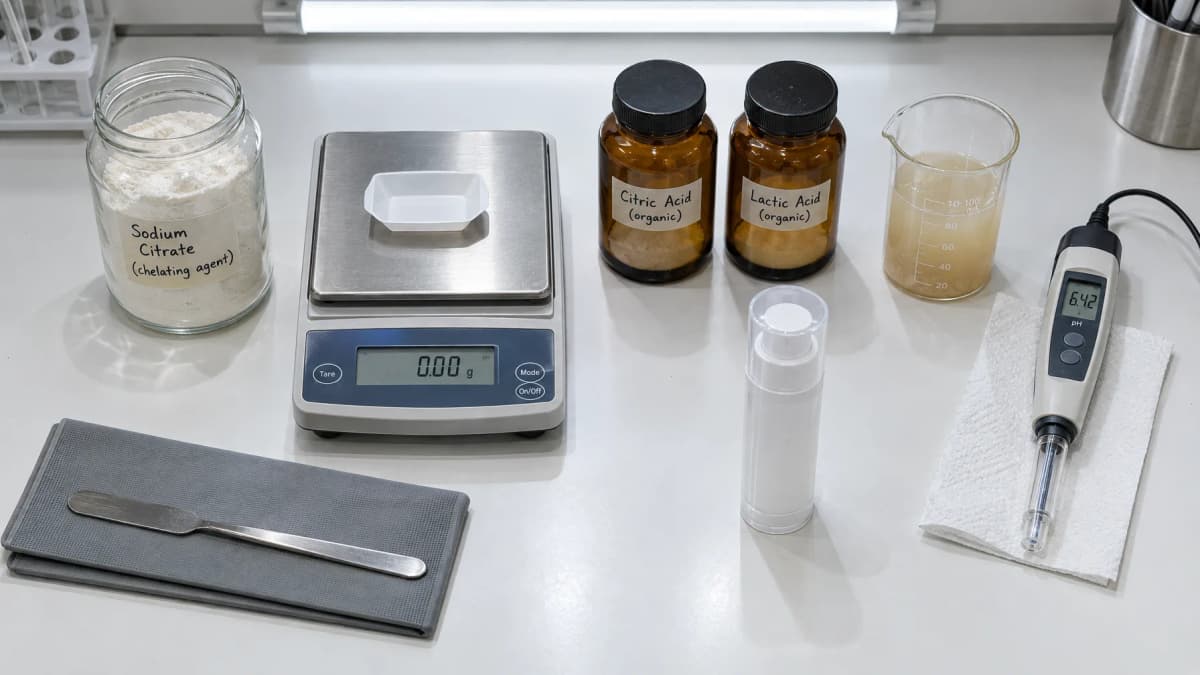
- Citric acid / sodium citrate: weak chelators, but double as pH adjusters.
Chelators prevent oxidation, but they do not kill microbes. Pair them with antioxidants such as tocopherol for oily phases. For the oil side of the story, see Linoleic oils: sunflower, grapeseed, safflower, and the price of their lightness, since high-linoleic oils are the most oxidation-prone choices in a base.
A Practical, Safer DIY Emulsion Base Workflow
Build the base
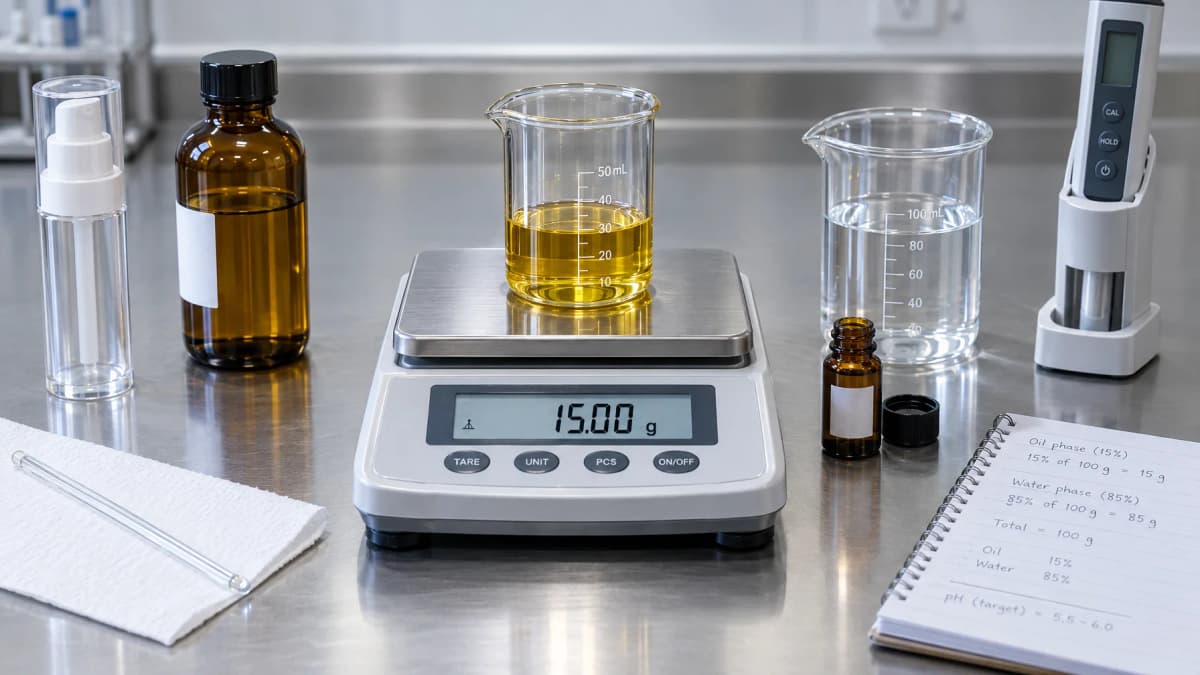
- Weigh everything on a 0.01 g scale; work in percentages, not spoonfuls.
- Heat oil and water phases separately to 70–75 °C and hold briefly to reduce bioburden.
- Combine under high-shear mixing, then cool while stirring.
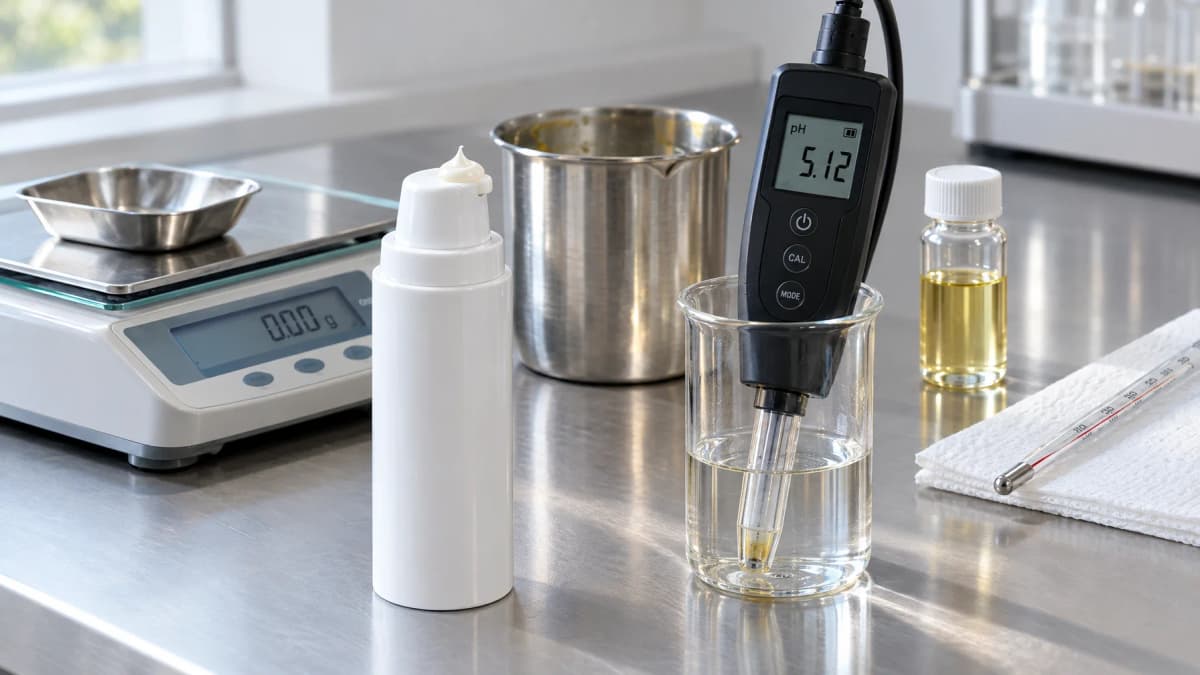
- Add heat-sensitive materials below 40 °C, then adjust pH to 4.5–5.5 and record it.
- Fill into sanitised airless pumps or tubes.
Realistic cost and shelf life
A well-sourced small-batch kit with a proper emulsifier, chelator, pH meter and airless containers often costs around £40–£60 to start, which surprises people who assumed DIY was cheap. Without a validated preservative, treat any water-based cream as a one-week product kept in the fridge. If you want to sell or gift, do the formal safety assessment and testing. For anyone wanting a structured route into this skill, see How to become a cosmetic chemist: the journey from curiosity to professional formulation; and if you want guided practice, our gentle-cream mini-course covers emulsion building step by step.
FAQ
What are DIY emulsion bases for skincare cream making?
They are homemade oil-in-water or water-in-oil mixtures stabilised by an emulsifier, typically 15–30% oil and 3–8% emulsifier. Any version containing water needs a proper preservative system.
Can I make a skincare cream without any preservative?
Only if it contains no water, such as a balm. Water-based creams spoil quickly, so refrigerate and use within days, or use a permitted, validated preservative system.
Do fermented extracts replace preservatives in cream?
Not reliably. They can support a preservation system, but their spectrum is narrower. Verify status against the UK Annex V list and CosIng, and confirm with a challenge test.