DIY sunscreen warning: homemade sunscreen cannot deliver a reliable SPF. Even with zinc oxide, particles clump, spread unevenly and leave unprotected gaps, and no kitchen can test SPF or UVA protection. Under UK rules, a sunscreen needs a safety assessment and permitted UV filters only. Oils, carrot seed and coconut do not replace them.
- Zinc oxide is a listed UV filter in the UK, with a maximum of 25% (active substance, mass fraction) in the finished product, per Annex VI of the UK Cosmetics Regulation.
- A stated SPF is a laboratory measurement, not a calculation: a recipe that "adds up" to SPF 30 on paper has no verified value.
- Typical retail price for a tested, properly labelled SPF 30-50 face sunscreen in the UK: roughly £10-£25 per 50 ml.
- Kitchen oils such as raspberry seed, carrot seed or coconut are not on the UV filter list and cannot be labelled as sun protection.
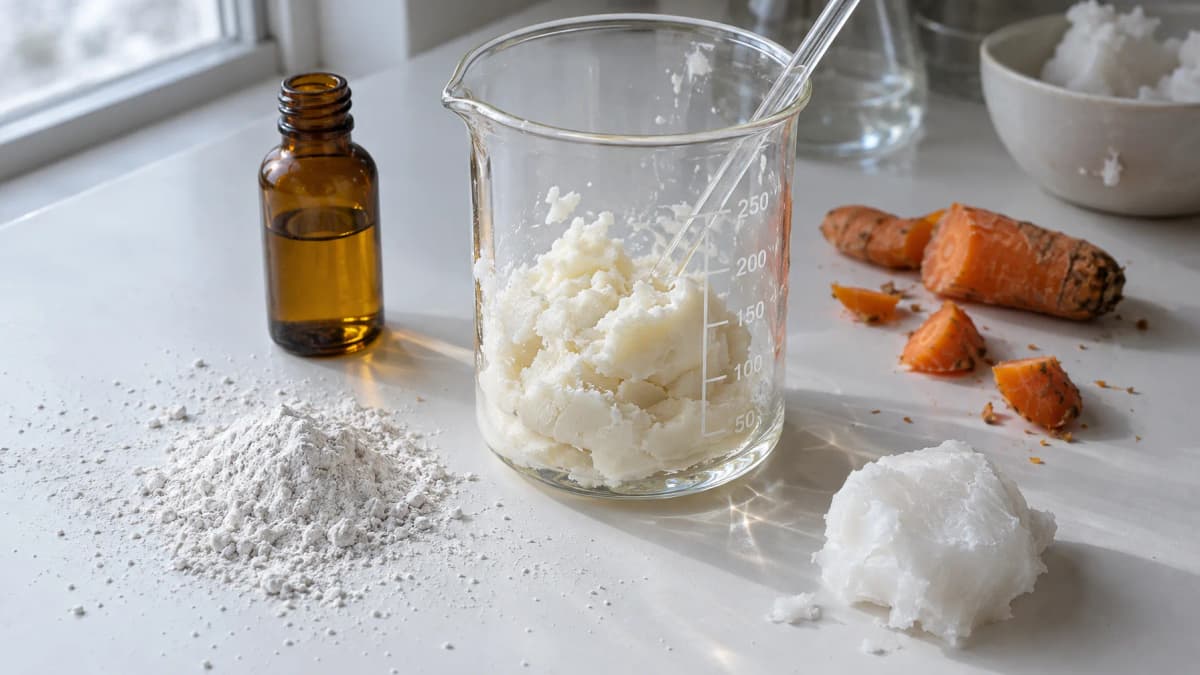
You have probably seen the video: someone whisks shea butter, zinc oxide powder and a few drops of carrot seed oil, then announces it is "SPF 30, naturally". It looks lovely, smells like a spa, and costs about £6 to make. The uncomfortable part is that nobody in that kitchen can tell you whether it protects your skin at all, and the burn will be the first lab report you receive.
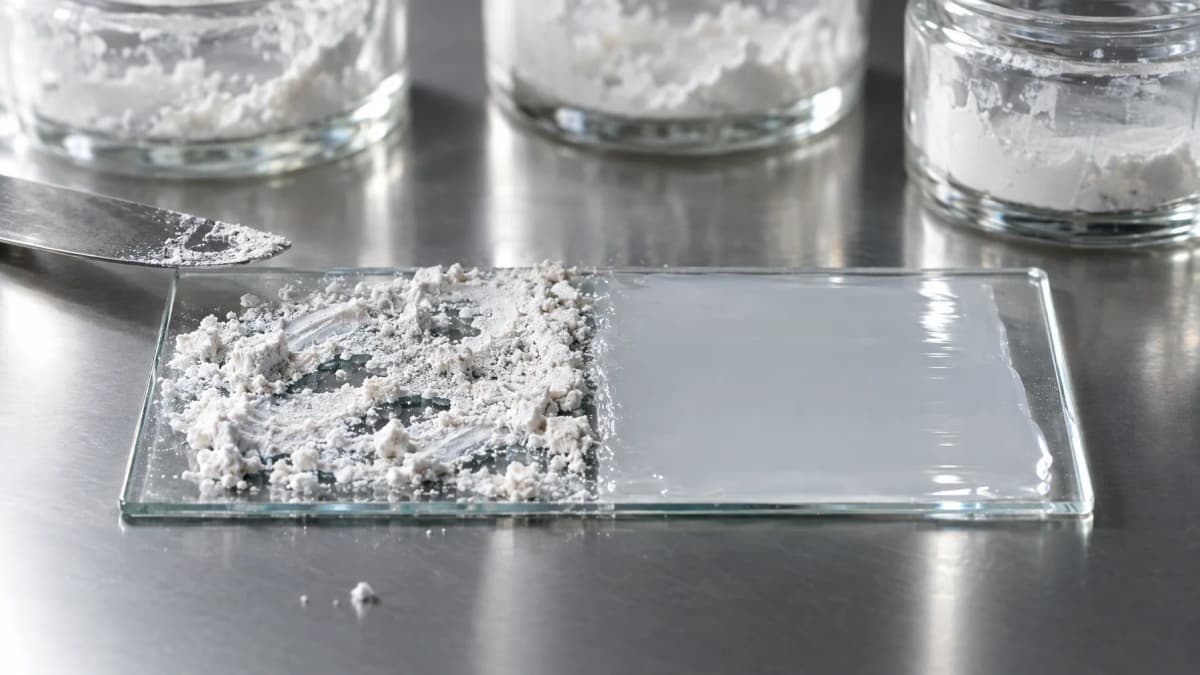
The DIY sunscreen warning in one picture: why a jar of zinc is not an SPF
Sunscreen is one of the few cosmetic categories where the product has to behave like a piece of precision engineering. It is a thin, even film of UV filters that must stay intact on moving, sweating skin for hours. Every step of homemade versions undermines that film.
Dispersion is the whole game
Zinc oxide is a mineral that reflects and absorbs UV, but only when its particles are evenly dispersed. In industrial sunscreens, the powder is milled, wetted with specific dispersants and locked into an emulsion or anhydrous base with the right viscosity. Stir the same powder into butter with a spoon and you get agglomerates: clusters of particles with large gaps between them. UV passes through the gaps. Skin under those gaps is effectively unprotected, even though the jar contains plenty of zinc.
Two jars with identical zinc percentages can differ massively in real-world protection. That is why the percentage on a recipe card tells you almost nothing. If you want to understand why texture and droplet structure matter so much, our piece on emulsifiers and cream texture: what is actually happening inside your moisturizer explains the same physics from the moisturiser side.
Film thickness and uneven spreading
SPF is measured on skin at a defined, fairly generous application amount. Real people apply much less, and a gritty, heavy homemade balm is even harder to spread evenly. The result is patchiness: a stripe of protection, a stripe of nothing. Commercial formulas are engineered with emollients and film formers to spread in a uniform layer, and they are tested accordingly.
UVA is invisible in a kitchen
SPF mainly describes protection against UVB, the burning wavelengths. UVA, linked to ageing and deeper damage, needs separate measurement. A recipe can feel like it prevents burning while leaving UVA protection unknown. Nothing in a home setup measures either one.
For a deeper formulation-level view of why this is so hard, see Sunscreen products: a complete guide for formulators — why DIY SPF doesn't work.
What the UK rules actually require
Sunscreens sold in the UK fall under the UK Cosmetics Regulation (retained EU 1223/2009). Three things matter to anyone thinking of making and selling, or even gifting at scale, a sun product.
Only listed filters count
The permitted UV filters are listed in Annex VI, with conditions of use and maximum concentrations. Zinc oxide, for example, appears there with a ceiling of 25% (active substance, mass fraction), with additional conditions, including for nano forms and exposure routes. If an ingredient is not on that list, it cannot be the thing that makes a product a sunscreen, however natural or edible it is. The CosIng database from the EU is the working reference formulators use to check functions and listings, and any specific filter should be checked against the current UK list before use.
Safety assessment and responsible person
Every cosmetic placed on the UK market needs a safety assessment by a qualified person and a named responsible person, and product information must be kept on file. Article 10 of the regulation sets out the safety assessment requirement. For sunscreens this includes the efficacy evidence behind the claim, not just toxicology.
Claims are regulated too
"Protects from the sun" is a performance claim. It has to be backed by test data. Our article on whether you can call your oil non-comedogenic on a UK label shows how strict claim substantiation can be even for a far milder statement.
| Question | Homemade "sunscreen" | Compliant UK sunscreen |
|---|---|---|
| UV filters | Powder or oil of unknown dispersion | Filters listed in Annex VI, used within stated limits |
| SPF value | Estimated from internet tables | Measured in vitro / in vivo |
| UVA protection | Unknown | Assessed and declared |
| Preservation | Often none, or ad hoc | Challenge-tested system |
| Batch consistency | Varies each time | Controlled manufacturing |
| Safety assessment | None | Required before sale |
The ingredients people trust, and why they mislead
Part of the DIY sunscreen warning is about folklore. Several ingredients have a reputation they have not earned in a sunscreen context.
Plant oils with "natural SPF"
Red raspberry seed oil, carrot seed oil, coconut oil, shea butter: web articles attach SPF numbers to them, often from a single in vitro experiment under unrealistic conditions. Even if an oil absorbs a little UV in a cuvette, that absorbance does not translate to a protective film on skin, and these oils are not permitted UV filters. Treat them as emollients that make skin feel nice, which is a perfectly good job. For how oils differ in feel and stability, see linoleic oils: sunflower, grapeseed, safflower, and the price of their lightness.
Oxidation can make it worse
Oils rich in polyunsaturated fats oxidise on warm skin under UV, forming reactive by-products. A balm loaded with them and sitting in a beach bag is a poor environment for stability. Preservation matters too: anything containing water, aloe or hydrosols needs a validated preservative system, as we explain in our article on why a single preservative won't save your formulation.
The "it worked for me" trap
Personal experience is a terrible UV detector. Skin type, sun intensity, time of day, sweating and reapplication all vary. A day with no burn proves little; a single burn proves a lot. Cumulative UV damage is silent, which is exactly why a measured, tested product exists.
A practical checklist before you trust any sun product
Whether you are tempted by a handmade market stall balm or a viral recipe, run through this list.
- Does the label list UV filters by INCI name (for example Zinc Oxide, Titanium Dioxide, or organic filters), not just oils?
- Is an SPF and a UVA claim stated, with a responsible person's UK address?
- Does the product carry a batch code and a period-after-opening symbol?
- Is the texture smooth with no visible grit when rubbed on the back of your hand?
- Is the brand able to say how the SPF was tested?
If any answer is "no", treat the product as a skin-feel balm, not sun protection, and pair it with shade, clothing and a tested sunscreen.
What you can safely DIY instead
- After-sun balms with allantoin, panthenol and light esters (no SPF claim).
- Lip balms and body butters for use at home, under sensible hygiene.
- Simple oil blends for evening use when sun exposure has ended.
The principle is simple: make things where an error costs you a dull texture, not a sunburn. The same spirit runs through our look at how to become a cosmetic chemist: the journey from curiosity to professional formulation, where curiosity grows into method.
Why professionally made is not the same as chemical-heavy
A common objection to this DIY sunscreen warning is that commercial products are "full of chemicals". Everything in a jar is a chemical, including zinc oxide and water. Listed filters have been through regulatory safety review, and mineral options exist for people who prefer them. If you want a mineral-only sunscreen, buy one with the filter named on the label and a stated SPF, and expect to pay roughly £12-£25 for a decent face product. That is a bargain compared with guessing.
If you want to learn how real sunscreen systems are built, from filter selection to dispersion and testing, our formulation course covers it step by step, in a setting where mistakes cost you a batch, not your skin.