Formulating with hero ingredients means building the whole formula around one star active, such as niacinamide at 2–5% (active), so that dose, pH, solvent system, stabilisers and packaging all protect and deliver it. A hero only works if the base lets it stay stable, reach the skin and remain compliant with UK Cosmetics Regulation limits.
- Niacinamide: effective range typically 2–5% active; most stable at pH 5–7.
- Vitamin C (L-ascorbic acid): needs pH below 3.5 to penetrate and is unstable in water.
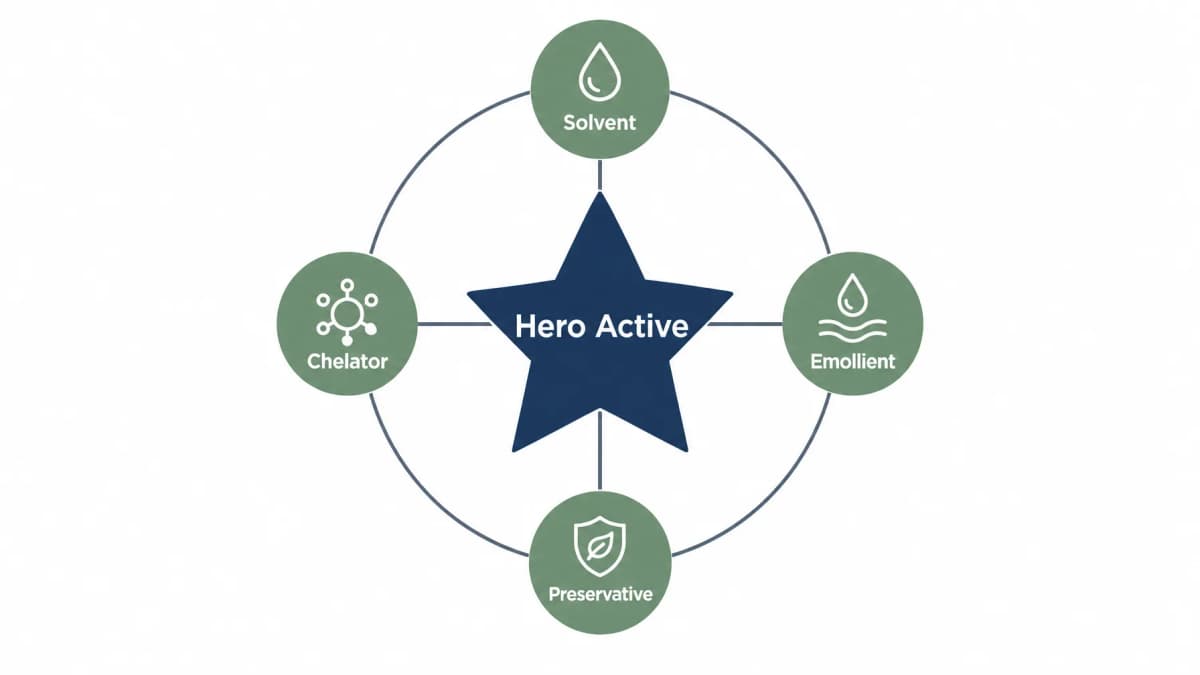
- A hero usually needs 3–6 supporting ingredients (solvent, stabiliser, preservative, emollient, chelator).
- Typical retail price for a well-made hero serum in the UK: about £15–£35 per 30 ml.
Why does a serum with 10% of a famous active sometimes do less than a quiet formula with 3%? Because the hero is only the headline. The base, the pH and the bottle write the rest of the story.
What formulating with hero ingredients really means
One star, many supporting roles
A hero ingredient is the active that defines the product's promise: niacinamide, a peptide, vitamin C, squalane, retinol. Everything else in the formula exists to serve it. Think of a film: the lead is memorable, but lighting, sound and script decide whether the film works.
Every percentage in this article is stated as active substance unless marked as raw material (as-supplied, weight fraction). The distinction matters: a 10% raw-material solution of a 20% active delivers only 2% active.
Why more is not better
Niacinamide shows benefits at modest levels. Clinical and formulation literature supports roughly 2–5% active for barrier and tone effects (Bissett et al., niacinamide and skin appearance). Higher doses raise cost and can raise irritation, which is why we cover the mistakes in Niacinamide for Facial Skin: How to Formulate Without the Mistakes That Kill Its Activity.
Choosing the hero: match the molecule to the problem
Start with the skin complaint
Dryness, dullness, fine lines, sensitivity: pick one primary complaint and one hero. Trying to fix everything with five heroes usually produces a formula where none reaches an effective dose and the pH compromises all of them.
- Define the single claim (for example, visibly smoother texture).
- Choose the molecule with evidence for that claim.
- Check its pH window and solubility.
- Check its legal status before anything else.
Check the legal status first
Permission is decided by the lists, not by whether something is natural or edible. Check Annexes II–VI of the UK Cosmetics Regulation (retained EU 1223/2009) and the CosIng database for restrictions, and IFRA standards for fragrance components. If you are unsure whether an ingredient, preservative or UV filter is permitted at your intended level, verify it against the list before formulating; this article does not assume either answer. Start at gov.uk guidance on cosmetic products.
Comparing popular heroes
| Hero | Typical use level | Best pH | Main weakness |
|---|---|---|---|
| Niacinamide | 2–5% active | 5–7 | Can flush at high dose or low pH |
| L-ascorbic acid | 10–15% active | below 3.5 | Oxidises, browns |
| Peptides | Often 0.5–5% raw material (supplier solution) | 5–7 | Degrade with heat and harsh pH |
| Squalane | 2–10% active | Not pH-dependent | Texture, not signalling |
Vitamin C illustrates the problem: L-ascorbic acid needs low pH to penetrate and is prone to oxidation (Pinnell et al., topical L-ascorbic acid). The practical fixes are in Vitamin C Serum Stability: Why Your Formula Turns Brown and How Chemists Actually Fix It.
Building the base around the hero
pH, solvent and chelators
Set pH for the hero first, then choose the buffer. Add a chelator such as disodium EDTA or sodium phytate to bind metal ions that catalyse oxidation. Use airtight, opaque packaging for oxidation-prone actives.
Delivery and texture
Humectants, emollients and film-formers shape how the product feels, which decides whether people use it daily. Plant-derived squalane is a good lightweight emollient for supporting a hero. For peptide heroes, see Peptide serums for skin: mechanism of action, types, and formulation rules and Peptides and Anti-Aging Skincare: The Complete Guide for Cosmetologists. For creams, the emulsifier choice matters, as described in Emulsifiers and cream texture.
Preservation
Water-based heroes feed microbes too. A broad-spectrum system from the permitted list in Annex V is non-negotiable.
Common mistakes and a quick checklist
- Dosing for the label, not for efficacy.
- Ignoring the pH window of the hero.
- Stacking too many heroes in one bottle.
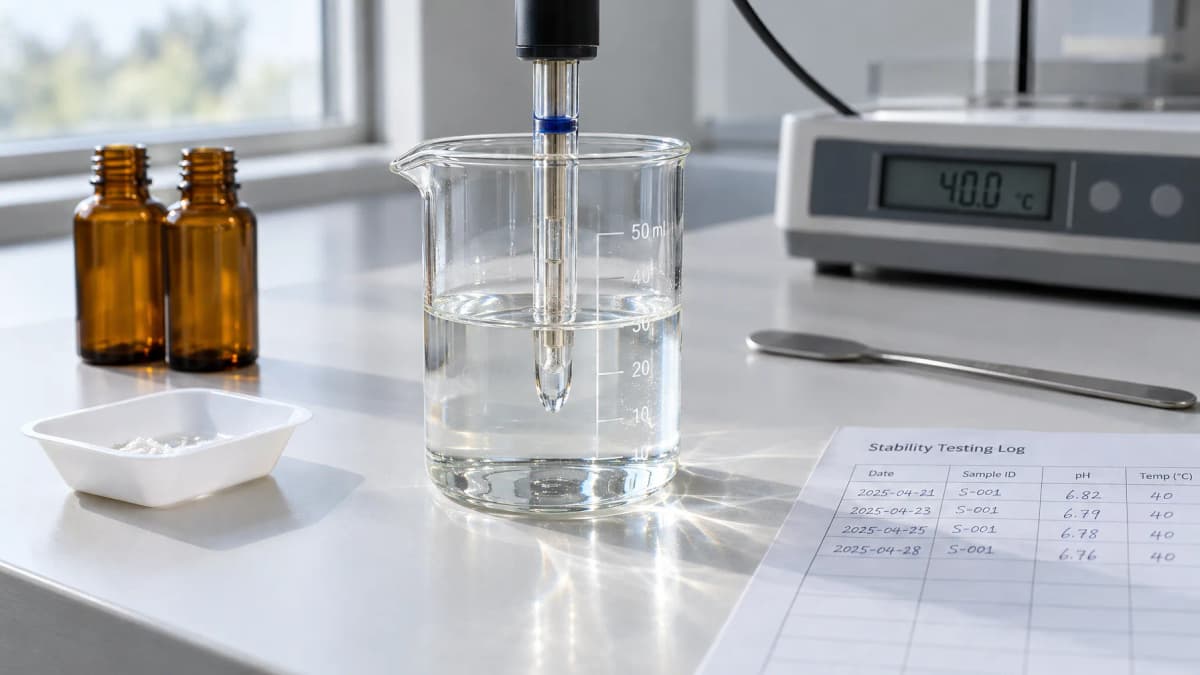
- Skipping stability testing at 40 °C for at least 4–12 weeks.
- Not checking Annex restrictions before scale-up.
A well-made single-hero serum at retail typically sits around £15–£35 for 30 ml, which gives you a sense of the cost ceiling the formula has to fit.
Where to go next
If you want to learn to formulate with confidence, our course walks through building a formula from the active outwards, step by step, with pH, stability and compliance covered. Beginners may also enjoy How to become a cosmetic chemist, and anti-ageing builders can see Anti-aging cream: a formula that actually works.