
Ingredients for sunscreen formulation fall into four groups: UV filters (organic such as avobenzone, octocrylene and triazines; inorganic such as zinc oxide and titanium dioxide, each capped by Annex VI of the UK Cosmetics Regulation), emulsifiers, photostabilisers and antioxidants, and film-formers. The goal is broad-spectrum protection that survives sunlight.
- Zinc oxide and titanium dioxide: maximum 25% as active substance (w/w of finished product), per the Annex VI list of permitted UV filters; nano forms carry extra conditions.
- Butyl methoxydibenzoylmethane (avobenzone): maximum 5% active substance; octocrylene: maximum 10% active substance (Annex VI).
- Typical formulation pH for emulsion sunscreens: roughly 5.5-7, a working range rather than a legal limit.
- Typical zinc oxide primary particle size in transparent grades: about 20-100 nm, a supplier-grade range that depends on whether the grade is nano or non-nano.
Here is the uncomfortable truth behind that white-cast, greasy, stinging SPF 50 you abandoned in a beach bag: the filter list is rarely the problem. Most failures come from how the filters sit next to each other, next to the emulsifier, and next to a stray iron ion or a cheap oil. Two formulas with identical filters can behave like different products after two hours in the sun.
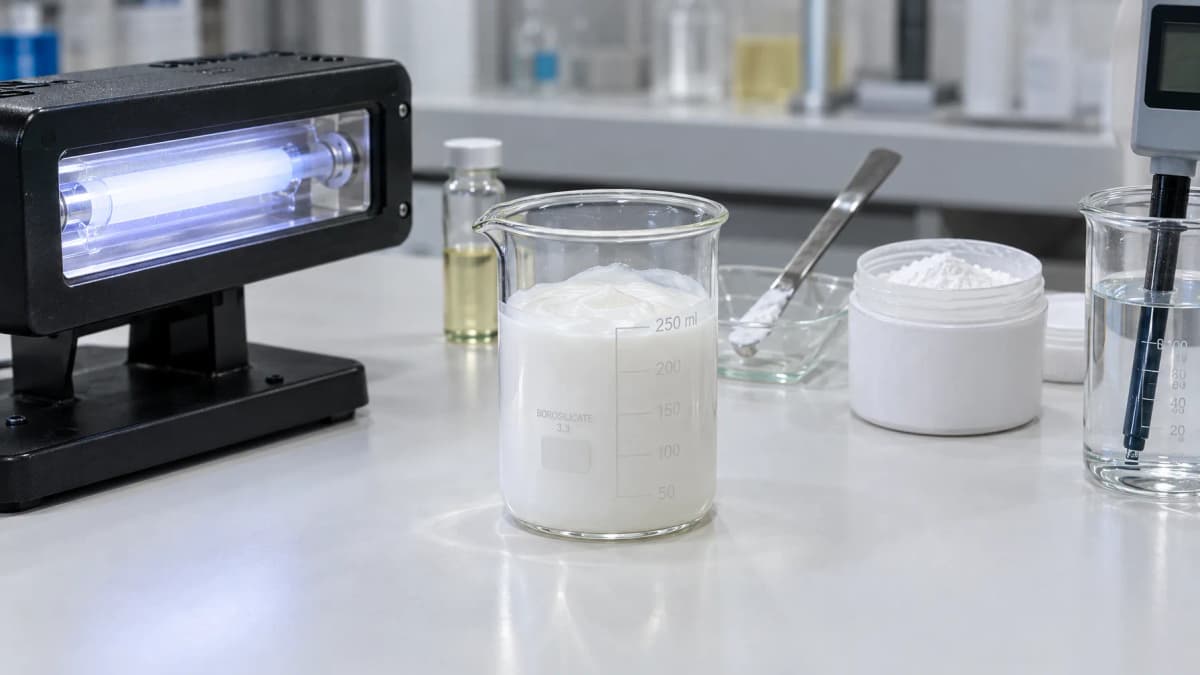
The Core Ingredients for Sunscreen Formulation: A Map Before the Details
Think of a sunscreen as a small architectural project. The filters are the walls, but the emulsion, the antioxidants and the film-formers decide whether the building stays standing. The legal ceiling for every filter is set by the permitted list in Annex VI of the UK Cosmetics Regulation. The same substances and their functions are indexed in the EU CosIng database. Being natural or edible does not put an ingredient on the list; only the list does. If you are unsure about a filter, check the current wording of the Annex before you commit to it.
Organic (chemical) filters
These are molecules that absorb UV photons and dissipate the energy as heat. Each covers a different slice of the spectrum:
- Butyl Methoxydibenzoylmethane: a strong UVA absorber, but notoriously photolabile.
- Octocrylene: a UVB absorber and the classic stabiliser of avobenzone.
- Bis-Ethylhexyloxyphenol Methoxyphenyl Triazine and Diethylamino Hydroxybenzoyl Hexyl Benzoate: modern, broad and highly photostable filters.
- Ethylhexyl Triazone: an efficient UVB filter, restricted by its own Annex VI limit.
Inorganic (mineral) filters
Zinc Oxide and Titanium Dioxide mainly absorb and scatter. Zinc oxide gives the broadest coverage into UVA; titanium dioxide leans toward UVB and short UVA. Both are limited by the Annex, and nanomaterials must additionally satisfy the nanomaterial provisions of Article 16, which include notification and labelling with the word [nano].
The supporting cast
Emulsifiers, oils and emollients (which dissolve crystalline filters), polymeric film-formers (for water resistance), antioxidants, chelating agents, preservatives and pH adjusters. In a sunscreen, none of these is decorative.
Chemical Compatibility: Avoiding Filter Degradation in Water-in-Oil Systems
Water-in-oil (W/O) emulsions are a favourite for water-resistant sunscreens: the continuous oil phase forms a hydrophobic film and dissolves oil-soluble filters nicely. But the same architecture concentrates risk. Avobenzone sits in an oil phase that may also contain oxidisable lipids, trace metals from pigments, or reactive fragrance components. The result can be yellowing, filter loss and a lower real-world SPF than the one measured on day one.
Why avobenzone is the diva
Avobenzone exists in keto and enol forms. Under UV it can shift to the keto form and break down into radical fragments. Formulators counter this in three ways:
- Pair it with a triplet quencher or stabiliser such as octocrylene, or with a purpose-designed photostabiliser.
- Choose the solvent carefully. Polar emollients tend to stabilise the enol form differently from non-polar oils, so the oil phase is part of the filter system.
- Keep metal ions away. Chelators protect against iron and other trace metals that can complex with the molecule and cause discolouration.
Emulsifier interactions
Emulsifiers are not neutral bystanders. Polyglyceryl-based and silicone W/O emulsifiers (for example PEG-10 Dimethicone or Polyglyceryl-4 Isostearate types) tolerate high filter loads reasonably well, but electrolyte level, HLB and the polarity of the oil phase all shift filter solubility. A crystalline filter that drops out of solution leaves patches with no protection. If you want to see how emulsifier choice shapes structure in the first place, our piece on emulsifiers and cream texture: what is actually happening inside your moisturizer covers the physical chemistry.
Preservation matters too: a sunscreen with a large water phase still needs a robust system, and a single preservative rarely covers every organism. We discuss why in preservation in cosmetics: why a single preservative won't save your formulation.
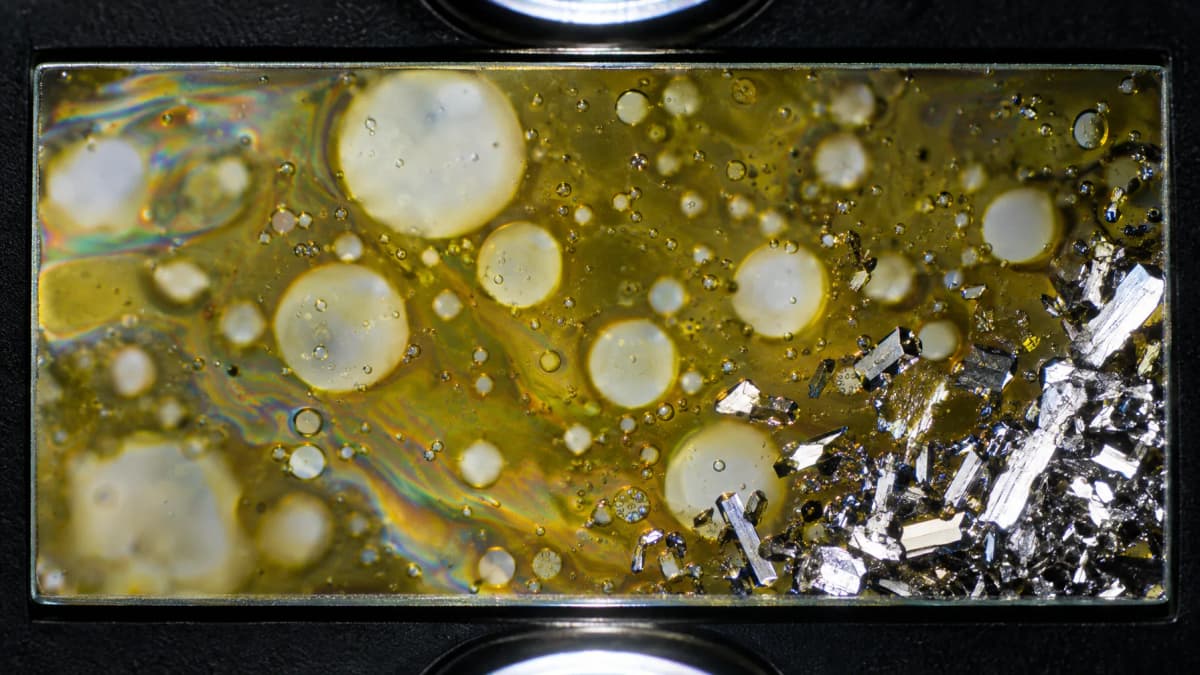
A quick compatibility table
| Filter pairing | What happens | Formulation response |
|---|---|---|
| Avobenzone + Octocrylene | Octocrylene helps accept excited-state energy and slows avobenzone loss | Classic pairing; verify with in-vitro irradiation testing |
| Avobenzone + mineral filter with uncoated surface | Metal surface can catalyse degradation and discolour | Use coated grades, add a chelator |
| Avobenzone + oxidisable oils | Radical chain reactions consume both | Choose stable emollients, add antioxidants |
| Triazine filter + polar emollient | Good solubility, strong photostability | Check recrystallisation at low temperature |
Limits for every pairing apply individually and are found in Annex VI; there is no pooled allowance for stacked filters, so each one must stay within its own ceiling.
The Role of Antioxidants in Extending Photostability of Active Ingredients
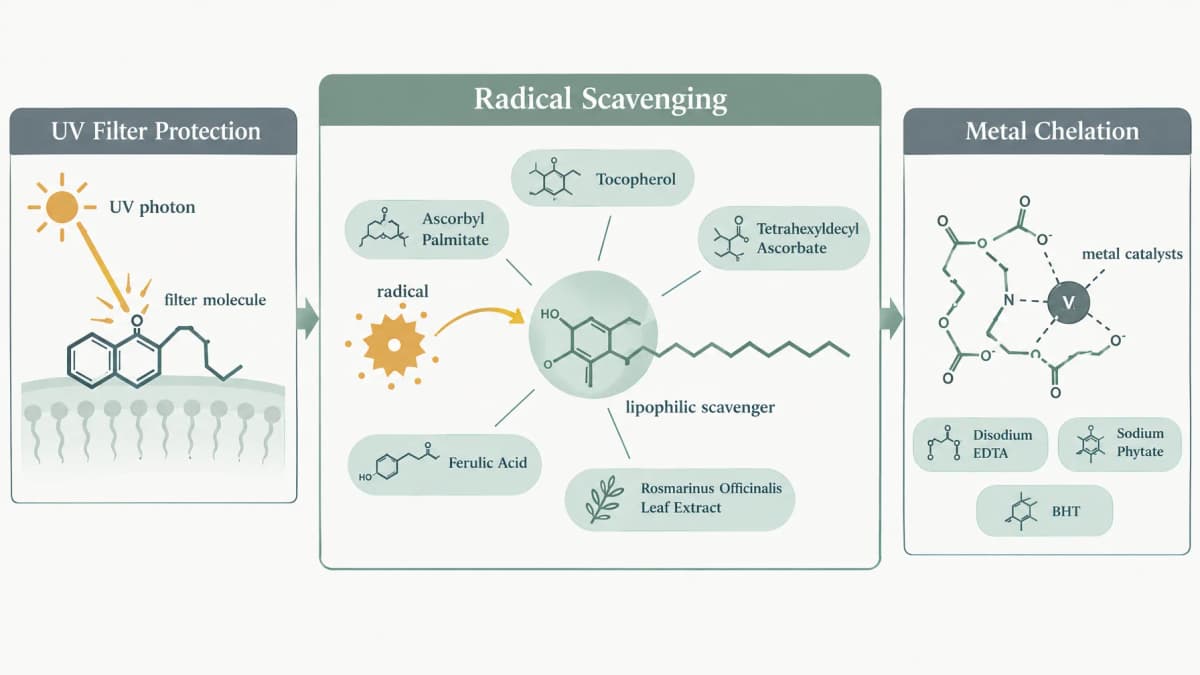
UV does not only excite filters; it also generates reactive oxygen species in the product film and on the skin. Antioxidants act as sacrificial guardians. They do not replace a photostable filter system, but they delay the oxidative chain reactions that bleach colour, create odour and eat filters.
Who does what
- Tocopherol (Vitamin E): a lipophilic radical scavenger that lives in the oil phase beside the filters.
- Ascorbyl Palmitate or Tetrahexyldecyl Ascorbate: oil-compatible vitamin C forms; they regenerate tocopherol in the presence of water-soluble partners.
- Ferulic Acid and Rosmarinus Officinalis Leaf Extract: plant antioxidants with additional colour and odour considerations.
- Disodium EDTA or Sodium Phytate: chelators; strictly not antioxidants, but they disable the metal catalysts that start the reactions.
- BHT: a cost-effective synthetic antioxidant, often used in technical systems.
Synergy, not stacking
The most effective antioxidant systems pair a lipophilic scavenger with a regenerating partner and a chelator. Adding five antioxidants at random produces a complicated INCI list, not a stronger system. Another trap: strongly coloured plant antioxidants can tint a pale mineral base. Match the antioxidant to the product aesthetic and stress-test it by exposing samples to light and heat, then measuring both filter content and colour drift.
The same oxidation logic explains why botanical oils spoil: our piece on linoleic oils and the price of their lightness shows why polyunsaturated oils are a poor foundation for a UV-exposed formula.
Particle Size Optimization for Zinc Oxide Dispersion and Transparency
Zinc oxide is a celebrity ingredient with a diva streak of its own. A broad-spectrum profile and an excellent safety record come with a catch: large particles scatter visible light and leave a white cast, while very small particles are more transparent but agglomerate and can raise nanomaterial labelling obligations. The legal ceiling is 25% as active substance in the Annex VI entry, but how a formula uses that room is a matter of dispersion engineering, not simple loading.
What particle size actually does
- Larger primary particles: stronger scattering, greater whiteness, typically better UVA attenuation per particle.
- Smaller particles: more transparent on skin, higher surface area, more demanding to wet and stabilise.
- Agglomerates: effectively behave as bigger particles, hurting both transparency and SPF uniformity.
Dispersion is half the formula
Most formulators buy pre-dispersed grades (zinc oxide in a cosmetic ester or silicone with a polymeric dispersant) rather than milling their own. The reasons are practical: high-shear milling, correct surface coating (for example Triethoxycaprylylsilane or Dimethicone) and wetting agent selection all decide whether the particles stay separate. Poorly dispersed zinc oxide may also interact with acidic ingredients or fatty acids and create soaps that thicken the emulsion over time.
If a nano grade is chosen, the finished product must meet the requirements for nanomaterials in Article 16, including the [nano] label wording. Verify the current status of each specific grade against the current regulatory text before you use it.
Practical checklist for a mineral SPF
- Choose a coated, pre-dispersed grade matched to your oil phase polarity.
- Add the dispersion early under low shear to avoid breaking the coating.
- Keep pH in the neutral range, since zinc oxide dissolves slowly in acid.
- Check viscosity and particle sedimentation after four to twelve weeks at elevated temperature.
- Measure SPF in vitro and, for claims, by the appropriate in vivo method.
Putting It Together: Synergy Over Shopping Lists
A good sunscreen is a system. Hybrid formulas, combining a photostable organic filter set with a modest percentage of zinc oxide, can deliver broad UVA and UVB coverage while allowing a lighter feel than a mineral-only formula. The mineral filter adds a physical-scattering contribution, while the organic filters supply efficient absorbance without huge pigment loads.
Cost and market reality
On UK shelves a well-made SPF 50 face product typically sits around £15-£25, and the price gap between a basic and a premium product is often paid for in modern filters, quality dispersions and stability work you cannot see. A cheap formula is not necessarily unsafe, but it may have less margin for photostability and sensory polish.
Claims need evidence
Efficacy claims, SPF numbers and the UVA logo all require testing, and the product must carry a safety assessment under the UK regulation. Our guide to non-comedogenic claims on a UK label shows the same logic: a claim is only as good as the evidence behind it.
If you want to move from reading about filters to actually building a stable emulsion, there is a hands-on route; start with how to become a cosmetic chemist: the journey from curiosity to professional formulation, and if you want structured practice, we run a formulation course where stability testing is part of the work.
FAQ
What are the main ingredients for sunscreen formulation?
UV filters (organic such as avobenzone, octocrylene and triazines; mineral such as zinc oxide and titanium dioxide), an emulsifier system, emollients that dissolve the filters, antioxidants and chelators, film-formers and a preservative system. All filters must be on the permitted list in Annex VI of the UK Cosmetics Regulation.
Which UV filters can be combined to improve photostability?
Avobenzone is commonly paired with octocrylene or a dedicated photostabiliser, and modern triazine filters are used for their built-in photostability. Always confirm each filter and its maximum concentration in Annex VI, and prove the combination by irradiation testing.
Why does zinc oxide leave a white cast, and can it be reduced?
Larger particles and agglomerates scatter visible light. Using well-dispersed, coated grades with small primary particles improves transparency, but nano grades trigger additional requirements under Article 16, so check the current rules.