Mineral vs chemical sunscreen formulation comes down to mechanism and matrix: mineral filters (zinc oxide, titanium dioxide) are insoluble particles that mostly absorb and scatter UV, while chemical filters are dissolved organic molecules that absorb UV. In the UK, titanium dioxide and zinc oxide are each typically capped at 25% (as the nanoform, a lower, specific limit may apply), and every filter must be on the Annex VI list. Hybrids combine both, at the price of texture and stability trade-offs.
- Annex VI of the UK Cosmetics Regulation lists permitted UV filters, each with its own maximum concentration, for example 25% for zinc oxide and titanium dioxide (товарное сырьё, mass fraction in the finished product, to be verified against the current listing) UK Cosmetics Regulation, Annex VI.
- Typical hybrid SPF 30 target: roughly 8-12% zinc oxide plus 3-4 organic filters at a combined 10-15% (товарное сырьё), with the exact figures checked against Annex VI.
- Target emulsion pH for stability: about 5.5-7.0.
- Photostability testing is usually done after irradiation of about 10-25 J/cm² UVA, with the loss of absorbance tracked.
Why does the cream that looked perfect on the bench go grainy after two weeks in a warm bathroom, and why is the SPF measured afterwards lower than the formula promised? The answer is rarely the filters themselves. It is what happens when a dense, charged powder meets a dissolved organic system.
Rheological Conflicts: How Zinc Oxide Disrupts Polymer Networks in Chemical Filters
In a pure chemical sunscreen, the oil phase is a solution: filters such as ethylhexyl triazone or butyl methoxydibenzoylmethane are dissolved in emollients and thickened by a polymer network. Add 10% zinc oxide and you add a high-surface-area solid that competes with that network for space and for polymer chains. This is the heart of mineral vs chemical sunscreen formulation in a single matrix. For the fundamentals of emulsion structure, see Emulsifiers and cream texture: what is actually happening inside your moisturizer.
Why viscosity drifts
Uncoated or poorly coated zinc oxide releases Zn²⁺ ions at the particle surface. These can bridge anionic polymers such as acrylates copolymer or carbomer, collapsing the network and thinning the cream, or gelling it into a paste. Typical symptoms:
- Viscosity drop of 20-40% within four weeks at 40 °C
- Grittiness from flocculated particles
- Phase separation when polar organic filters (for example, diethylamino hydroxybenzoyl hexyl benzoate) migrate to the particle surface
Practical fixes
Choose a coated grade (triethoxycaprylylsilane or dimethicone coatings reduce ion release), pre-disperse the powder in the oil phase with a polyhydroxystearate dispersant, and favour non-ionic or nonpolar rheology modifiers over carbomer. Raising the pH to 6.5-7 also limits zinc dissolution. Always re-check viscosity after three freeze-thaw cycles.
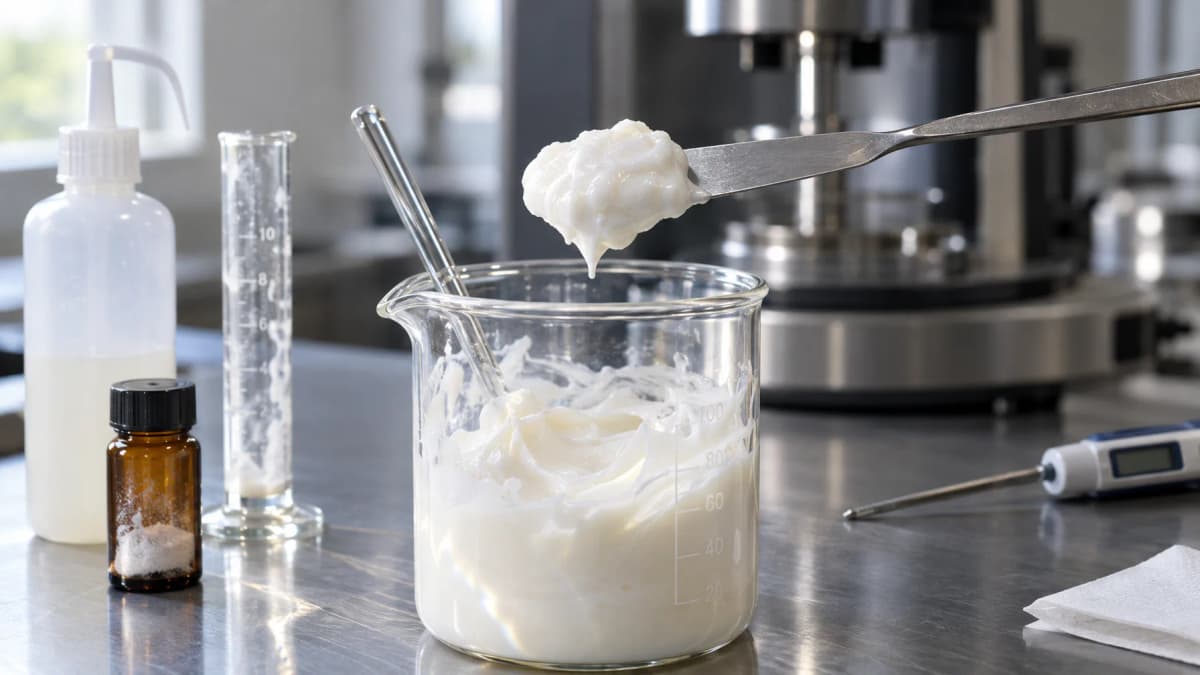
Photostability Synergies vs. Degradation Risks in Hybrid UV Screens
Photostability is where hybrids can shine or fail. Butyl methoxydibenzoylmethane (avobenzone) is the classic example: in a poor solvent it undergoes keto-enol photodegradation, losing UVA absorbance. Stabilisers such as octocrylene or diethylhexyl syringylidenemalonate help. Reviews of filter photostability are available in the peer-reviewed literature PubMed search: avobenzone photostability.
Where zinc oxide helps
Zinc oxide absorbs in the UVA-I region and scatters light, which lowers the photon dose reaching the dissolved filters. That can slow degradation, so a hybrid can stay more stable than the same organic filters alone.
Where it hurts
Zinc oxide and titanium dioxide are photocatalysts. Uncoated particles can generate reactive oxygen species that attack avobenzone and the oils. Coating with silica, alumina or silanes is the standard answer, and the coating itself must be compatible with the system. Irradiated stability testing is the only reliable check.
| Feature | Mineral | Chemical | Hybrid |
|---|---|---|---|
| Mechanism | Absorb and scatter | Absorb | Both |
| Rheology risk | Particle flocculation | Low | Highest |
| Photostability | Coating dependent | Filter dependent | Synergy or ROS risk |
| White cast | High | None | Moderate |
| Indicative retail price (50 ml) | £12-£25 | £8-£20 | £15-£30 |
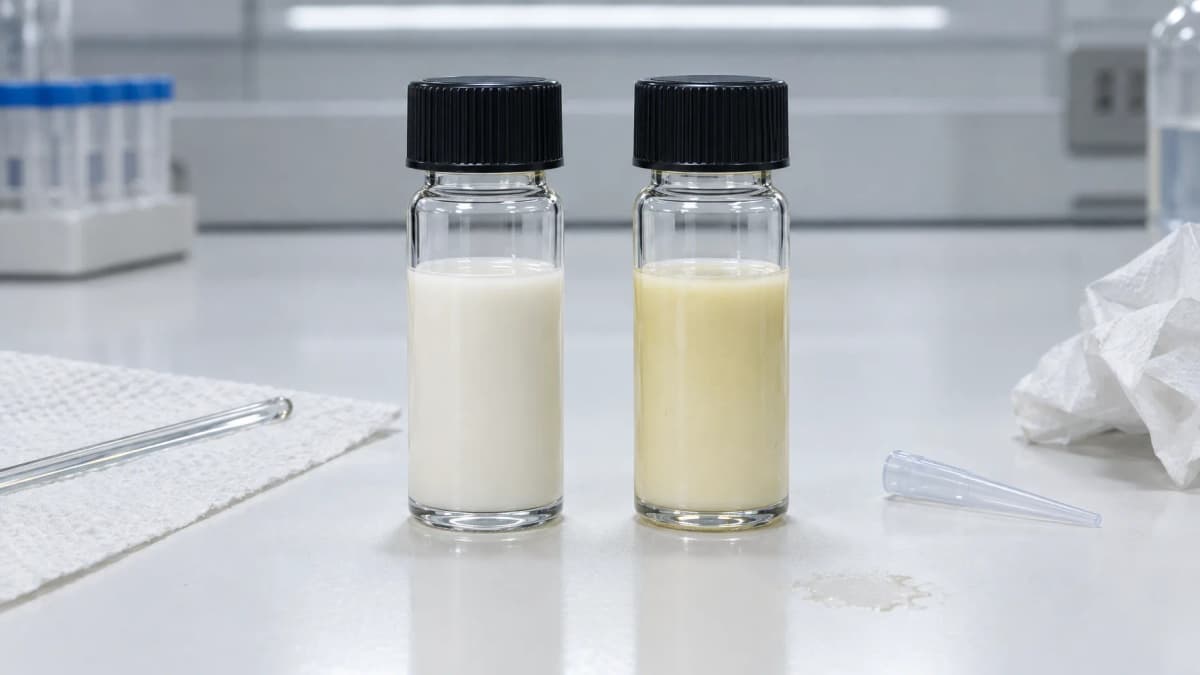
The White Cast Paradox: Surface Modification Strategies for Mineral-Chemical Blends
White cast is physics: particles near 200-300 nm scatter visible light most strongly. Shrinking them reduces cast but raises regulatory and stability questions, because nano-form filters carry specific conditions in the UK and EU lists, so check the entry before choosing a grade.
Strategies that work
- Use the organic filters to carry more of the SPF so the zinc oxide level can drop to 5-8% (товарное сырьё).
- Match refractive index with high-RI emollients such as C12-15 alkyl benzoate.
- Use hydrophobic coatings so the particles disperse evenly and do not agglomerate into visible clusters.
- Add tinted iron oxides for deeper skin tones.
The trade-off
Better dispersion lowers cast and increases photocatalytic surface area, so coating quality is more critical, not less. For wider formulation context, read Sunscreen products: a complete guide for formulators — why DIY SPF doesn't work.
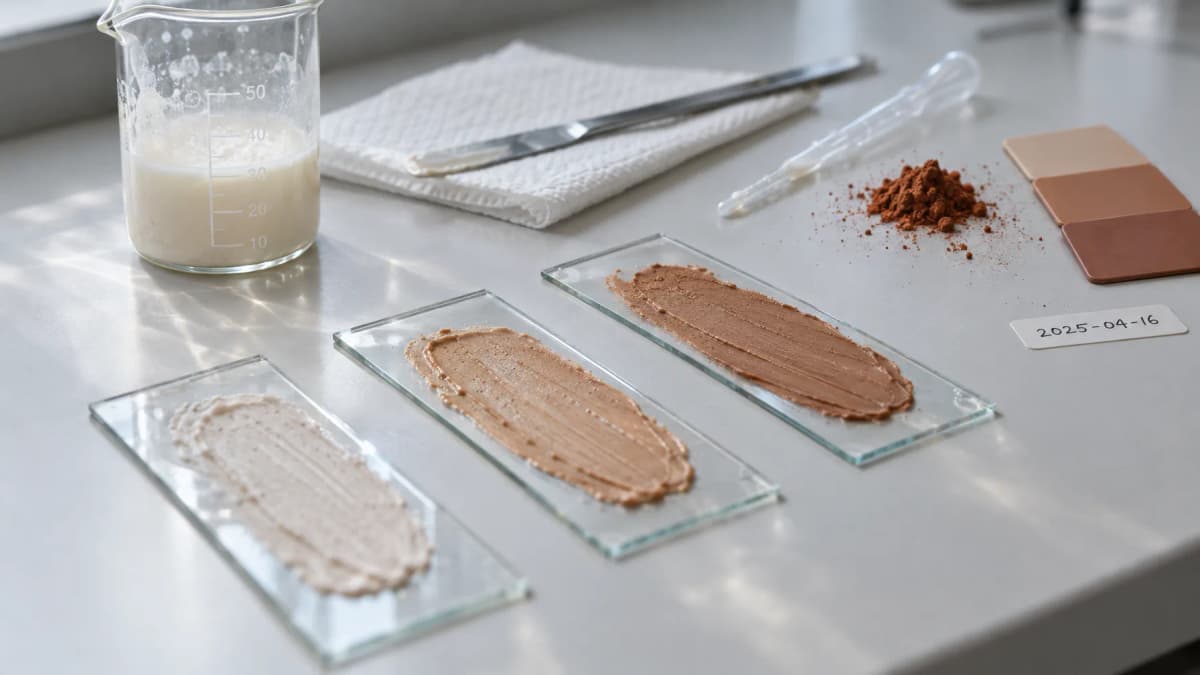
A Bench Checklist for Hybrid Systems
- Confirm every filter and its maximum on the UK list before you design the blend.
- Select coated mineral grades and disperse them first.
- Measure viscosity at 24 h, 4 weeks (40 °C) and after freeze-thaw.
- Run irradiated absorbance tests for UVA stability.
- Verify SPF and UVA protection with accredited in vivo and in vitro methods.
If you want to learn to build these systems yourself, we have a course on formulation. A good starting point is How to become a cosmetic chemist: the journey from curiosity to professional formulation.