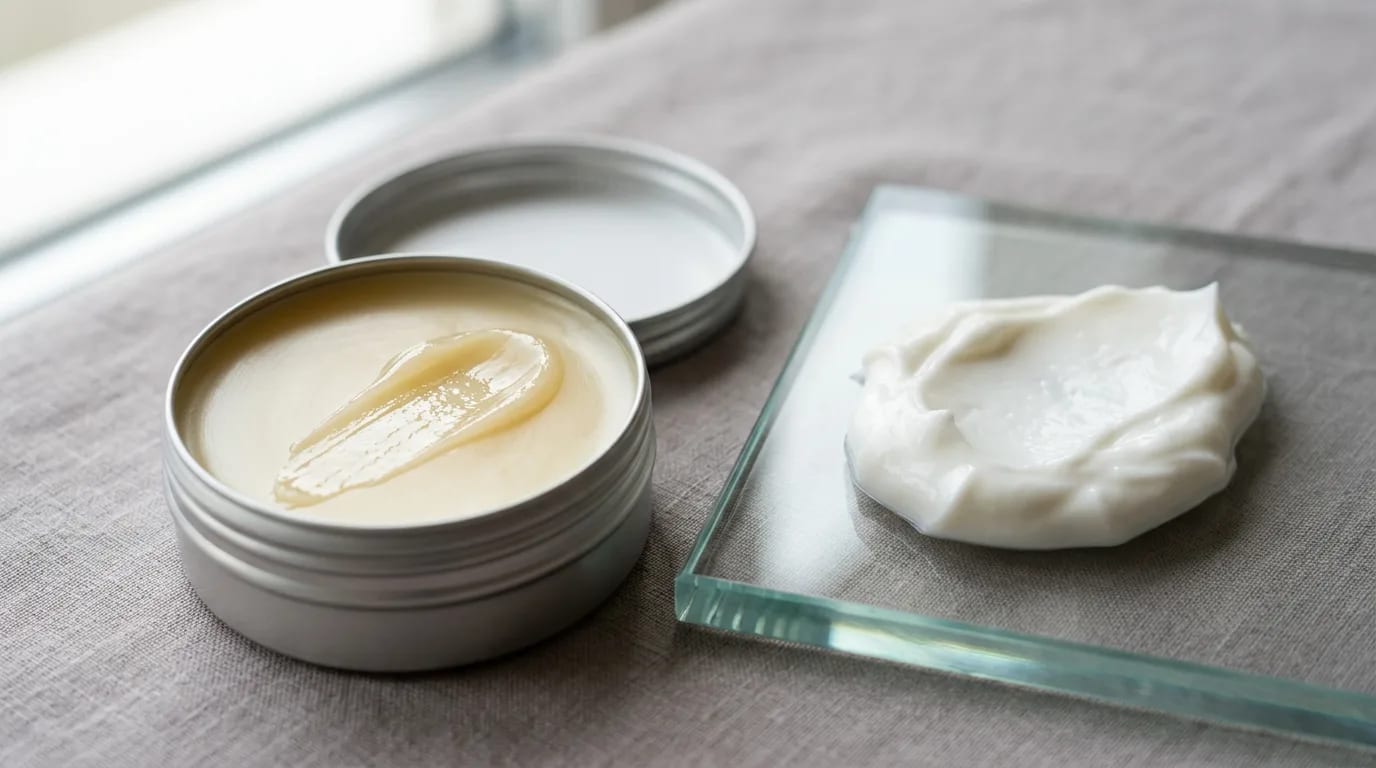
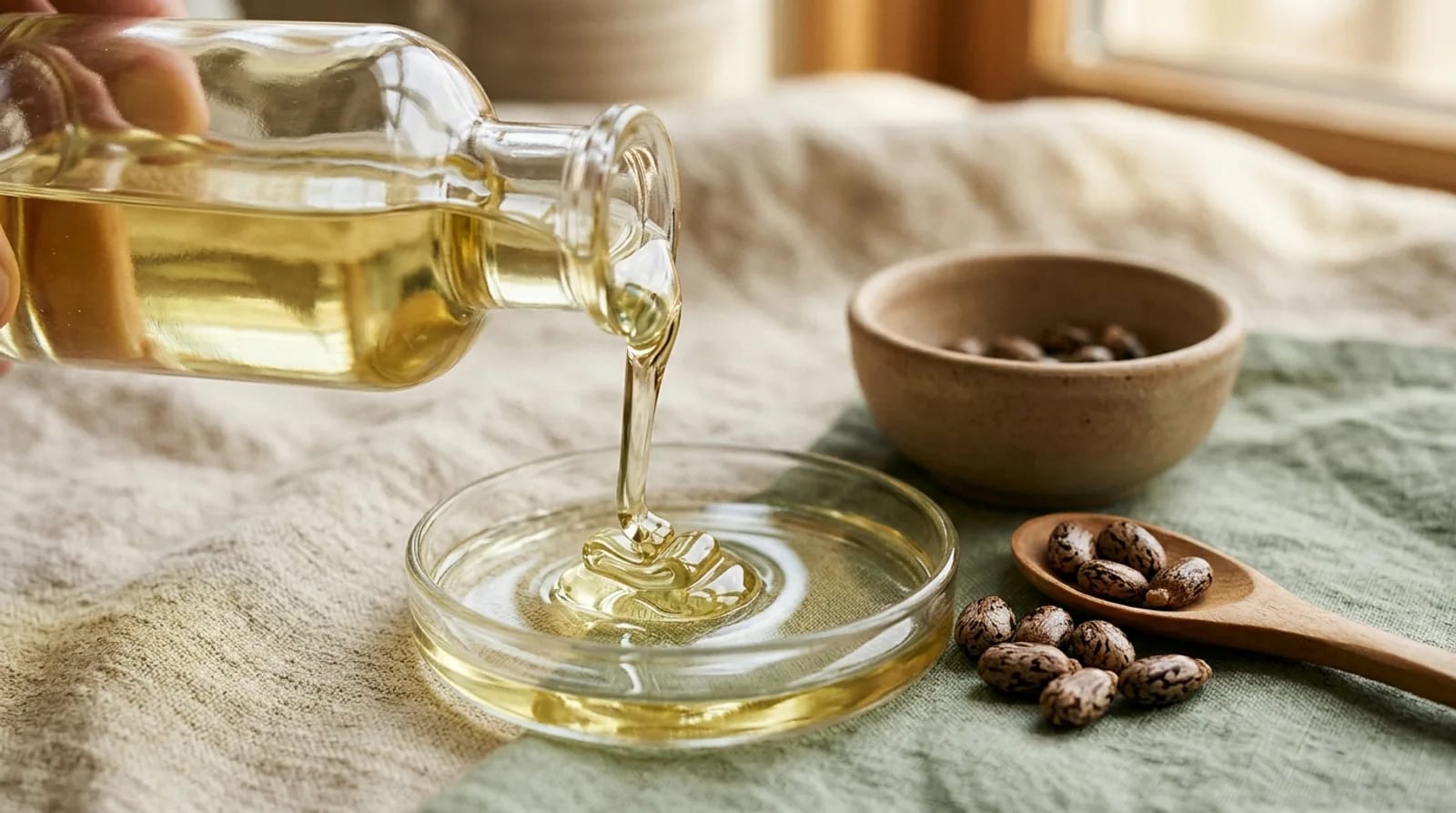
When a beginner formulator first faces the question facial oil — which one to choose, they discover not just a long list of vegetable oils, but an entire system of chemical variables: fatty acid profile, iodine value, oxidation rate, comedogenic potential, and the ability to integrate into the lipid barrier. Choosing "by eye" or based on a pretty bottle doesn't work here. The right oil is a precise match between molecular structure and the needs of specific skin and the goals of the cream formula. In this article, the Oksana Walker online school "Walker Formulation Academy" analyzes facial oils from the perspective of cosmetic chemistry: what happens at the molecular level, why one oil dries out oily skin while another triggers comedones even in dry skin, and how to build a formulation consciously.
Fatty acid profile: the main criterion when choosing a facial oil

Vegetable oil is not a monolith. It is a mixture of triglycerides in which glycerol is bonded to three fatty acids. It is the ratio of these acids that determines everything: texture, absorption rate, oxidative stability, and biological effect on the skin.
Saturated fatty acids: structure and stability
Oils with a high content of saturated fatty acids — palmitic (C16:0) and stearic (C18:0) — are characterized by high oxidative stability and a long shelf life. Palmitic acid is identical to that found in human sebum, which is why oils with a high proportion of it (coconut, shea, palm) are well-tolerated by skin with a compromised barrier. However, saturated acids create dense, occlusive films — this is a plus for dry and mature skin, but a risk for acne-prone skin.
Monounsaturated acids: a balance between nourishment and lightness
Oleic acid (C18:1, omega-9) is the dominant component of olive, avocado, apricot, and almond oils. It penetrates the stratum corneum well, nourishing and softening it, but at high concentrations, it can disrupt the barrier function in people with genetically low levels of linoleic acid in their sebum — which is typical for acne-prone skin. Oils with a balance of oleic and linoleic acids (jojoba oil, which technically contains liquid wax, and macadamia oil) are considered the most versatile.
Polyunsaturated acids: activity and instability
Linoleic (C18:2, omega-6) and alpha-linolenic (C18:3, omega-3) acids are functional actives. Linoleic acid is a component of skin ceramides, regulates transepidermal water loss, and reduces inflammation. Oils with a high content of it — rosehip, raspberry, blueberry, hemp, cucumber — are particularly valuable for inflamed and sensitive skin. The downside: high unsaturation means rapid oxidation. Such oils require antioxidant protection in the cream formula (tocopherol, rosemary extract) and a short shelf life for the finished product. Read more about how climate and growing conditions affect the fatty acid composition of oils in the article How climate affects the composition of fatty acids and essential oils in plants.
Oil comedogenicity: myths and real chemistry

The comedogenicity scale (0–5) is one of the most frequently cited and, at the same time, most misunderstood tools in cosmetic chemistry. It is important to understand its limitations before making formulation decisions.
Where the comedogenicity rating comes from
Classic data were obtained in rabbit ear assays — a model that has a weak correlation with the reaction of human facial skin. The rating also depends on concentration: an oil that is comedogenic in its pure form may be safe when used at 2–5% in a cream formula. Coconut oil has a rating of 4, but at a concentration of up to 5% in a light emulsion for normal skin, it rarely causes problems. Context is always more important than a table.
Practical classification for the formulator
- Low risk (0–1): jojoba oil (liquid wax, does not oxidize), hemp, rosehip, blueberry, high-oleic safflower — suitable for oily and acne-prone skin
- Medium risk (2–3): almond, apricot, avocado, shea butter — good for normal and combination skin at moderate concentrations
- High risk (4–5): coconut, wheat germ oil, flaxseed — best used in small quantities or avoided on the face for those prone to acne
When creating anhydrous facial products, the comedogenicity of oils becomes an especially critical parameter. Read more about this class of products in the article Anhydrous products: A complete guide for beginners.
Facial oil — how to choose for a specific skin type
The theory of fatty acids and comedogenicity only makes sense in the context of real skin types. Below are not just recommendations, but the chemical logic behind each choice.
Dry and dehydrated skin
Dry skin experiences a lipid deficiency in the stratum corneum and high transepidermal water loss (TEWL). Here, you need oils that replenish intercellular lipids and create an occlusive barrier. The optimal choice:
- Shea butter (high content of stearic acid and unsaponifiable fractions — triterpenes, phytosterols)
- Avocado oil (oleic acid + sterols, deeply nourishing)
- Babassu oil (lauric acid, light texture with a nourishing effect)
- Marula oil (high oleic acid, good biocompatibility)
For mature dry skin, it makes sense to add rosehip oil (retinol precursors, linoleic acid) at a concentration of 5–15% to the base oil.
Oily and acne-prone skin
The paradox: oily skin often has a deficiency of linoleic acid in the sebum with an excess of oleic acid. This disrupts the barrier function and triggers inflammation. The task of the oil is to replenish linoleic acid without clogging pores. Priority:
- Hemp seed oil (omega-6 to omega-3 ratio close to 3:1, ideal for inflamed skin)
- Rosehip oil (high linoleic + trans-retinoic acid)
- Blueberry seed oil (anthocyanins + linoleic acid)
- Jojoba oil (liquid wax, mimics sebum, regulates sebum production)
Sensitive and reactive skin
Here, oils with anti-inflammatory components and minimal irritation potential are important. Borage oil and evening primrose oil contain gamma-linolenic acid (GLA, C18:3 omega-6), which suppresses the synthesis of pro-inflammatory prostaglandins. They are used in a concentration of 5–20% in a blend with more stable base oils. Sweet almond oil, with its neutral profile and low allergenicity, often serves as a base for sensitive skin.
Oxidative stability and formula protection

One of the main mistakes of novice formulators is ignoring the oxidation rate of oils. Oxidized oil does not just lose its effectiveness: it becomes a source of free radicals and can cause skin irritation.
Iodine value and stability prediction
The iodine value (IV) reflects the degree of unsaturation of an oil: the higher the value, the faster the oxidation. Oils with an IV above 130 (flaxseed — IV 170–200, borage oil — IV ~145) require special protection. Oils with an IV below 80 (coconut — IV ~10, shea butter — IV ~55) are stable without additional antioxidants.
Antioxidant protection in the formulation
Standard approach: adding tocopherol (vitamin E) at a concentration of 0.1–0.5% to oils with a high degree of unsaturation. Important: tocopherol at concentrations above 0.5% can act as a pro-oxidant. Rosemary extract (ROE, 0.02–0.1%) synergistically enhances protection. For oils with GLA (borage, evening primrose), storage in a refrigerator and use within 6 months after opening is recommended. Understanding the texture and rheology of oil systems is closely linked to the topic Tribology, gums, and gelling agents — how an oil behaves during application determines the consumer's perception of the product.
Oil in a formula: concentrations, combinations, and technological solutions
Understanding the individual properties of oils is only half the work. A professional formulator thinks about how oils interact with each other and with the other components of the system.
The principle of oil blends
Combining oils allows you to achieve an optimal fatty acid profile that is unattainable with a single oil. The classic approach is the "rule of three": base oil (50–70%), medium oil (20–30%), active oil (5–15%). For example, for oily skin: jojoba oil (60%) + hemp oil (25%) + rosehip oil (15%). For dry, mature skin: avocado oil (50%) + marula oil (30%) + borage oil (20%).
pH and oils: an unobvious connection
Vegetable oils technically do not have a pH (they are anhydrous), but in an emulsion, the water phase affects the hydrolysis of triglycerides. An acidic environment (pH 4.5–5.5) slows down hydrolysis and extends the stability of the oil components of the emulsion. This is especially important when working with unstable oils in creams and lotions. Read more about the role of pH in cosmetic formulas in the article pH in cosmetics: a basic guide for formulators.
Sample formula for a light oil serum for oily skin
- Jojoba oil — 55%
- Hemp oil — 25%
- Rosehip oil — 12%
- Squalane (olive) — 5%
- Tocopherol (vitamin E) — 0.3%
- Rosemary extract ROE — 0.05%
- Lavender essential oil (optional) — 0.5%
This formula provides a high linoleic acid content (~40%), antioxidant protection, and a neutral comedogenic profile. Shelf life with proper storage is up to 6 months.

Common mistakes when choosing a facial oil and how to avoid them
Even experienced home formulators repeat the same mistakes when working with oils. Knowing typical miscalculations saves time, money, and the skin of testers.
- Choosing "by popularity": argan oil is popular, but its high oleic acid content (~45%) makes it suboptimal for acne-prone skin, despite marketing claims
- Ignoring raw material quality: cold-pressed rosehip oil and refined rosehip oil are different products with different fatty acid profiles and activity levels.
- Using 100% oil as "skincare": pure oil does not moisturize — it only retains moisture. Without pre-hydrating the skin, the effect will be minimal.
- Mixing incompatible oils without antioxidants: adding flaxseed oil to any mixture without protection drastically reduces the shelf life of the entire formula.
- Overestimating comedogenicity ratings: a chart is a guideline, not a verdict. Individual skin reactions are always more important than averaged data.
If you are just starting your journey in cosmetic chemistry, the article How to choose oils and butters for your skin type: a guide for beginner formulators will provide a practical foundation for your first experiments. And for understanding the behavior of solid oils and butters in formulas, the article Butter polymorphism: why cocoa butter is temperamental and how to work with it is indispensable.
Frequently Asked Questions
Can I apply pure oil to my face instead of a cream?
Technically, yes, but with caveats. Oil creates a lipid barrier and prevents moisture loss, but it is not a moisturizer in itself: it contains no water or hygroscopic substances. For maximum effect, apply oil to slightly damp skin or over a light hydrating toner — this way, the oil will "seal" the moisture inside. For oily skin, a light oil serum with linoleates can replace a day cream, but for dry and mature skin, it is better to use oil as the final step of your skincare routine or as part of an emulsion.
Why does the choice of facial oil depend not only on skin type but also on the season?
In winter, the skin's barrier function decreases due to low humidity and temperature fluctuations — during this period, it makes sense to increase the proportion of oils with saturated and monounsaturated fatty acids (shea, avocado, marula), which create a denser protective film. In summer, especially in hot climates, the skin produces more sebum, and light oils with linoleic acid (hemp, jojoba) handle the task better without weighing down the texture or provoking clogged pores.
How to check the quality of vegetable oil before adding it to a formula?
Basic organoleptic tests: color (unrefined oils have a characteristic hue — green for hemp, golden for argan), smell (a rancid, sharp odor is a sign of oxidation), texture (the oil should not separate or have sediment at room temperature, unless that is normal for that specific type). For precise verification, use the Free Fatty Acid (FFA) value and Peroxide Value (PV): an FFA above 1% and a PV above 10 meq/kg signal low quality or the onset of oxidation. Buy raw materials from suppliers who provide a Certificate of Analysis (CoA).
Choosing a facial oil is not about intuition or marketing, but chemical logic. By knowing the fatty acid profile, iodine value, comedogenic potential, and stabilization rules, you create products that perform predictably and safely. This exact approach—from molecule to finished cream formula—is what distinguishes a professional formulator from an amateur acting by guesswork. If you want to build a systematic understanding of cosmetic chemistry and learn to formulate consciously, the Walker Formulation Academy Club is a community and knowledge base where every step is backed by chemistry, not myths. Learn more in our courses and start creating cosmetics you can be proud of.