Articles in the "Ingredients" category
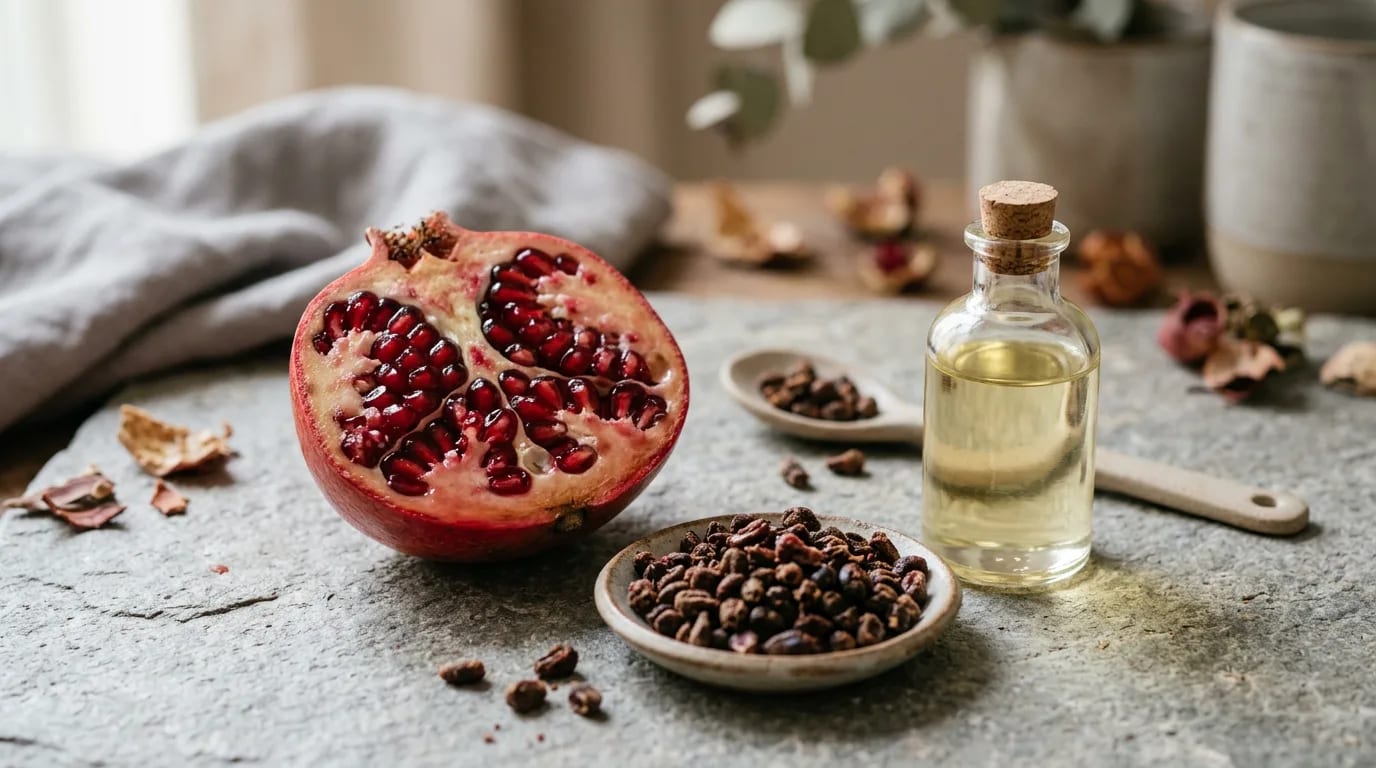
Pomegranate seed oil: is it worth the price? The bottle is 30 ml. It is dark glass, it is priced in pounds like a decent bottle of gin, and the reason you have not pressed buy yet is that everything you have read about it says the same three words: rich in punicic acid. Not what punicic acid does. N
Is the erucic acid in British rapeseed oil a problem? There is a bottle of cold-pressed British rapeseed oil in the kitchen, the golden kind from a farm shop or the supermarket's own, and it costs a fraction of what the cosmetic suppliers want for almond. Every spring you watch whole counties of the
Is jojoba oil good for oily skin? What the chemistry says You have oily skin, or skin that breaks out, and everything you read says the same thing: jojoba is the one oil that is safe, because it is "just like your skin's own sebum". Your skin recognises it. It balances oil production. It will not cl
How to turn a body oil into a balm without beeswax You have a body oil that works. Now you want it as a balm — something solid in a tin that softens under a thumb and does not leak into a handbag. Every recipe you find says the same thing: melt in some beeswax. Maybe you would rather not. Maybe the
Why one oil feels light and another feels heavy on the skin Two bottles on the bench. The supplier calls one of them light and dry-feel and the other one rich and cushioning. You put a drop of the "light" one on your cheek and half an hour later it is still sitting there with a shine on it, while th
Why does my cream feel greasy, and what to change first You made a cream. It goes on beautifully. Ten minutes later your face has a shine on it, and by the time you have finished the washing-up your fringe is sticking to your forehead. So you do the obvious thing: you cut the oil phase from 12% to 6
Can you call your oil non-comedogenic on a UK label? You have the chart open on your phone. Somebody's comedogenic ratings list, the one that gets reposted every few weeks, and next to your oil there is a 0 . Which is exactly what you were hoping for, because the labels are being printed this week a
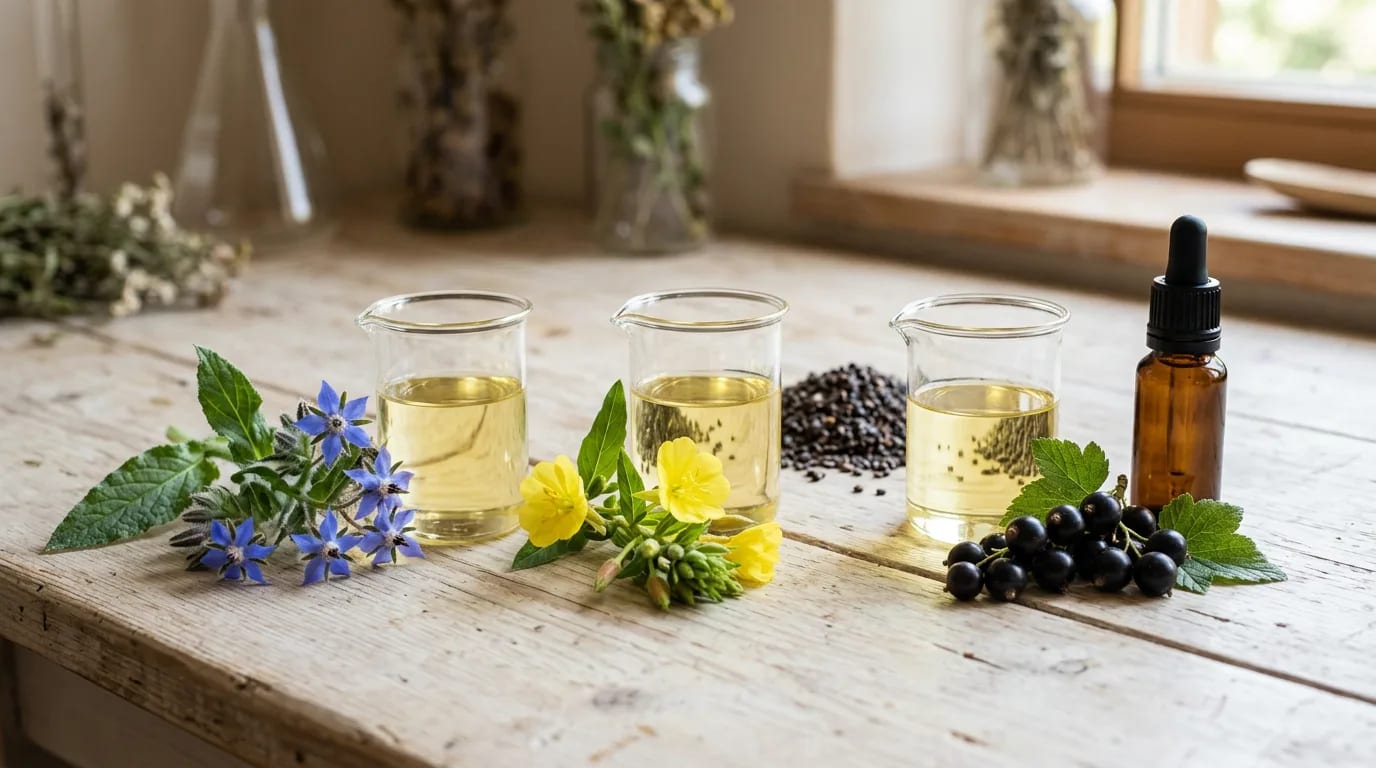
The oils you pay for by the milligram Borage, evening primrose and blackcurrant seed oil sit at the expensive end of the price list, and the reason they are there is one fatty acid: gamma-linolenic acid, GLA. This article evaluates the three oils primarily by their GLA content, their cost and the ox
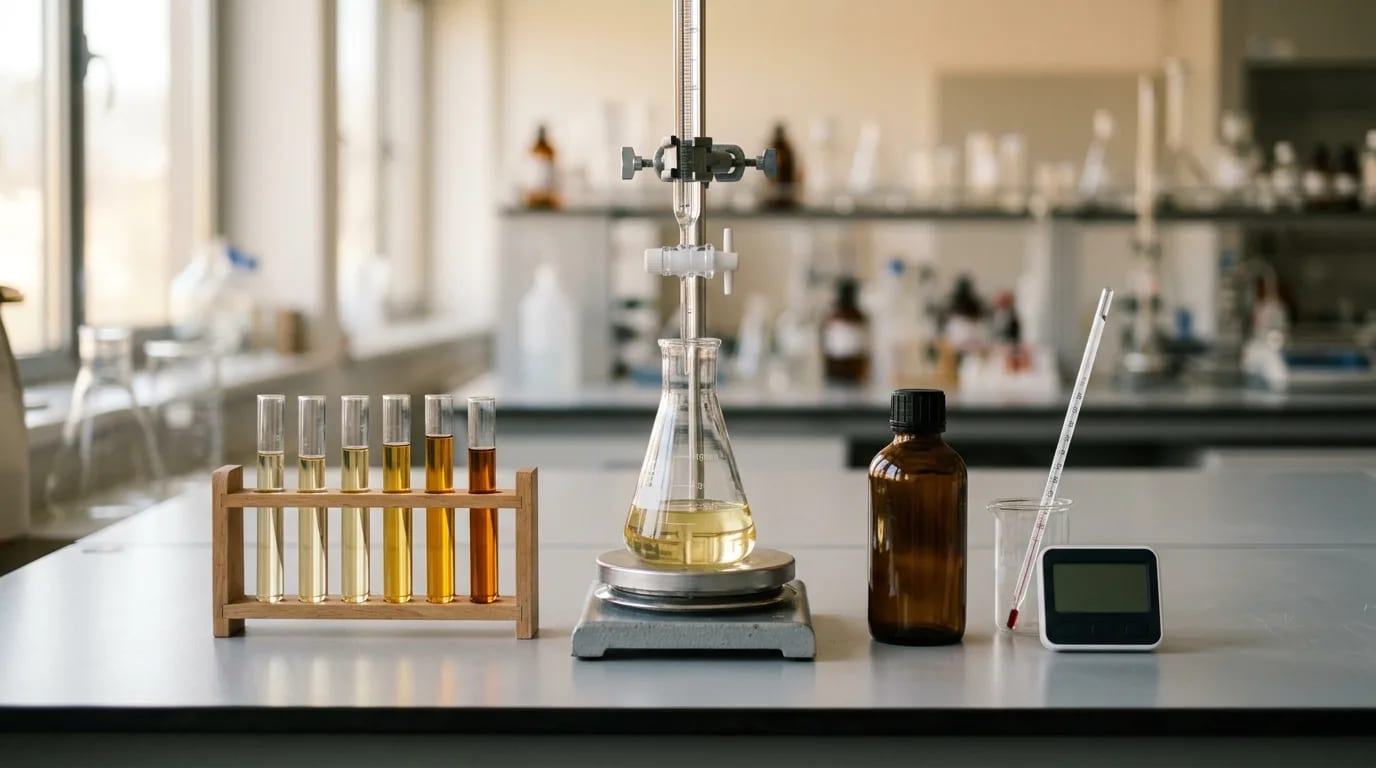
Predicting rancidity instead of waiting for it Every formulator has smelled it: the odour, which in our experience people describe as crayon-like or cardboard-like, that means a facial oil has gone off, usually noticed in a sample that was supposed to prove the product would last. The smell is the e
The light oils, and what they cost you Sunflower, grapeseed, safflower, soybean and maize oil are the oils formulators describe as light. In our formulators' experience they are what goes into a facial oil "for combination skin", a fast-absorbing body oil or a serum that must not feel greasy, and th
The oil you reach for without thinking Every formulator has a default oil: the one that goes into a first prototype before any thought has been given to it. In our formulators' experience that oil is usually oleic. Olive oil, high-oleic sunflower, hazelnut, avocado and, on the border of the group, a
Why coconut oil refuses to behave like other oils A formulator who has learned the trade on sunflower and olive oil meets coconut oil and finds that the rules have changed. The jar that was a clear liquid in the warm kitchen is a white block on the workshop shelf. A soap recipe built around it behav
 Walker Formulation Academycosmetic chemistry