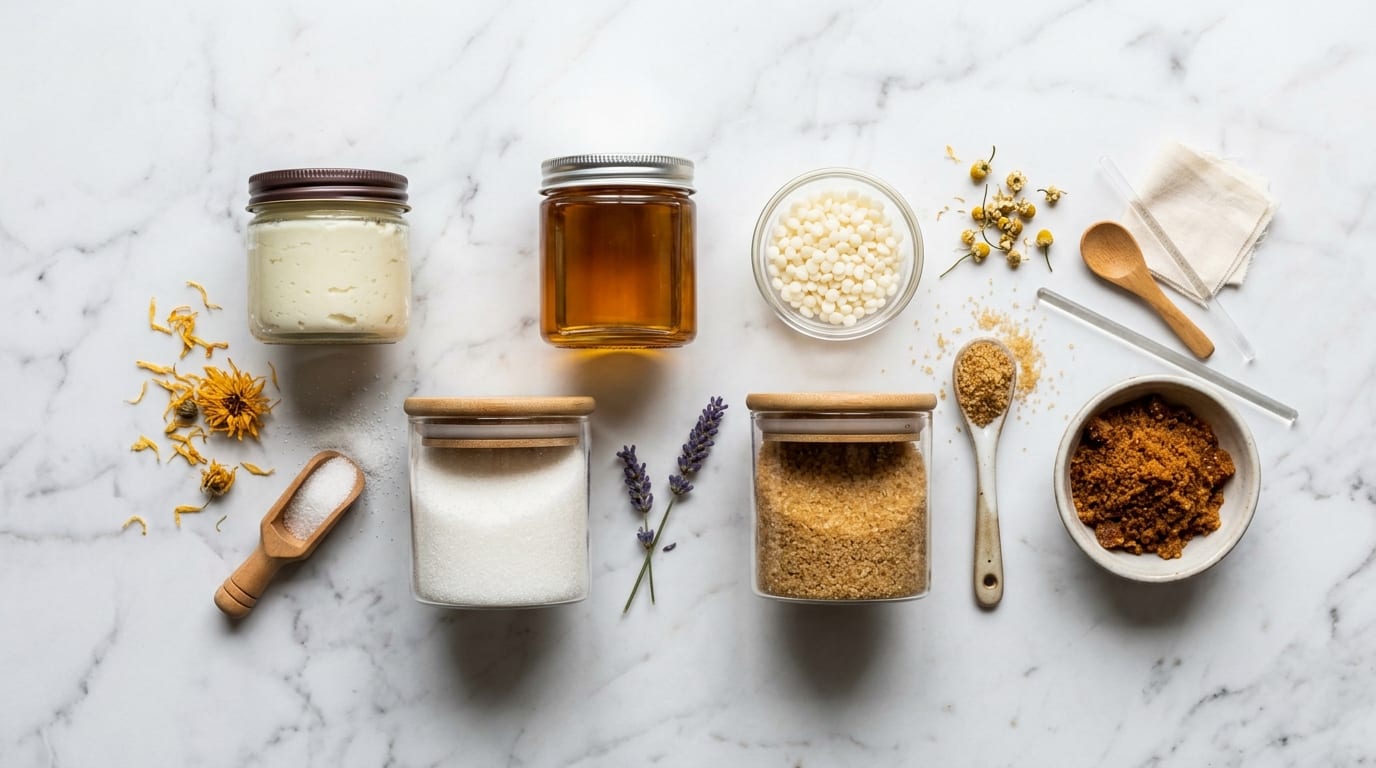
Most formulators formulate a serum once and use it all year round. That works, but it is not optimal. Skin in January and July lives in fundamentally different conditions: different air humidity, different temperatures, and different levels of transepidermal water loss (TEWL). If you want to create a truly effective face serum recipe, you should think of the formula not as a static product, but as a living system that needs to be adapted to the season. In this article, the online school "Walker Formulation Academy" breaks down exactly how to change the composition depending on the climate — and why it makes sense from the perspective of cosmetic chemistry.

Why the season changes skin needs — and your formula
Skin is a dynamic organ, and its barrier function directly depends on the external environment. In winter, cold air outside and dry heating inside create double stress: TEWL increases, the level of natural moisturizing factor (NMF) drops, and the lipid matrix of the stratum corneum becomes less plastic. In summer, the picture is the opposite: increased humidity and sebum production change the priorities — the skin needs light hydration without occlusion and control of oily shine.
From a formulation perspective, this means that the same set of humectants, emollients, and actives will work differently depending on the season. Hyaluronic acid at low air humidity (below 40%) can draw water from the deep layers of the skin instead of retaining it from the surface. Heavy emollients save the day in winter, but in summer, they create discomfort and clog pores.
Transepidermal water loss: a key parameter
TEWL is the rate at which water passively evaporates through the stratum corneum. In winter, it increases due to the disruption of the lipid barrier. In summer, under conditions of high humidity, TEWL decreases, but sebum and sweat create their own problems. Understanding this mechanism helps in choosing the right classes of moisturizers for each season: hygroscopics (attract water), occlusives (retain water), and emollients (restore the barrier).
How the climate zone affects the basic strategy
A formulator in Moscow and a formulator in Krasnodar will formulate a winter serum differently. In a continental climate with frosts below −15°C, the priority is maximum barrier protection. In a mild coastal climate, winter is milder but humidity is higher, which requires a balance between occlusion and breathability. Read more about how climate affects the composition of fatty acids and essential oils in plants — this is directly related to the choice of oils for seasonal formulas.
Winter face serum: a recipe with an emphasis on barrier protection

A winter formula solves three problems at once: it replenishes water loss, restores the lipid barrier, and protects the skin from temperature stress. This is not just a "greasier" serum — it is a well-thought-out system consisting of several classes of ingredients.
Key humectants for a winter formula
In winter, hygroscopic agents must be combined with occlusive or film-forming components — otherwise, they will work "against" you. Here is the optimal set:
- Glycerin 3–5% — a classic humectant that works well even in low humidity, but can feel sticky in high concentrations.
- Betaine 2–3% — gentler than glycerin, less sticky, and well-tolerated by sensitive skin.
- Panthenol 2–5% — simultaneously moisturizes and accelerates barrier regeneration.
- High molecular weight hyaluronic acid 0.1–0.2% — forms a film on the surface and reduces TEWL; the high molecular weight fraction is preferable in winter.
- Sodium PCA 1–2% — an NMF component that replenishes what the skin loses during the cold season.
Barrier components: ceramides, squalane, and fatty acids
A serum is not a cream, but that does not mean there is no room for light lipid components. Squalane (2–5%) is ideal for a winter serum: it does not clog pores, is biocompatible with sebum, and forms a thin protective layer. Ceramides (Ceramide NP, AP, EOP) at a concentration of 0.5–1% restore the intercellular matrix of the stratum corneum. If you work with oils, pay attention to those with a high linoleic acid (omega-6) content — it supports barrier permeability and reduces inflammation. Read more about choosing oils in the article how to choose oils and butters for your skin type.
Example of a basic winter formula (aqueous phase)
- Distilled water — up to 100%
- Glycerin — 4%
- Betaine — 2%
- Panthenol — 3%
- Sodium PCA — 1.5%
- Hyaluronic acid (HMW) — 0.15%
- Squalane — 3%
- Niacinamide — 4% (barrier and anti-inflammatory active)
- Preservative — according to specification
- pH adjuster — to 5.5–6.0
Hydrocolloids are perfect for thickening this formula — you can find a comparison of options in the article xanthan and guar gums: comparison, synergy, and the unexpected winner.
Summer face serum: light hydration and sebum control
A summer formula is not just a simplified winter one. It is a different philosophy: minimum occlusion, maximum functionality. In summer, the skin produces more sebum, pores are enlarged, and the skin surface temperature is higher — all of this affects how ingredients penetrate and perform.
Humectants for high humidity
In summer, you can safely reduce the concentration of heavy hygroscopic agents and focus on light film-formers and sebum regulators:
- Low molecular weight hyaluronic acid 0.05–0.1% — penetrates deeper, hydrates without leaving a surface film.
- Niacinamide 5–10% — regulates sebum production, tightens pores, and evens out skin tone.
- Allantoin 0.2–0.5% — soothes the skin after sun exposure, acts as a mild keratolytic.
- Glycerin 1–2% — we reduce the concentration compared to winter.
- Green tea extract or resveratrol — antioxidant protection against UV stress.
Texture and rheology of a summer serum
A summer face serum should have a watery or gel-like texture that absorbs quickly. This is achieved by choosing the right thickeners and avoiding heavy emollients. Carbomer or hydroxyethylcellulose provide a light gel without any greasiness. Viscosity and skin feel are the domain of formula tribology, which is covered in detail in the article tribology, gums, and gelling agents.

Adjusting humectants for seasonal dryness: transitional periods
March and October are the most challenging months for a cosmetic formulator. The weather is unstable: freezing in the morning, warm in the afternoon, heating is still on indoors, and snow is melting outside. The skin cannot adapt in time, and it is during these periods that sensitivity flare-ups, flaking, and reactivity occur most often.
Transitional season strategy
For transitional periods, a "layered" hydration strategy is optimal: the serum contains both hygroscopic agents and light occlusives, but in moderate concentrations. The key principle is adaptability. Some modern technological ingredients (for example, complexes based on beta-glucan or adaptogenic extracts) have the ability to regulate hydration depending on environmental conditions — this is an area actively developing in professional cosmetic chemistry.
It is also important to monitor the pH of the formula during the transitional period: as storage and application temperatures change, the pH of buffer systems may shift slightly. For more on how to work correctly with acidity, read the article pH in cosmetics: a basic guide for cosmetic formulators.
Adaptive humectants: what they are and why they are needed
The concept of adaptive hydration is not just a marketing term, but a real direction in ingredient development. Such systems react to changes in ambient humidity: they increase occlusion in dry air and reduce it in humid conditions. For the home formulator, this means it is worth including several classes of humectants in your formula simultaneously, creating your own "adaptive" system instead of relying on a single ingredient.
Actives that change effectiveness depending on the season
Not only humectants, but also functional actives work differently in winter and summer. This is important to consider when creating a face serum recipe.
- Vitamin C (ascorbic acid) — especially relevant in summer as an antioxidant against UV stress, but unstable at high storage temperatures. Use stable derivatives (ascorbyl glucoside, MAP) or store the formula in the refrigerator.
- Retinol — traditionally recommended for autumn-winter use, as it increases photosensitization. In summer, reduce the concentration or switch to retinaldehyde.
- Acids (AHA/BHA) — require mandatory SPF protection in summer; in winter, if you have dry skin, reduce the concentration to avoid exacerbating barrier disruption.
- Peptides — stable in any season, but peptides that stimulate the synthesis of ceramides and collagen are especially valuable in winter.

Practical tips for adapting your formula
Transitioning from a winter to a summer formula does not require a complete overhaul of the recipe. It is enough to adjust 3–4 parameters:
- Glycerin concentration: winter — 3–5%, summer — 1–2%.
- Type of hyaluronic acid: winter — high molecular weight (surface film), summer — low molecular weight or a mixture of fractions.
- Lipid component: winter — squalane 3–5% + ceramides, summer — squalane 0–1% or complete omission of oils.
- Viscosity: winter — medium gel or serum-essence, summer — watery gel with minimal thickener.
- Actives: winter — niacinamide + panthenol + peptides, summer — niacinamide + antioxidants + light AHAs in low concentration.
If you are just starting your journey in cosmetic chemistry and want to understand how to approach formulation systematically, check out how to become a cosmetic chemist: the path from curiosity to professional formulation. And if you want to grow within a community of like-minded people, join the Walker Formulation Academy Club, where formulators exchange formulas and experience.
FAQ: Seasonal Serums
Do I need to completely change the serum formula every season?
Not necessarily. It is enough to have a base formula and adjust 3–4 key parameters: glycerin concentration, type of hyaluronic acid, quantity and type of lipids, and viscosity. A complete revision of the formula is justified only when there is a radical change in climate — for example, when moving from a continental climate to a tropical one.
Can I add SPF filters to a summer serum?
Technically it is possible, but extremely difficult in terms of stability and efficacy. Mineral filters (titanium dioxide, zinc oxide) leave a white cast in a serum, while chemical filters require specific formulation conditions and regulatory approval. The optimal solution is to keep the serum as a functional treatment and provide SPF protection with a separate finishing product.
How can I check that a winter serum does not cause comedogenicity when adding oils?
Use oils with a low comedogenic index (0–1): squalane, jojoba oil, hemp oil. Conduct a patch test for 48–72 hours before full use. It is also important to consider the synergy of components: some combinations of ingredients can increase comedogenic potential even if the individual components are safe.
Seasonal adaptation is not about complicating the process, but about its maturity. When you understand how temperature and humidity change skin needs, a face serum formula ceases to be a fixed list of ingredients and becomes a flexible system. In winter — barrier protection and intensive hydration. In summer — lightness, antioxidant protection, and sebum control. During transitional periods — balance and adaptability. This approach is exactly what distinguishes a professional formulator from an amateur who simply follows a recipe. Do you want to learn how to formulate consciously and systematically? Learn more in our courses — the Walker Formulation Academy online school teaches cosmetic chemistry from scratch to the level of a confident developer.