Articles tagged "INCI and labels"
AI errors in calculating cosmetic formula concentrations happen because neural networks analyze a text-based INCI list, not the actual percentages of ingredients. INCI only reflects the order and qualitative composition — the formula never discloses the dosage of actives, preservatives, or surfactan
AI Chemist vs. ChatGPT: why trust in cosmetic formulas has become a critical issue The AI Chemist analyzes a cosmetic formula against a verified ingredient database Over the past two years, queries like "decode this cream's INCI list" or "is this preservative safe" have become some of the most commo
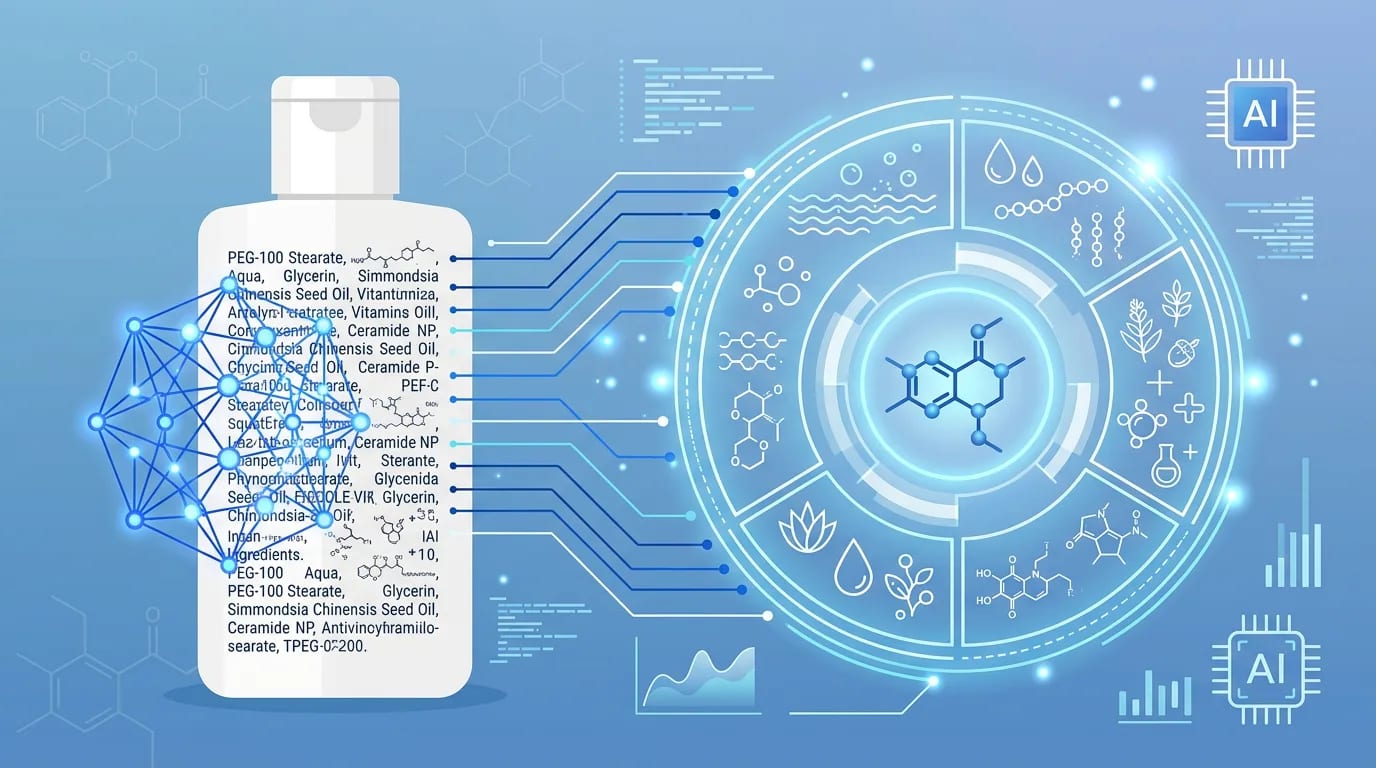
Why Analyze a Competitor's INCI List, and How AI Helps AI analyzes the INCI label and turns it into a structured formula Every bottle on a mass-market shelf or in a niche boutique is more than marketing and packaging — it's an encoded formula, openly available to anyone in the form of an INCI list (
Pick up any shampoo off the shelf — expensive, cheap, "natural," "sulfate-free" — and flip it over. Somewhere in the first five ingredients you'll find something ending in Sulfate, Betaine, or Glucoside. That's a surfactant — the class of ingredients without which shampoo would just be scented water
Look at any of the top-10 best-selling serums — there's an 80% chance it's in there. Niacinamide. Vitamin B3. Nicotinamide. Three names for one substance that has somehow become a favorite of dermatologists, Korean labs, and home formulators alike. But here's the paradox: the more popular an ingredi
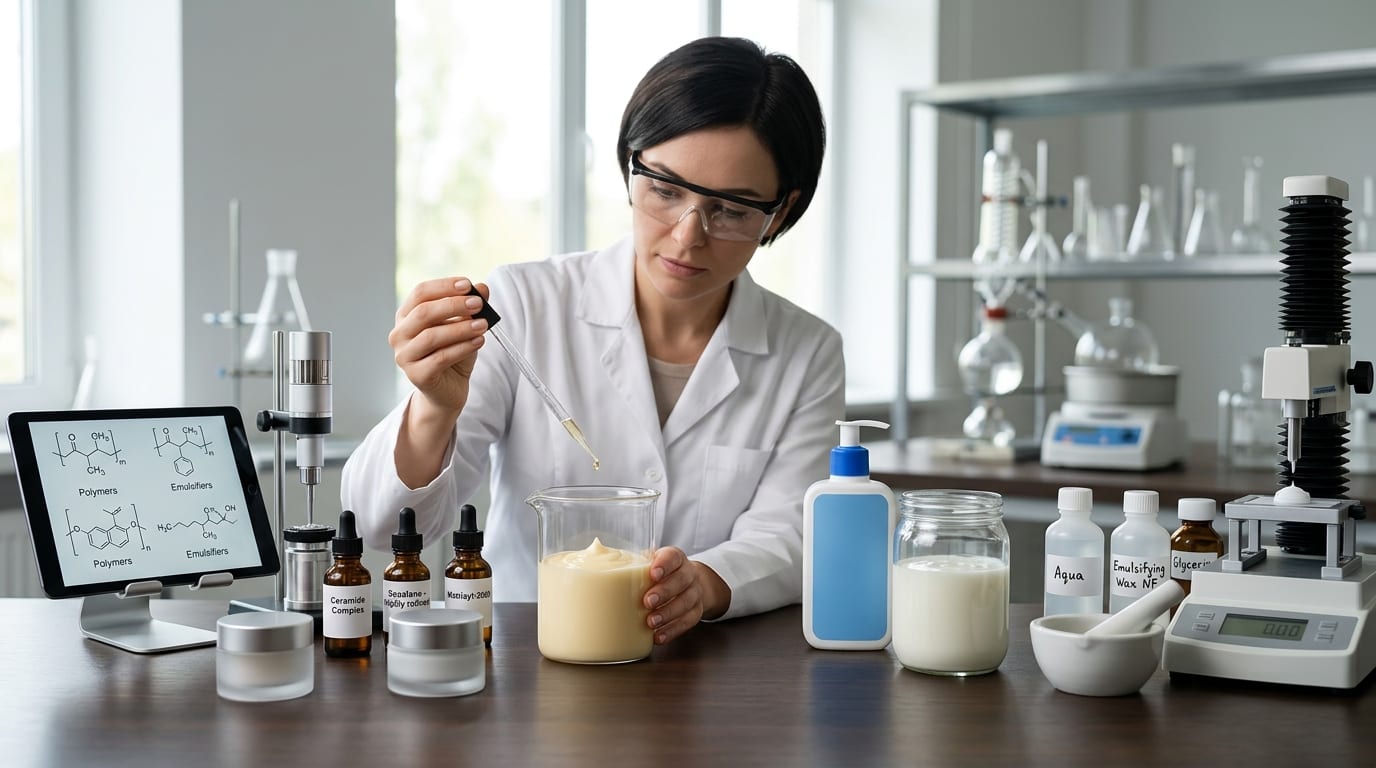
Have you ever noticed that a professional face cream costing 8,000 rubles and a pharmacy moisturizing lotion for 400 rubles can contain almost identical ingredients — yet feel completely different on the skin? This isn't a marketing trick or a placebo effect. It's formulation. And the deeper you und
Do you know what the Soviet “Krapiva” shampoo, the Japanese furo ritual, and a modern sulphate-free bottle costing around £30 have in common? They all solve one problem: removing sebum, dirt, and styling residue without turning hair into straw. The only difference is how exactly this happens at a molecular level.
Imagine: you’re holding a serum that costs £30. On the front of the packaging, in large letters, it says: “10% niacinamide, hyaluronic acid, peptides.” Something inside you says: this should work. But a cosmetic chemist, looking at that same label, sees a completely different story — and it doesn’t always have a happy ending.
Do you know how many raw materials are officially registered in the latest edition of the INCI Dictionary? More than 17,000. And that is just the tip of the iceberg — each ingredient has several suppliers, each with its own trade name and slightly different characteristics. When a person first op
 Walker Formulation Academycosmetic chemistry