An emulsifier is the ingredient without which a cream turns into a separated liquid within just 24 hours. It is exactly what holds water and oil together, shapes the texture, determines the skin feel, and, in many ways, ensures the stability of the entire cream formula. Nevertheless, choosing an emulsifier remains one of the most common pitfalls for beginner formulators. In our cosmetic chemistry training, this topic is given a special place: understanding the logic of emulsifiers means learning how to read a cream formula rather than just copying someone else's recipes. In this article, the Oksana Walker online school breaks down the HLB system, the main classes of emulsifiers, and practical selection criteria — without oversimplification, but also without unnecessary complexity.
What is an emulsifier and why does it work
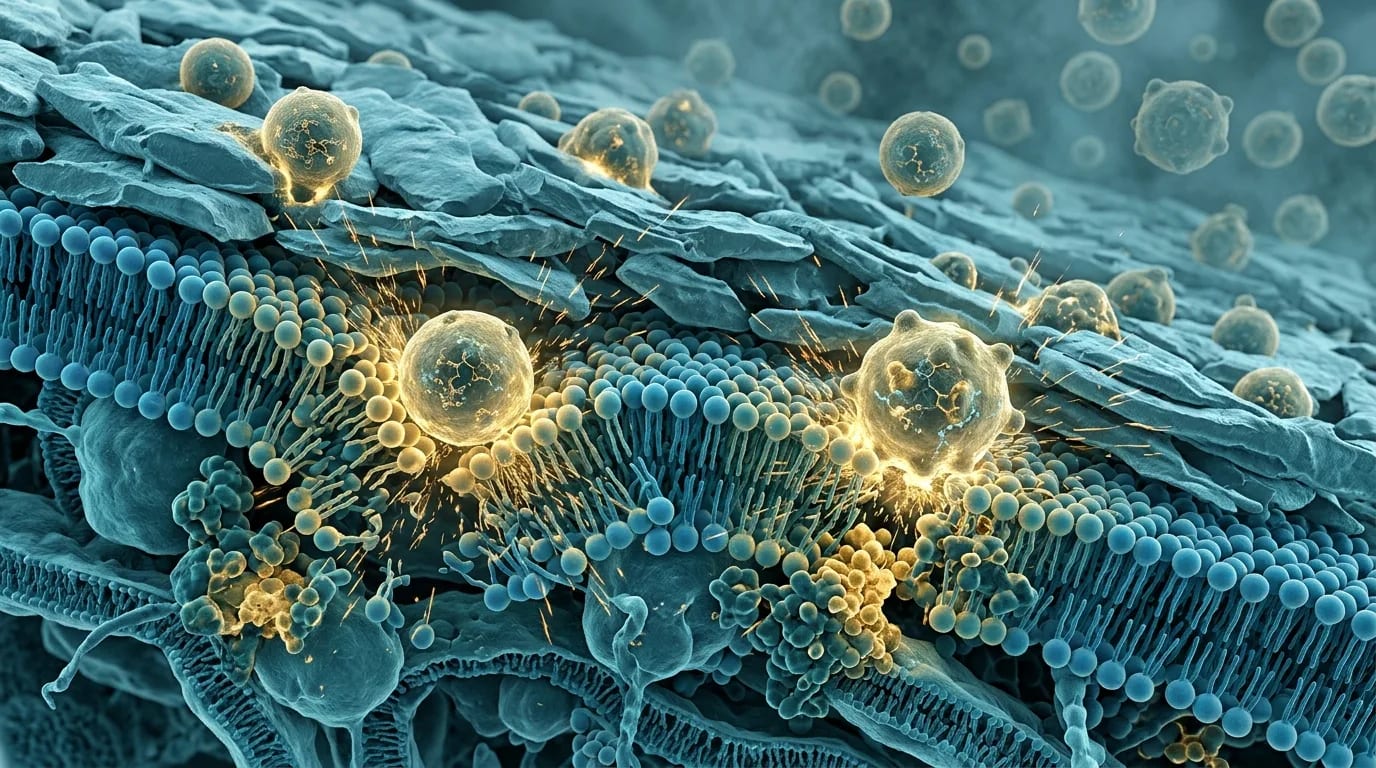
An emulsifier is a surfactant (surface-active agent) with an amphiphilic structure: one part of the molecule is attracted to water (hydrophilic), and the other to oil (lipophilic). By positioning themselves at the interface between the phases, emulsifier molecules reduce interfacial tension and form a protective film around the droplets of the dispersed phase.
The result is a stable emulsion of two types:
- O/W (oil-in-water) — light creams, lotions, and water-based serums. Oil droplets are dispersed in the water phase.
- W/O (water-in-oil) — nourishing creams, balms, and sunscreens with a dense texture. Water droplets are dispersed in the oil phase.
The type of emulsion is determined not only by the ratio of the phases but primarily by the nature of the emulsifier — and this is where the HLB system comes into play.
HLB: the numerical language of emulsifiers
HLB (Hydrophilic-Lipophilic Balance) is a numerical scale from 0 to 20 that describes the balance of hydrophilic and lipophilic properties of a molecule. The higher the value, the more "water-loving" the emulsifier is.
- HLB 1–6 — W/O emulsifiers (e.g., Span 80, beeswax)
- HLB 7–9 — wetting agents, transition zone
- HLB 10–16 — O/W emulsifiers (e.g., Polysorbate 60, Olivem 1000)
- HLB 16–20 — solubilizers, cleansing agents
For every oil or fatty component, there is a "required HLB" (rHLB). The formulator's task is to select an emulsifier or a blend of emulsifiers whose total HLB matches the rHLB of the oil phase. This is the basic logic of a stable emulsion.

Main classes of emulsifiers: cosmetic chemistry training in practice
The market for cosmetic emulsifiers is vast. For practical work, it is convenient to divide them into several functional classes.
Classic non-ionic emulsifiers
The most common class in modern formulations. They are compatible with a wide range of pH levels, electrolytes, and active ingredients.
Examples and their features:
- Olivem 1000 (Cetearyl Olivate / Sorbitan Olivate) — a biomimetic emulsifier based on oleic acid that forms a liquid crystal structure similar to the skin's lipid barrier. Recommended concentration: 3–8%. Works well at pH 4.5–7.
- Emulsifying Wax NF (Cetearyl Alcohol + Polysorbate 60) — an accessible and predictable option for O/W emulsions. Concentration: 5–10%.
- Arlacel 165 (Glyceryl Stearate + PEG-100 Stearate) — a self-emulsifying wax that provides a dense cream texture. Concentration: 3–6%.
- Ritamulse SCG (Glyceryl Stearate + Cetearyl Alcohol + Sodium Stearoyl Lactylate) — a natural, certifiable emulsifier popular in organic cosmetics.
Polymeric and silicone emulsifiers
A separate class consists of high-molecular-weight emulsifiers that stabilize an emulsion not by reducing interfacial tension, but by forming a viscous protective layer around the droplets. These include Carbopol derivatives (upon neutralization), Aristoflex AVC (Ammonium Acryloyldimethyltaurate/VP Copolymer), and silicone emulsifiers such as Abil EM 90.
Aristoflex AVC is particularly interesting: it works without heating, via a cold process, and is compatible with high concentrations of electrolytes and acidic pH levels. This makes it indispensable for cream formulas containing AHA acids or vitamin C. Read more about working with pH-sensitive systems in our article pH in cosmetics: a basic guide for formulators.
Emulsifiers for W/O systems
For anhydrous and W/O formulas, the selection logic changes. Here, emulsifiers with a low HLB are used: Span 80 (Sorbitan Oleate), Span 60 (Sorbitan Stearate), beeswax combined with borax, as well as modern options like ABIL WE 09 and Isolan GPS. We examine the detailed mechanics of anhydrous systems in the article Anhydrous products: A complete guide for beginners.

How to calculate the required HLB for your cream formula
Calculating the required HLB of the oil phase is arithmetic accessible to everyone. The algorithm is as follows:
- Make a list of all oils and fatty components in the cream formula with their percentage content in the oil phase (not in the total cream formula).
- Find the rHLB of each component (values are published by manufacturers or in reference books).
- Multiply the rHLB of each component by its share in the oil phase.
- Add up the resulting values — this is the required HLB of your oil phase.
- Select an emulsifier or a blend of emulsifiers with a total HLB within ±1 of the calculated value.
Calculation example: the oil phase consists of jojoba oil (rHLB = 6, 40% share), shea butter (rHLB = 6, 30% share), and isopropyl myristate (rHLB = 11.5, 30% share).
Required HLB = 6 × 0.4 + 6 × 0.3 + 11.5 × 0.3 = 2.4 + 1.8 + 3.45 = 7.65
This is a borderline zone. You can use a mixture of emulsifiers: for example, Span 60 (HLB = 4.7) + Tween 60 (HLB = 14.9) in a ratio that provides a total HLB of about 7.7.
When HLB doesn't work
HLB is a useful tool, but it is not universal. It does not take into account the viscosity of the phases, the melting point of waxes, or the presence of electrolytes and polymers. For silicone oils, esters, and some synthetic components, rHLB values are non-standard or not defined at all. In such cases, one relies on manufacturer recommendations and empirical testing — which is what distinguishes an experienced formulator from a beginner.
We analyse the logic of component interaction in complex systems — for example, how emulsifiers work in conjunction with gelling agents — in detail in our article Tribology, gums, and gelling agents.
Practical criteria for choosing an emulsifier
The HLB theory is a starting point. The actual choice of an emulsifier is determined by a combination of factors.
Compatibility with active ingredients
Some emulsifiers conflict with certain actives:
- Cationic emulsifiers (e.g., Incroquat BTMS) are incompatible with anionic surfactants and some preservatives.
- Polyglyceryl ether-based emulsifiers can reduce the effectiveness of certain preservatives — keep this in mind when developing a preservation system.
- Olivem 1000 is sensitive to high concentrations of electrolytes (salts, extracts) — when using them, the stability of the emulsion must be checked additionally.
- Peptide complexes are generally neutral to emulsifiers but require adherence to a specific pH window. Read more about peptides in our article on the path from curiosity to professional formulation.
Target texture and skin feel
The emulsifier directly shapes the sensory profile of the product. Cetearyl Alcohol in an emulsifying wax provides a dense, "creamy" texture. Aristoflex AVC creates a light gel-cream with a watery glide. Olivem 1000 is a soft, bioadhesive cream with a skin-fusing feel. Silicone emulsifiers provide a characteristic silky slip. When choosing an emulsifier, always keep the final consumer experience in mind.
Certification requirements
If you are developing products for organic or natural certification (COSMOS, ECOCERT, NATRUE), the list of permitted emulsifiers narrows significantly. Polyethylene glycol derivatives (PEG), ethoxylated components, and synthetic silicones are excluded in this case. Alternatives: Olivem 1000, Ritamulse SCG, Sucragel, and the Montanov series.

Common mistakes when working with emulsifiers
Even experienced formulators occasionally encounter unstable emulsions. Here are the most frequent causes:
- HLB mismatch. The emulsifier was chosen "by eye" without calculating the required HLB of the oil phase.
- Insufficient concentration. Skimping on the emulsifier is a direct path to separation. Every emulsifier has a minimum working concentration.
- Incorrect incorporation temperature. Most wax-based emulsifiers require complete melting and identical temperatures for both phases (usually 70–75°C) before mixing.
- Oil phase percentage too high. For standard O/W emulsions, the oil phase should not exceed 30–35%. Exceeding this requires increasing the emulsifier concentration or switching to a more powerful system.
- Ignoring electrolyte load. High concentrations of salts, aqueous extracts, and certain actives destabilize a number of emulsifiers.
- Lack of a co-emulsifier. Many systems work significantly better in pairs: a primary emulsifier + a fatty alcohol (Cetyl Alcohol, Cetearyl Alcohol) or a low-HLB co-emulsifier.
Systematic stability testing is a mandatory stage of development. Centrifugation, thermal cycling, and storage at elevated temperatures help identify weaknesses in the cream formula before launching into production.
To learn how oil composition affects the behavior of fatty components in a formula, read our article How climate affects the fatty acid and essential oil composition in plants — this is directly related to calculating rHLB.

Cosmetic chemistry training: how to move from theory to confident practice
Understanding emulsifiers is not a one-time piece of knowledge, but a skill that is formed through practice, mistakes, and a systematic approach. Self-study via articles provides a foundation, but it does not replace structured training where theory is immediately tested in a formulation.
At the "Walker Formulation Academy" online school, cosmetic chemistry training is structured so that every concept — whether it's HLB, pH buffering, or butter polymorphism — is reinforced through specific formulas with error analysis. Students learn not just to mix ingredients, but to understand why a formula works the way it does — and how to modify it for a specific task.
Related topics that will help deepen your understanding of emulsion systems:
- How to choose oils and butters for your skin type — the oil phase directly determines the requirements for the emulsifier
- Butter polymorphism: why cocoa butter acts up — the crystalline structure of fats affects emulsion stability
- Xanthan and guar gums — water-phase gelling agents work in synergy with emulsifiers
If you are just starting your journey in cosmetic chemistry and want to know where to begin, check out the school's homepage — it contains current courses and programmes for various skill levels. Members of the Walker Formulation Academy Club get access to an exclusive database of formulations and weekly formula reviews with an instructor.
Frequently Asked Questions
Can I mix several emulsifiers in one formula?
Yes, and it is a common practice. Mixing emulsifiers allows you to more accurately hit the required HLB of the oil phase, improve stability, and adjust the texture. A classic combination is an emulsifier with a high HLB (O/W) plus a co-emulsifier with a low HLB (for example, Cetyl Alcohol or Span 60). It is important to consider ionic compatibility: anionic and cationic emulsifiers are not used in the same formula.
Why is the emulsion stable immediately after preparation but separates after a week?
This is a sign of thermodynamic instability, which is masked by the high viscosity of a fresh emulsion. Reasons: insufficient emulsifier concentration, HLB mismatch, high electrolyte load, or failure to follow the temperature regime during emulsification. Conduct an accelerated stability test: 48 hours at 45°C. If separation occurs, re-evaluate the emulsifying system, not the preservative.
Do I need a special degree to develop cosmetic formulas?
A formal diploma is not required, but systematic knowledge is essential. Cosmetic chemistry training in specialized schools provides exactly the foundation that is difficult to assemble on your own: an understanding of ingredient chemistry, the logic of stability, regulatory requirements, and testing practice. This significantly shortens the path from your first cream to a reproducible, safe formula.
Emulsifiers are the foundation of most cosmetic formulas. Understanding the HLB system, emulsifier classes, and selection criteria turns the process of creating a cream from intuitive mixing into conscious formulation. This very transition — from "sort of like this" to "exactly how and why" — is the goal of professional education in cosmetic chemistry. Learn more in our courses — and start creating formulas that work predictably.