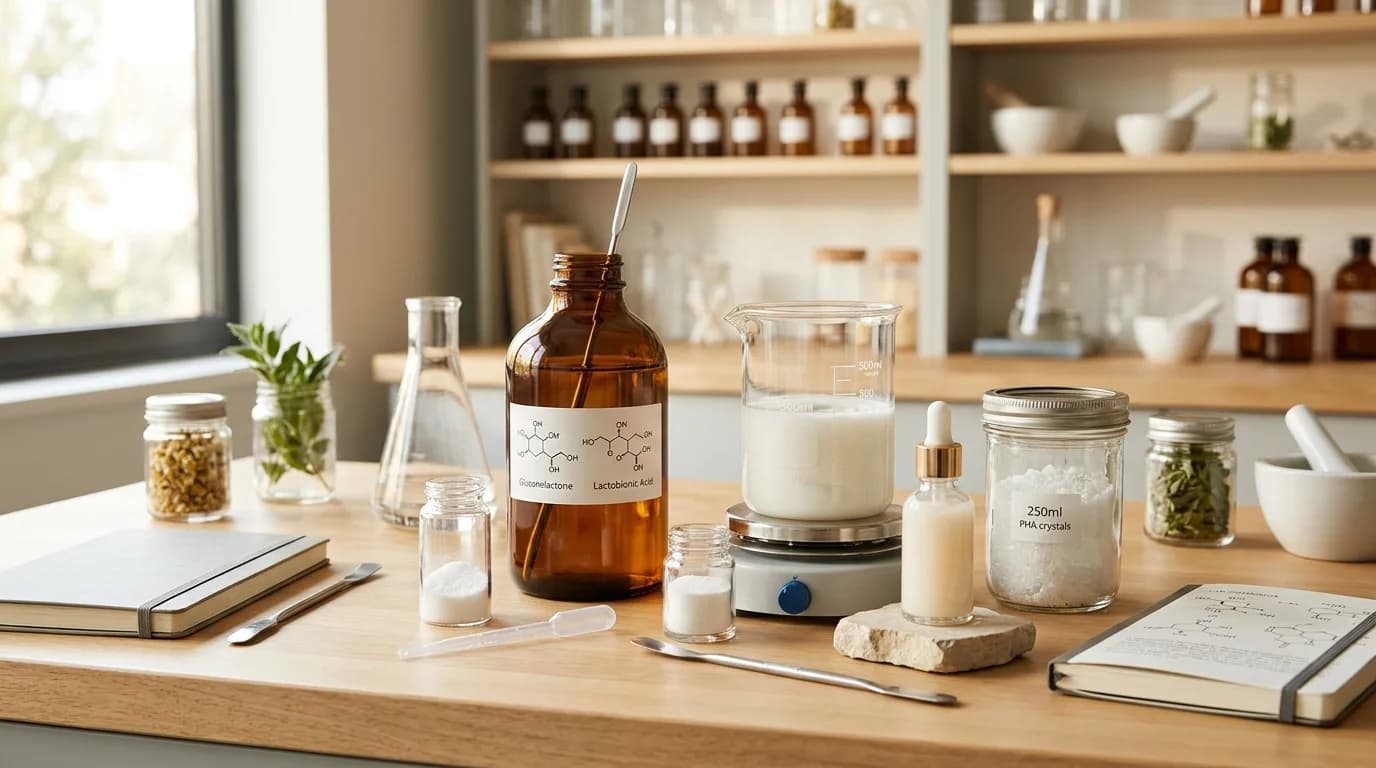
Formulating with PHAs (polyhydroxy acids such as gluconolactone, galactose and lactobionic acid) means using larger, more hydrophilic exfoliants than glycolic acid. Typical use is 2–10% active at pH 3.5–4.5, which gives gentle exfoliation plus humectancy. Confirm each ingredient's status against the UK Cosmetics Regulation and CosIng before launch.
- Typical PHA use level: 2–10% active substance (not commodity-grade mass fraction), with 4–8% most common in leave-on serums.
- Working pH window: about 3.5–4.5 for gluconolactone-based leave-ons.
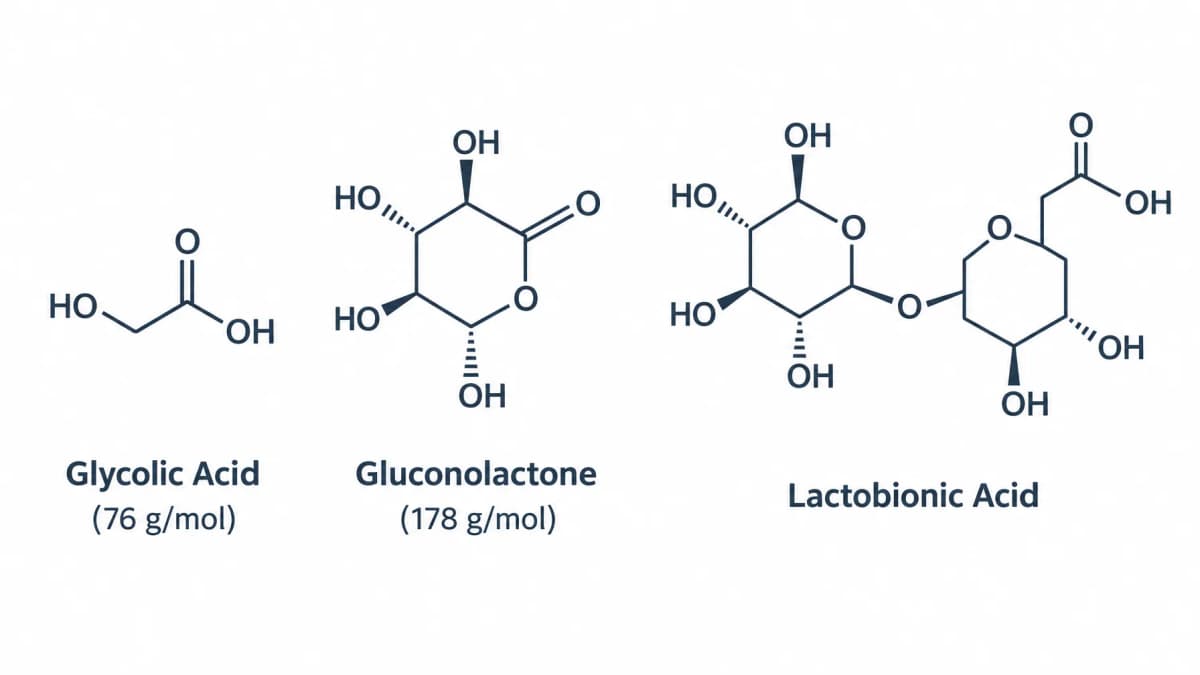
- Molecular weight: gluconolactone about 178 g/mol, lactobionic acid about 358 g/mol, glycolic acid only 76 g/mol.
- Indicative raw-material cost: roughly £8–£15 per 100 g for cosmetic-grade gluconolactone, depending on supplier and pack size.
Everyone wants the glow of an acid toner without the sting, and sensitive skin is the group most often told that no such thing exists. PHAs come closest. They are not a magic exception to chemistry, though. They are exfoliants whose molecular size slows penetration, and that size is both the benefit and the formulating trap.
What PHAs actually are, and why formulators reach for them
The molecule behind the marketing
Polyhydroxy acids are carboxylic acids carrying several hydroxyl groups on a carbon chain. In cosmetics you will meet three main INCI names: Gluconolactone (a cyclic ester that hydrolyses in water to gluconic acid), Galactose, and Lactobionic Acid (a gluconic acid bonded to galactose, often called a bionic acid). Gluconolactone is about 178 g/mol, against 76 g/mol for glycolic acid, so it moves into the stratum corneum more slowly. That slower entry usually explains the lower stinging reported in the literature. The comparative clinical work is indexed on PubMed.
The many hydroxyl groups also bind water. That is why PHA products often feel cushioned rather than tight, and why they pair well with the humectant strategies in How to Use Hyaluronic Acid: A Cosmetic Chemist's Molecular Weight Guide.
What you can honestly promise
PHAs loosen corneocyte cohesion at the surface. They can improve smoothness and radiance, and they are generally better tolerated than small alpha hydroxy acids. They are not deep-peeling agents, and claims should stay at the level of cosmetic effects. Lactobionic acid additionally chelates metal ions and is often used as an antioxidant-supporting ingredient, but check the supplier's data for the grade you buy.
Formulating with PHAs: levels, pH and the gluconolactone puzzle
Use levels and pH
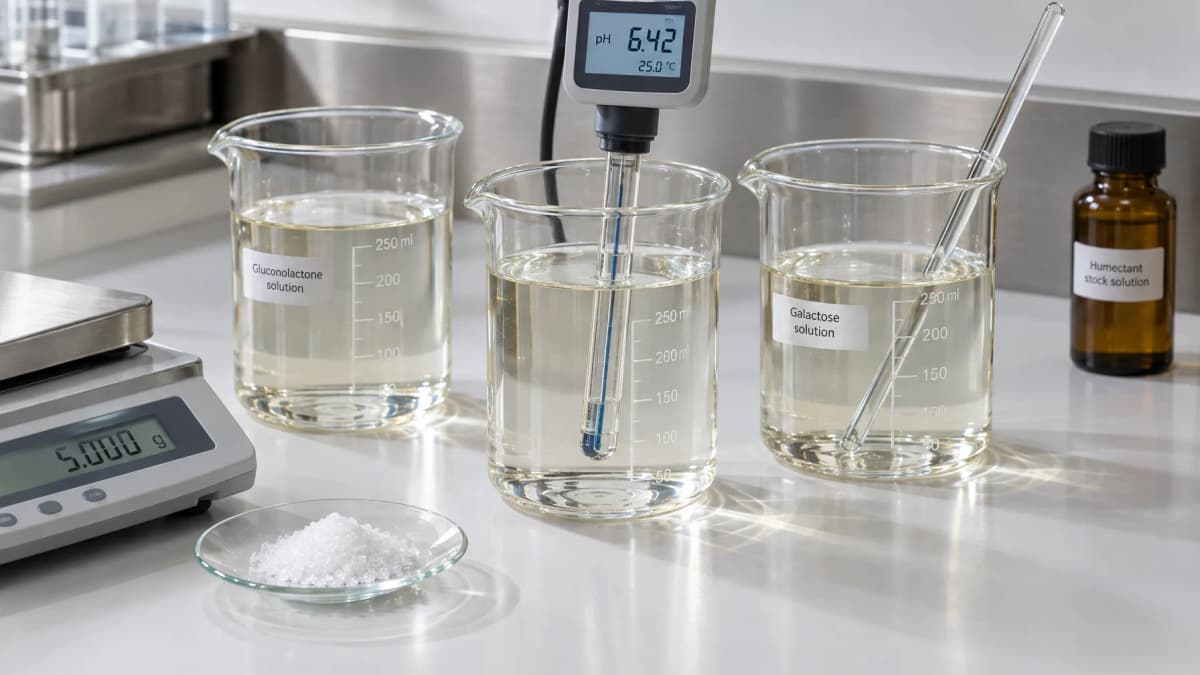
Most supplier guidance and published studies work in the 2–10% active range at a finished pH of roughly 3.5–4.5, as summarised in the clinical literature on PHA regimens. Gluconolactone is not itself the acid. In water it slowly opens to gluconic acid (pKa about 3.9), so the pH of a fresh solution drifts downward over hours to days. Always measure the finished batch after 24 hours, then again at stability checkpoints.
A practical starting point for a rinse-off or leave-on toner:
- Gluconolactone: 3–5% active, to begin with.
- Humectants (glycerin 3–5%, sodium PCA or panthenol): to reinforce the soft feel.
- Buffer: sodium gluconate or sodium citrate to hold pH in the 3.5–4.5 window.
- Preservative: choose one effective at low pH; check the permitted-substances list for each.
Percentages here refer to active substance. If your lactobionic acid arrives as a solution, calculate from the supplier's stated assay, not the weight of the drum.
Choosing between the three
| PHA | Approx. MW (g/mol) | Feel and behaviour | Formulating note |
|---|---|---|---|
| Gluconolactone | 178 | Mild exfoliation, light humectancy | Hydrolyses in water; pH drifts down |
| Galactose | 180 | Mild, sugar-like, supportive | Often a co-active rather than the star |
| Lactobionic Acid | 358 | Very gentle, strongly hydrating, chelating | Higher cost; check solubility and colour of grade |
Stability, texture and the traps that ruin a PHA formula
Thickeners and electrolytes
Low pH is hard on many polymers. Carbomers lose viscosity in acidic, ionic systems, and the gluconate released by gluconolactone adds electrolyte load. Better choices are acid-tolerant polymers such as certain acrylates copolymers, hydroxyethylcellulose, xanthan or sclerotium gum. Test viscosity at 24 hours, one week and after a 4–40 °C cycle. If you are building around a single star active, the framework in Formulating with Hero Ingredients helps you decide what supports it and what must stay out of the way.
Combining with other actives
PHAs sit comfortably next to niacinamide, but low pH and niacinamide's own stability window need care. The practical rules are collected in Niacinamide for Facial Skin: How to Formulate Without the Mistakes That Kill Its Activity. Peptides are more pH-sensitive: many are happiest nearer pH 5–6, so a PHA at 4.0 may not suit them. For background, see How Peptides Work. A common solution is to separate them into two products in one routine rather than forcing a compromise pH.
- Avoid stacking PHA with high-strength retinoids in a single leave-on for sensitive-skin claims.
- Watch metal ions: lactobionic acid chelates, which can shift preservative performance.
- Use opaque or airless packaging if the formula includes light-sensitive co-actives.
UK and EU compliance: what to check
Lists, not labels
Whether an ingredient is allowed is decided by the lists in the UK Cosmetics Regulation (retained Regulation 1223/2009), not by whether it is a food additive or marketed as natural. Gluconolactone has a food-additive history, but that does not settle its cosmetic status. Check the Annexes via legislation.gov.uk, confirm INCI names and functions in CosIng, and review the safety conclusions in the CIR ingredient database where available. Any restrictions, such as maximum concentrations for specific acids, must be taken from the current text. If a position is unclear for your exact grade or combination, verify it with your safety assessor rather than assuming.
The safety assessment and claims
Under the regulation every product needs a safety assessment by a qualified person. Exfoliating products should have sensible usage instructions, such as introducing gradually and daily sun protection. This matters because exfoliation increases sun sensitivity, and the guidance in Anti-aging cream: a formula that actually works shows how to frame such advice in a routine. Claims such as "gentle" should be supported by tolerance testing.
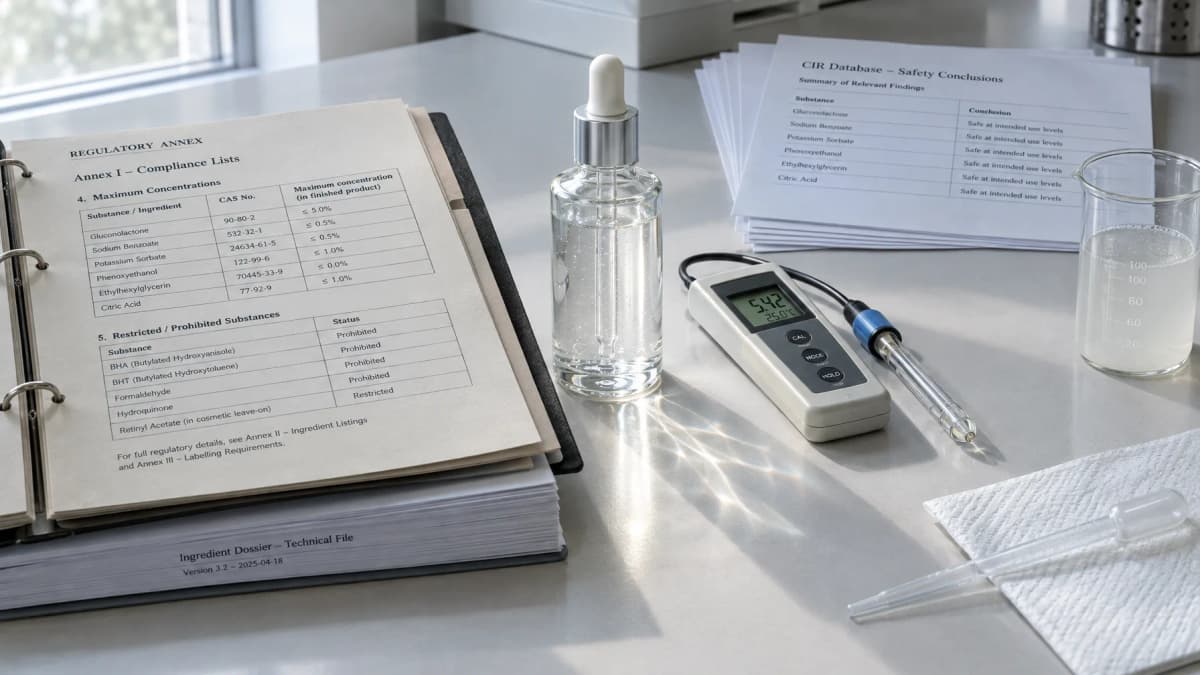
A starter PHA serum and how to test it
Framework formula
- Water to 100%.
- Glycerin, 3–5%.
- Gluconolactone, 4–6% active, added to cool water and dissolved fully.
- Acid-tolerant gelling agent, to target viscosity.
- Panthenol, 0.5–2%.
- Preservative system suitable for pH 3.5–4.5, added per supplier instructions.
- Adjust pH to 3.8–4.2 after 24 hours using sodium hydroxide or a gluconate buffer.
Test the pH daily for the first week, then at 4, 8 and 12 weeks. Run a preservative efficacy test on the final pack, because low pH alone is not a safeguard. A retail range for finished PHA serums is often about £12–£30 for 30 ml, which gives a sense of the market positioning your cost of goods must support.
Common complaints and fixes
- "It stings": lower the level to 2–3% and raise pH toward 4.2.
- "It thinned out": switch from carbomer to an acid-tolerant polymer.
- "It feels sticky": reduce glycerin and add a light slip agent.
If you want to learn how to build and stability-test formulas like this step by step, we run a course on exactly that.