Useful material on cosmetic chemistry, ingredients and growing your business
Imagine: you are holding a cream that melts perfectly into the skin, leaves a silky feeling, and doesn't pill under foundation. Who created it? The answer is not as obvious as it seems. Behind every successful formula stands not just one person, but a whole chain of specialists — and confusing them is a mistake.
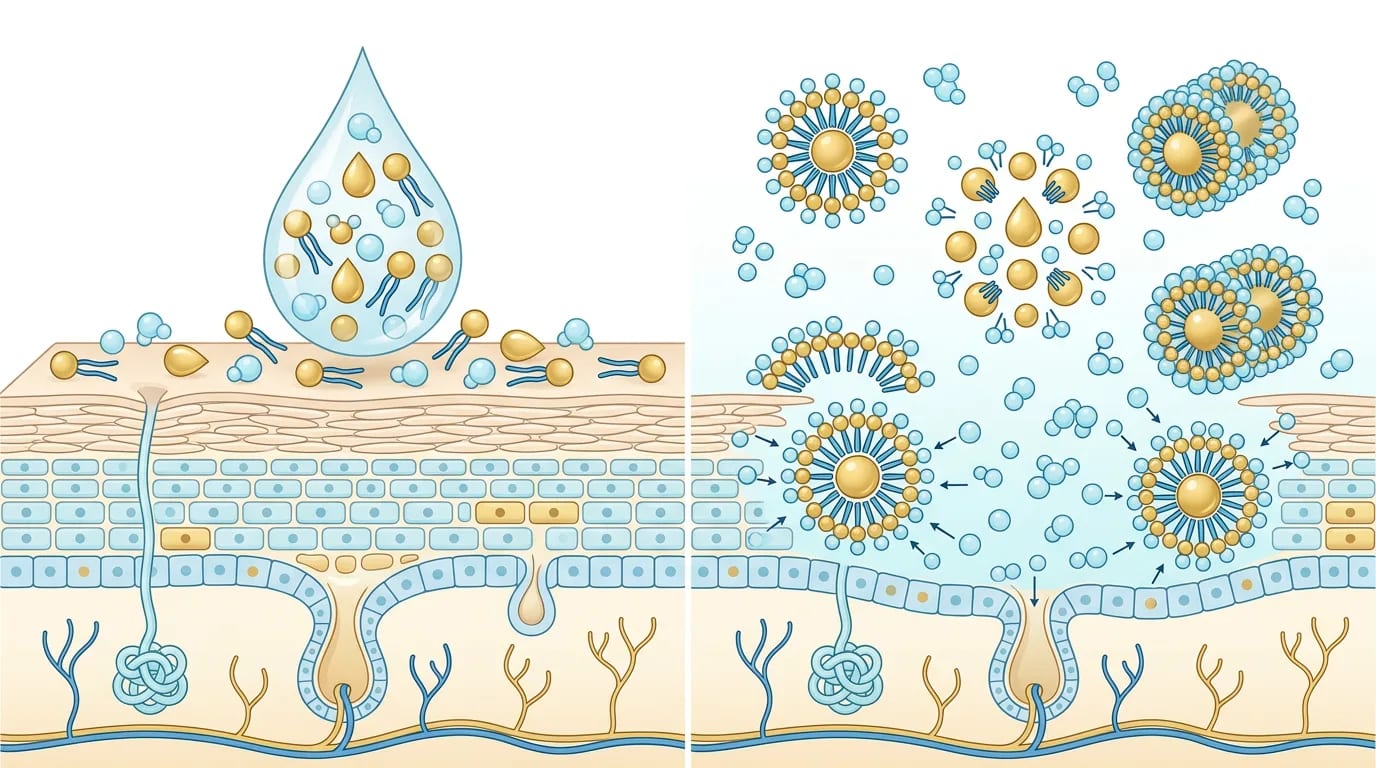
If you want to understand how to choose the best hydrophilic cleansing oil — whether for formulating at home or professional development — you should start not with marketing descriptions on labels, but with chemistry. A hydrophilic oil is not just an "oil that washes off with water." It is a carefully balanced
Creating a homemade lip balm seems like a simple task: melt the wax, add oils, and pour into tubes. But this apparent simplicity hides several serious risks that are rarely mentioned in recipe articles. Oils oxidize. Essential oils, which seem harmless at
Imagine: you’re holding a serum that costs £30. On the front of the packaging, in large letters, it says: “10% niacinamide, hyaluronic acid, peptides.” Something inside you says: this should work. But a cosmetic chemist, looking at that same label, sees a completely different story — and it doesn’t always have a happy ending.
Most formulators create a serum once and use it all year round. This works, but it is not optimal. In January and July, skin lives in fundamentally different conditions: different air humidity, different temperatures, and different levels of transepidermal water loss (TEWL). If you want to...
DIY facial toner is one of the first products most home formulators start with. It may seem like just water with a few additives, but behind this simplicity lies serious chemistry: choosing solvents, managing pH, proper preservation, and the precise selection of actives.
When scientists from the University of Manchester and the No7 brand announced the creation of a 'superpeptide', the cosmetic community reacted with mixed feelings: some spoke of a revolution, others of marketing. But behind the loud headlines lies some truly interesting chemistry. We are talking about a fundamentally new approach
When a formulator first creates an anti-ageing face cream formula, the initial impulse is to add all the best ingredients at once: retinol, vitamin C, peptides, AHA acids, and niacinamide. The logic is clear: the more actives, the more effective the cream. But this is exactly where most formulas quietly "die" — not at the emulsification stage
Peptide cosmetics are no longer a niche topic: today, they are one of the fastest-growing segments of active ingredients. But while signal and matrikine peptides are already well-known to cream formulators, neuropeptides — and especially melanocyte-stimulating compounds — remain a gap even for ex
When a customer picks up a bottle labelled "organic," they expect something clean, safe, and close to nature. But for a formulator, this word represents an entire system of standards, restrictions, and technological solutions that cannot be ignored. Organic cosmetics — what is it from the perspective of
Creating a good shampoo is more difficult than it seems at first glance. Many beginner formulators, inspired by the idea of natural cosmetics, mix a mild surfactant with a couple of essential oils — and are surprised why the result is disappointing: the hair squeaks, the foam disappears, and the formula separates after a week. Pr
When a formulator chooses an oil for a formula, the first question is usually: "Is it light or heavy?" But behind this subjective feeling lies precise biochemistry. Fatty acids in skin oils are the molecules that determine everything: absorption rate, oxidative stability, and barrier properties.
 Walker Formulation Academycosmetic chemistry