Useful material on cosmetic chemistry, ingredients and growing your business
Body scrub is one of the first products that home formulators start with. It seems simple: take sugar, add oil, mix — and it's done. But that is exactly where the trap lies: most homemade scrubs either separate within a week, irritate the skin, or just wash down the drain.
Hydrosols have long moved beyond being a byproduct of essential oil steam distillation and have carved out their own place in the arsenal of conscious skincare. However, most materials about them are written from the formulator's perspective: how to incorporate them into a cream formula, what pH to consider, and how to preserve them. Meanwhile, the end consumer
Do you know how many raw materials are officially registered in the latest edition of the INCI Dictionary? More than 17,000. And that is just the tip of the iceberg — each ingredient has several suppliers, each with its own trade name and slightly different characteristics. When a person first op
Imagine: you have an idea for the perfect cream. You know how it should smell, how it should feel on the skin, and which active ingredients should work in it. But between "I know what I want" and "here is a finished, stable cream formula" lies a chasm several months wide, filled with laboratory iterations, stability tests, and pH adjustments.
When a beginner formulator first faces the question of which face oil to choose, they discover not just a long list of vegetable oils, but an entire system of chemical variables: fatty acid profile, iodine value, oxidation rate, comedogenic potential, and the ability to penetr
When it comes to the best skin peptide available today, the answer is no longer limited to classic Argireline or Matrixyl. In 2024–2025, a group of scientists from the University of Manchester, in collaboration with the No7 brand team, introduced a matrix super-peptide complex capable of
The periorbital zone is one of the most demanding areas in cosmetic chemistry. The skin here is 4–5 times thinner than on the cheeks, almost devoid of sebaceous glands, and is constantly subjected to mechanical stress from facial expressions. This is precisely why peptides for the eye area have become one of the most sought-after classes.
Everyone who has ever held a cold-process bar scented with lavender and layered with shea butter has wondered: what is actually happening inside this piece? You can buy handmade soap on every marketplace today, but understanding what distinguishes a high-quality product from a beautiful but chemi
If you have ever studied the ingredients of an anti-ageing cream, you have encountered them — peptides. These short chains of amino acids have become one of the most discussed classes of active ingredients in cosmetic chemistry, and for good reason. A properly selected peptide for facial skin in a cream formula is capable of targeting specific skin concerns.
The question of "how to become a cosmetic chemist" sounds different today. While this path used to lead exclusively to medical college or a beauty salon, more and more people are now discovering cosmetic chemistry — the science of creating creams, serums, shampoos, and conditioners from scratch. This field combines bioch
DIY cosmetic formulation is not just a hobby: it is a precise science that requires an understanding of emulsion chemistry, raw material properties, and technological processes. If you want to learn how to make cream at home so that it is stable, safe, and truly effective for the skin, this article will be your starting point.
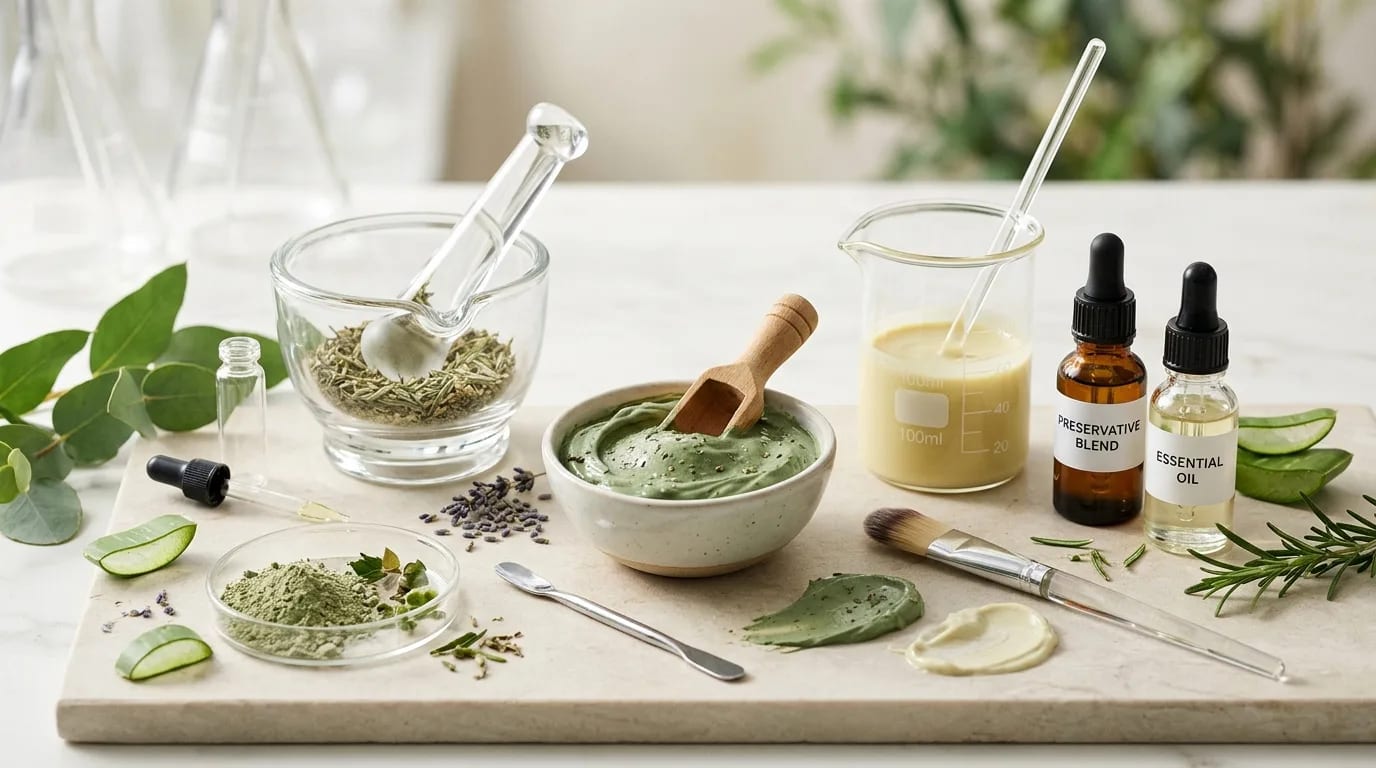
Preserving clay masks: the science of microbiological control and the role of glycols At the “Walker Formulation Academy” school, we are convinced that a deep understanding of ingredient chemistry is the foundation of professional formulation development, and preserving clay masks is one of the most illustrative examples of how mineral
 Walker Formulation Academycosmetic chemistry