A DIY emulsion base for skincare cream making combines roughly 60-80% water phase with 15-30% oil phase, held together by 2-5% emulsifier (commercial raw material, by mass). Because any product containing water supports microbial growth, it also needs a broad-spectrum preservative used within its permitted limit, plus an antioxidant for the oils.
- Typical cream: 60-80% water phase, 15-30% oil phase, 2-5% emulsifier (commercial raw material, by mass).
- Skin-friendly finished pH: about 4.5-6.0, which is also the working window for many preservatives.
- Emulsification is usually done with both phases heated to about 70-75 °C.
- Unpreserved water-based creams can show visible contamination within days at room temperature.
- Antioxidant tocopherol is commonly used at about 0.05-0.5% (commercial raw material, by mass) in the oil phase.
Most home formulators obsess over texture and skip the part that decides whether the jar is safe in week two. A cream can feel luxurious and still be a culture dish. This article is about the chemistry that most texture-focused recipes leave out.
The Invisible Threat: Why Water-Based Creams Spoil Without Proper Stabilization
An oil-in-water emulsion is, microbiologically, a nutrient broth with a fatty topping. Water activity is high, and the formula supplies glycerin, plant extracts, proteins and fatty esters as food. Bacteria, yeasts and moulds need very little to grow, and every dip of a finger adds more of them. Cosmetic safety guidance from industry bodies stresses that products containing water need an effective preservation system, which is why cosmetic safety information resources treat preservation as a core safety function rather than an optional extra.
What an emulsion base actually is
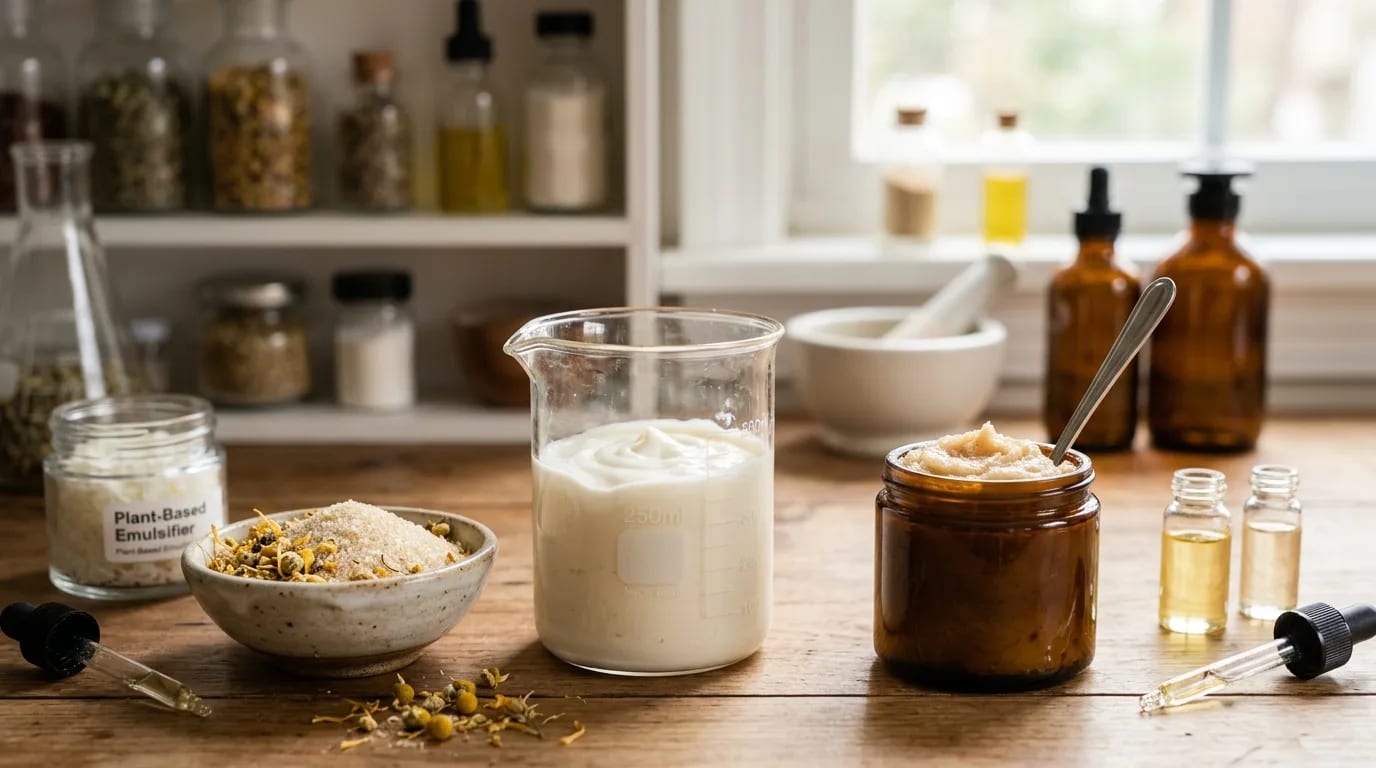
An emulsion is a dispersion of one liquid in another that do not mix. The emulsifier sits at the oil-water interface and lowers interfacial tension. Three parts matter:
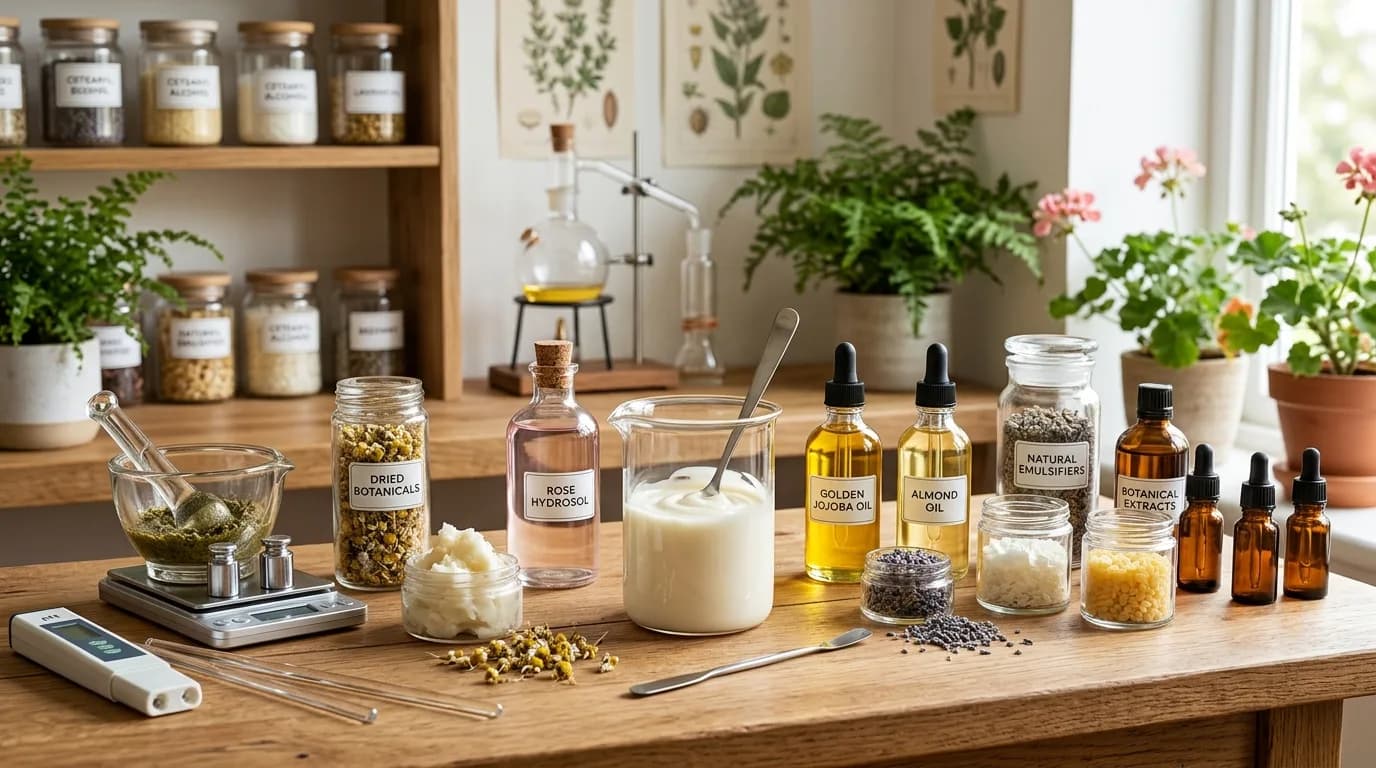
- Water phase: water, humectants such as glycerin, optional thickener.
- Oil phase: liquid oils, butters, fatty alcohols such as cetyl alcohol for structure.
- Emulsifier: for example a self-emulsifying wax or a glyceryl stearate-based system, chosen by supplier guidance for the oil load.
Texture articles such as Shea, cocoa or mango: which butter makes the balm you want cover the oil side well. Here the focus is what keeps the water side clean.
Why the fridge and "natural" claims do not rescue you
Cold slows growth but does not stop it; we cover this in the fridge question. Likewise, honey, vinegar, grapefruit seed extract or essential oils are not a validated preservative system at the levels that are comfortable on skin. Whether any ingredient is allowed as a preservative is decided by the list of permitted preservatives in the retained Cosmetics Regulation 1223/2009 as it applies in the UK, not by how natural it sounds.
Beyond Botanical Extracts: Selecting Effective Broad-Spectrum Preservatives for Home Labs
A useful preservative covers bacteria, yeast and mould, stays active in the finished pH, and partitions into the water phase, where microbes live. Always check the ingredient against Annex V of the regulation, including its maximum concentration and any conditions of use. Maximum limits are stated per ingredient there, and supplier technical sheets give the recommended ranges for their blends.
Matching preservative to pH and base
Organic-acid preservatives such as benzoic and sorbic acid salts work mainly in acidic conditions, so they suit formulas at the lower end of the skin-friendly range. Other permitted systems tolerate a wider pH. The practical rule: choose the preservative first, then adjust the base pH into its working window, and verify with a pH meter or reliable strips rather than guessing.
| Approach | Strength | Limitation |
|---|---|---|
| No preservative, single-use batches | Nothing to select | Must be used immediately; not storable |
| Botanical extract only | Appeals to "natural" buyers | Not a validated broad-spectrum system |
| Listed preservative blend (Annex V) | Defined limits and spectrum | Needs correct pH, dosing by weight and phase |
| Anhydrous format (balm, oil) | No free water to support growth | Not a cream; can still oxidise |
Dosing and process rules
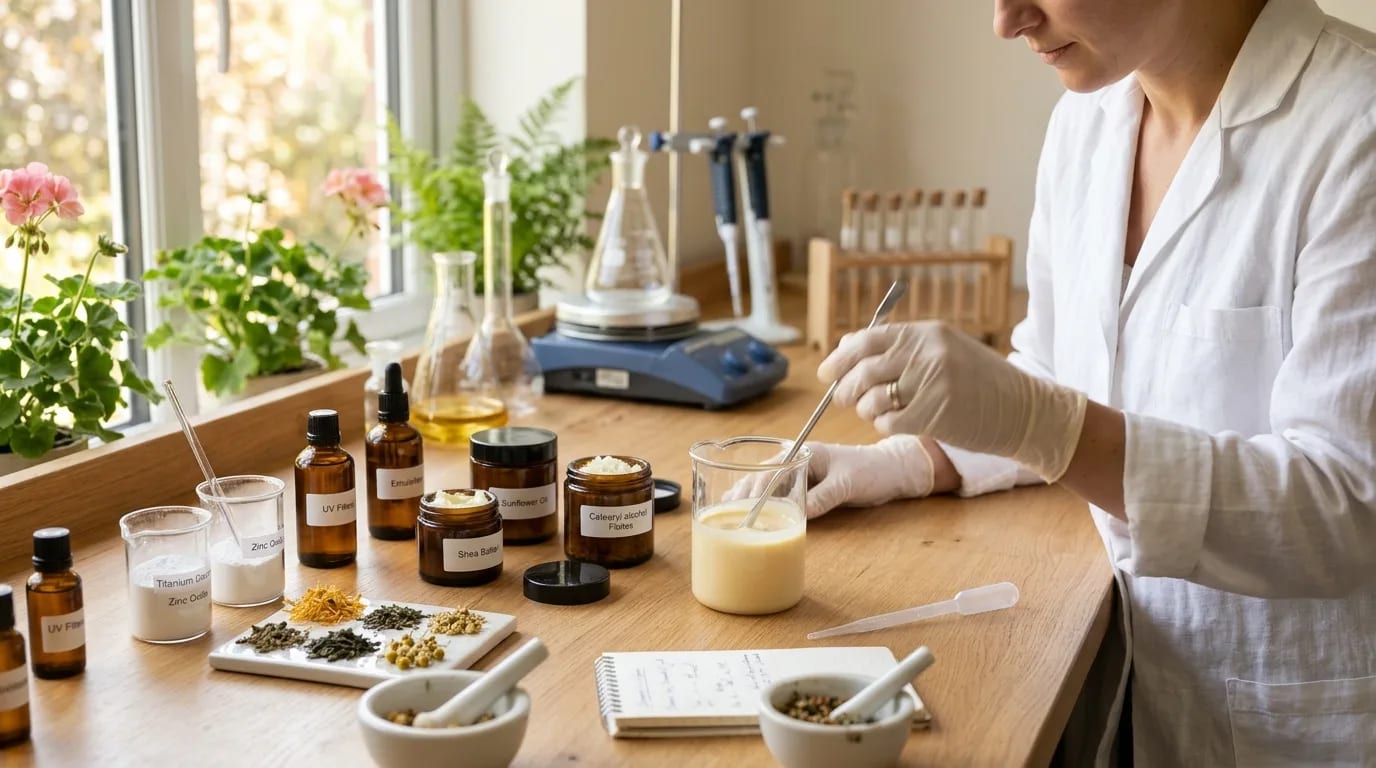
- Weigh to 0.01 g; a 100 g batch makes mistakes costly.
- Add heat-sensitive preservatives in the cool-down phase, below the temperature stated on the supplier datasheet.
- Sanitise jars, spatulas and beakers with ethanol and let them dry.
- Use pumps or tubes, not wide-mouth jars, to limit finger contamination.
- Label the batch date and discard at the supplier-recommended or conservative short interval.
Home use cannot replace a challenge test, the lab method used by industry to confirm a preservative system works in the actual formula. This is also why the regulation requires a safety assessment for products placed on the market. Anyone selling creams should check requirements via UK government cosmetics guidance.
Oxidation Control: Using Antioxidants to Extend the Shelf Life of DIY Oils
Preservatives do not stop rancidity. Oxidation is a chemical chain reaction in unsaturated fatty acids, producing off smells and irritating by-products. Oils rich in linoleic or linolenic acid, such as rosehip or pomegranate, go off fastest; see Pomegranate seed oil: is it worth the price? for a high-reactivity example.
Choosing and dosing antioxidants
Tocopherol (vitamin E, INCI: Tocopherol) is a chain-breaking antioxidant, typically used around 0.05-0.5% of the oil phase as commercial raw material (by mass). Safety assessments of tocopherols are summarised by the Cosmetic Ingredient Review. Rosemary extract and ascorbyl palmitate are other options, often paired for synergy.
Habits that slow oxidation
- Buy oils in small bottles and keep them dark and cool.
- Choose stable oils (jojoba, fractionated coconut, squalane) for the bulk of the oil phase.
- Use opaque, airless packaging.
- Keep heat exposure during emulsifying short.
For active-led formulas, the principles in Formulating with Hero Ingredients apply: protect the star ingredient and its carrier together.
A Practical Starter Framework
A cautious home formulator works in this order: pick a simple oil-in-water base, choose a listed preservative and its pH window, add an antioxidant to the oil phase, make 50-100 g, and watch for colour, smell and texture change. Costs are modest: a starter set of emulsifier, preservative and basic oils is often around £30-£50. If you want a guided path, our mini-course on gentle creams walks through bases step by step.
FAQ
What is a DIY emulsion base for skincare cream making?
It is a mix of a water phase, an oil phase and an emulsifier, usually about 60-80% water, 15-30% oil and 2-5% emulsifier. If it contains water, it also needs a permitted preservative.
How do I make a stable cream base at home?
Heat water and oil phases separately to about 70-75 °C, combine with the emulsifier while mixing, cool, then add a preservative and adjust pH. Weigh everything precisely and sanitise equipment.
Can I make cream without preservatives?
Only as a tiny batch used immediately. Anything storable with water needs a preservative; check permitted ones against the UK Cosmetics Regulation lists.